For many disabled Asian Americans, Disability Pride is more than a celebration each July. It’s an ongoing journey of embracing every part of who they are, while navigating culture, family, identity, and belonging.
Last year, Cold Tea Collective celebrated Disabled Pan-Asian Changemakers, highlighting ten disabled Pan-Asian leaders across generations who are helping shape a more accessible and inclusive future.
This year, we continue that conversation by centering the next generation: five emerging disabled Asian American leaders whose stories reveal how Disability Pride is evolving through identity, advocacy, community, and belonging.
For years, disability has often remained absent from conversations within AANHPI communities, shaped by stigma, silence, and misconceptions that can leave young people feeling isolated. At the same time, disability narratives in mainstream media have rarely reflected the full diversity of Asian American experiences or the many ways disability intersects with culture, race, gender, mental health, and identity.
Across advocacy, journalism, healthcare, mental health, education, and the arts, a new generation is reshaping what Disability Pride looks like, not only by sharing their own stories but by building communities where others can finally see themselves reflected.
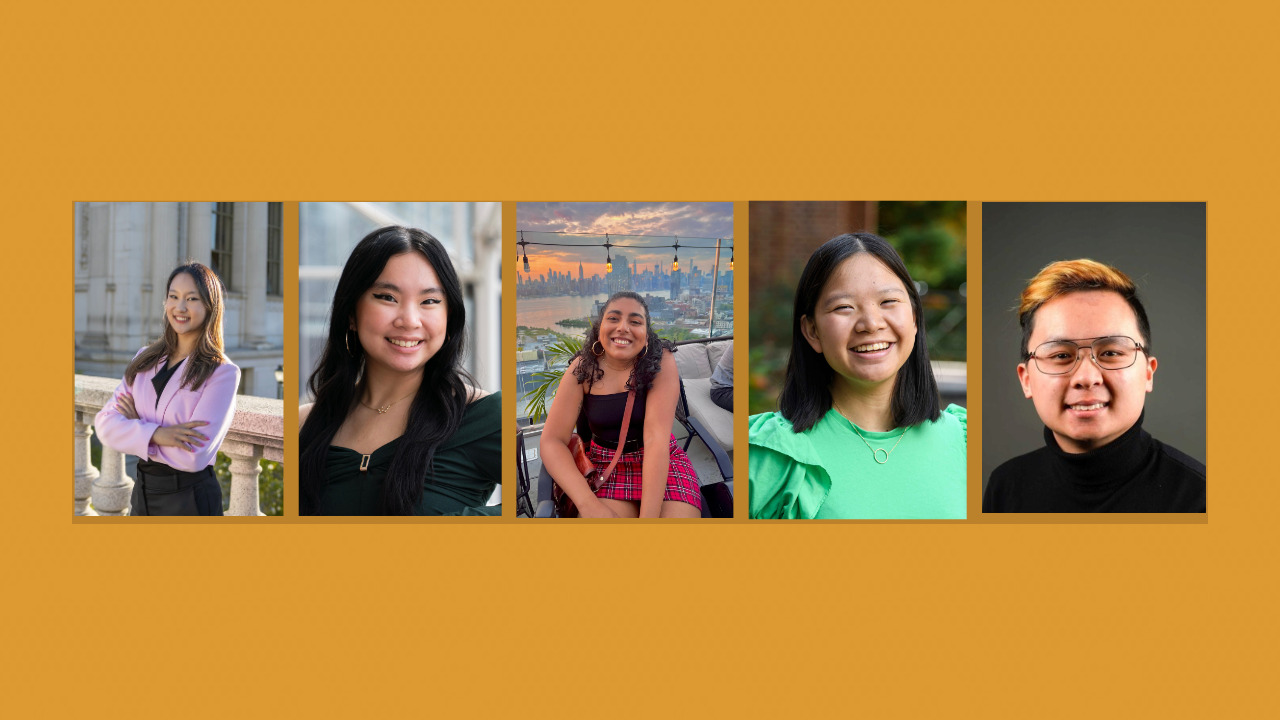
Read the stories of our contributors: Jada Yang, Aliza Lopez, Ken Dinh Vu, Shruti Rajkumar, and Alexandra “Zandy” Wong, who share their lived experiences, reflections, and hopes for the future.
See also: Disability Pride: Redefining what it means to be disabled and Asian
Five Gen Z Pan-Asian voices shaping the future of Disability Pride
While each of our contributors comes from a different cultural background, disability experience, and career path, they share a common goal: creating a world where disabled Asian youth are seen, supported, proud of who they are, and empowered to lead.
Jada Yang (She/Her)

Jada Yang is a Japanese, Taiwanese, and Chinese American UC Berkeley student born with cerebral palsy, studying Public Health, Disability Studies, and Public Policy. As the Disability Justice Officer for the University of California Student Association, she advocates for more than 30,000 disabled students across the UC system, advancing accessibility, policy, and disability justice.
Aliza Lopez (She/Her)

Aliza Lopez is a Filipina American mental health advocate and late-identified ADHDer whose work bridges youth leadership, public health, and peer support. As Communications & Policy Assistant at Hopelab, she champions culturally responsive mental healthcare while helping young people shape the policies and systems that affect their lives.
Ken Dinh Vu (He/Him)

Ken Dinh Vu is a Vietnamese American writer, poet, musician, nonprofit evaluation professional, and graduate student in Public Administration at California State University, Dominguez Hills. Diagnosed with autism in elementary school, he uses storytelling to explore disability, identity, and intergenerational trauma while creating spaces where disabled Asian youth feel seen, heard, and connected.
Shruti Rajkumar (They/Them)

Shruti Rajkumar is an Indian American freelance reporter and Communications and Development Coordinator at the Disability EmpowHer Network. A brain cancer survivor and wheelchair user, they use journalism and storytelling to expand authentic disability representation across media while exploring the intersections of disability, healthcare, and identity.
Alexandra “Zandy” Wong (She/Her)

Alexandra “Zandy” Wong is a Chinese American incoming medical student at UCSF, founder of the NextGen Accessibility Initiative, and a Rhodes Scholar. Growing up with severe hearing loss inspired her work advancing disability inclusion through medicine, technology, and public policy, with a focus on ensuring disabled communities help shape healthcare innovation, artificial intelligence, and accessibility.
Growing up disabled and Asian American
For many disabled Asian Americans, growing up meant navigating identities that were rarely acknowledged together. Disability was often treated as something to overcome or left unspoken, while representation rarely reflected both disability and Asian American identity. Without language or role models, it was difficult to imagine a future where every part of themselves could coexist.
“Being both Asian American and disabled meant I often felt like I existed between communities rather than fully belonging in either one,” Jada Yang shared. “In Asian spaces, disability was rarely talked about openly, and I often felt pressure to minimize my disability or ‘push through’ it. At the same time, in disability spaces, I rarely met people who shared my cultural background.”

For years, Yang struggled to find spaces where she could fully embrace both identities. “It sometimes felt like I had to choose which part of my identity to emphasize, when in reality both have always been inseparable.”
Ken Dinh Vu echoed that feeling. “It’s not as if I stop being Asian when entering the disabled community or that I’m not autistic when I enter the Asian community,” Vu said. “I still am both regardless of which space I enter.”

While Yang’s and Vu’s experiences differed, both arrived at the same realization: disability and culture were never competing identities. The challenge was finding communities willing to embrace both at once.
As Vu put it, ”Disabled Asians do deserve a say as well, or even their own platform.”
See also: Breaking free from the model minority myth as a neurodivergent Vietnamese American
The weight of expectations of being disabled and Asian American
For the other contributors, that search for belonging was shaped by cultural expectations, limited representation, and messages about what success and disability were supposed to look like.
In Shruti Rajkumar’s experience, growing up meant constantly measuring themselves against expectations that didn’t account for disability. “I frequently pushed myself beyond what I was capable of because I was forced to live up to an Asian, able-bodied standard that I couldn’t reach because of my disability.”

For Aliza Lopez, understanding disability meant unlearning beliefs shaped by colonial mentality, intergenerational trauma, and the pressure to equate productivity with worth.
“When I was younger, I previously saw my struggles with mental wellness as a personal fault and would feel shameful for what I faced, rather than realizing that, as with any mental conditions, they’re largely caused by neurochemical imbalances, and that in itself is naturally out of my control.”

Learning she had ADHD became a turning point. “It felt validating to know that I could reclaim some personal autonomy over the symptoms I experienced.”
Reading Year of the Tiger and Disability Visibility had a similar impact on Alexandra “Zandy” Wong.

“It was the first time I saw my culture (both disability and Chinese American culture) represented. It was an embracing of one’s story that made it so powerful for me.”
Although their experiences differed, each contributor came to a similar realization: many of the barriers they faced were shaped not only by disability, but also by cultural expectations, limited representation, and systems that left little room for people living at multiple intersections.
Finding community as disabled Asian Americans
Community did not change who they were. It changed how they understood themselves.
For many disabled Asian Americans, belonging isn’t something they grow up with. It’s something they discover through mentors, friendships, advocacy, creative expression, and the realization that they are not alone.
Before Vu found belonging through poetry and disability advocacy, he found it at home. He credits his sister, Quyne, who lives with bipolar disorder, as one of the first people to show him that disability and creativity could coexist. Looking back, Vu said she was one of the few people who “kept the fire in me from going cold” during some of the most difficult years of his childhood.
“She reminded me of the importance of our voices and the value of holding onto who we are as individuals in the face of adversity and injustice, which inspired me to be more open about my identity as a Vietnamese American who’s autistic.”
That lesson stayed with him as he found community through open mic poetry and music. Authentic self-expression helped transform self-doubt into confidence.

“My own self-doubt and fears started to melt away the moment I began expressing my autistic and Vietnamese identity. It was a powerful experience to see my work appreciated and to find other poets who resonated with it.”
For Yang, connecting with other disabled students and organizers changed how she saw herself.

“Finding community and learning from other disabled people helped me recognize that disability is not something I need to hide or overcome. It became a meaningful part of who I am and how I understand the world.”
For both Vu and Yang, belonging wasn’t about finding people exactly like themselves. It was about finding communities where every part of their identities could exist together.
See also: Gaming, mental health, and belonging: How Pan-Asian communities find connection through play
The power of disabled Asian American representation and shared lived experiences
Finding community didn’t end with belonging. For Lopez, Rajkumar, and Wong, seeing other disabled Asian Americans transformed isolation into connection. Through mentors, fellow advocates, family, and disabled Asian creatives, they found language, confidence, and a deeper sense of belonging.
For Lopez, shared lived experiences became a source of mutual understanding and trust.
“My support systems have made a significant influence in my life, including my friends, fellow advocates, and my brother. Through sharing our lived experiences, creating a foundation of mutual acceptance and respect, and upholding empathy for one another, I’ve been able to trust people who understand my experiences.”

Today, that support shapes her youth mental health advocacy, where listening is just as important as leading.
For Rajkumar, discovering disabled Asian writers, journalists, and advocates helped her see disability as a shared culture rooted in creativity and resilience.

“Disabled Asian creatives, such as Alice Wong and Leah Lakshmi Piepzna-Samarasinha, helped me feel seen and supported,” Rajkumar said. “I used to be so scared to speak about my experiences because I didn’t have the words to describe them. Now I’m unapologetically open with those around me, all of which wouldn’t be possible without my disabled friends, elders, and ancestors.”
Building relationships with disability organizations such as The American Association of People with Disabilities, Asian Americans with Disabilities Initiative (2021-2025), mentors, and other young disabled leaders reminded Wong that she wasn’t navigating this journey alone.

“Meeting other young people with disabilities inspires me to keep going and makes the journey a little less lonely.”
Although each contributor’s journey looked different, they shared the same realization: representation didn’t erase the barriers they faced, but it reminded them they no longer had to face them alone.
For many, that’s where Disability Pride truly begins: not only in embracing who you are, but in knowing you belong.
See also: Cultivating a space for Asian mental health conversations
Fostering representation of Asian Americans with disabilities
Finding community transformed how these five leaders saw themselves. It also inspired them to become the representation they once searched for. Today, they are creating that visibility through advocacy, healthcare and leadership.
Rajkumar’s advocacy is focused on empowering young writers and creatives with disabilities through training on disability storytelling and reporting.
For Vu, storytelling has become both an act of healing and an invitation for others to embrace every part of themselves, and it is “necessary so we can provide the space to tell our stories and find healing for ourselves, our ancestors, and future generations after us.”
Representation means ensuring people with disabilities are positioned to shape the future of healthcare.
“Disabled individuals should have a seat at the table when we’re designing healthcare, digital health, and AI,” said Wong. “Our lived experiences are essential to building systems that truly work for everyone.”
Together, these five leaders are redefining what representation looks like for disabled Asian Americans. They are not waiting for someone else to tell more inclusive stories or create more accessible systems.
Through their own work, they are becoming the representation they once needed, and helping ensure the next generation grows up knowing that disability, culture, and leadership can exist together.
See also: WATCHLIST: 15 Pan-Asian films centering mental health experiences
How Gen Z is redefining Disability Pride
For the generation of disabled Asian American leaders, Disability Pride means embracing disability as an inseparable part of who they are while rejecting shame. Disability is intertwined with culture, family, community, and identity.
“Disability Pride means rejecting the mindset that I was forced into as a kid, that disability was something shameful or something I had to overcome to be worthy,” said Rajkumar. “Now I see disability as something that connects me to an incredible community, history, and culture.”
“To me, Disability Pride means embracing my disability as an integral part of my identity,” said Yang. “Now, in political and advocacy spaces, I find power in my disability as it shapes how I lead and the issues I fight for.”
For Vu, Disability Pride is an act of self-liberation. “Disability pride is about allowing every aspect of our existence to shine in all its beauty and the scars we carry in pursuit of our own self-liberation.”
Lopez considers intersectionality as central to disability pride. “Disabilities should never be seen as a deficit, and a person should never be reduced to their condition.” Similarly, Wong wants to see a world where accessibility is universal.
Although each contributor defined Disability Pride differently, they share a common belief: disability is not something to hide, fix, or overcome. It is an integral part of who they are.
For this generation, Disability Pride is about embracing every part of themselves while helping reshape how disability is understood for those who come next.
See also: Celebrating neurodiversity in Asian American communities
Advice to the next generation of disabled Asian Americans
Our participants shared a resoundingly clear message to the next generation of Asian American youth with disabilities: you do not have to wait for permission to belong. Your disability, culture, and identity are not contradictions.
“Don’t be afraid to take up space, ask for accommodations, tell your story, and dream bigger than the expectations others place on you,” said Yang. One day, you may become the representation another young person has been searching for.”
Rajkumar’s advice is to “start reaching out to other disabled Asian people and consuming more media from those people. My world truly opened when I found other disabled Asian people. From there, your world will open up too.”
Lopez knows that the future is being built today. “Any progress is still progress. Every step still takes you closer to your goal, no matter how small.”
The future of Disability Pride isn’t only about breaking barriers. It’s about making sure the next generation of disabled Asian Americans never has to spend years wondering if they belong. If these five changemakers are any indication, that future is already taking shape.
See also: Celebrating neurodivergent Pan-Asian creatives in media