For decades, neurodivergence in Asian communities was often misunderstood, hidden, or framed as behavioral problems rather than differences in how our minds and bodies process the world. Many people grew up without the language to describe their experiences, leading to delayed diagnoses, misdiagnoses, or silent struggles.

Among the Pan-Asian diaspora, conversations around mental health and neurodiversity are still evolving. Cultural stigma, the pressure of the model minority myth, and a lack of awareness about conditions like ADHD and autism have historically made it difficult for many Asian individuals to speak openly about their experiences.
Today, that narrative is beginning to shift.
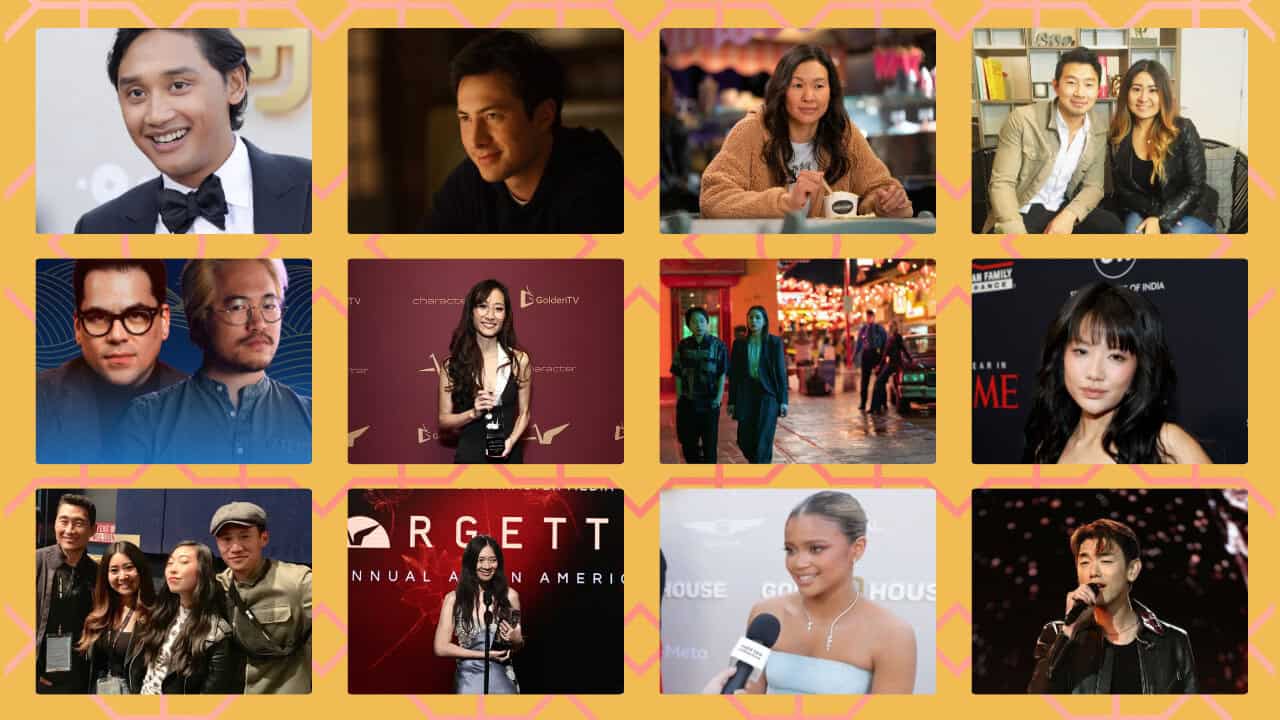
Across sports, entertainment, music, and digital media, a growing number of Pan-Asian public figures are openly sharing their experiences with ADHD, autism, and other neurodivergent conditions. Their visibility helps challenge stigma and expands the conversation around mental health and neurodiversity in Asian communities worldwide.
By sharing their stories, these artists, athletes, and creators are helping reshape representation and normalize neurodivergent experiences across the Asian diaspora.
For readers who want to dive deeper into how neurodiversity intersects with culture, identity, and community, you can also explore our previous Cold Tea Collective feature: Celebrating Neurodiversity in the AANHPI Community: Breaking Barriers, Embracing Identity, and Building Inclusive Futures.
Athletes
Various research institutions, including the NIH, found that individuals with ADHD are often drawn to physical activity and sports as an outlet for regulating energy, focus, and emotions. Structured training and movement can provide frameworks where many neurodivergent athletes thrive.
Alysa Liu
The two-time U.S. figure skating champion and Olympic gold medalist has been open about her ADHD diagnosis. Liu has discussed the importance of mental health support in the high-pressure world of competitive sports and how she navigates training with a neurodivergent brain.
“I have ADHD, and I love situations that I’m not expecting,” Liu said in an interview with ESPN.
“It gives me a dopamine rush. With little mistakes, I love working through it. And although it’s not ideal to make those mistakes in competition, it was made, and my brain still was releasing those chemicals, and I had to think, ‘What next?’”
Chloe Kim
The snowboarder and three-time Olympic gold medalist had recently been diagnosed with ADHD. Kim opened up about how she masked her ADHD through sports in a way that has helped her.
“I couldn’t focus, but with snowboarding, that was the thing I can really lock in on,” said Kim on the School of Greatness Podcast with Lewis Howes. “I was so focused whenever I had my snowboard attached to my feet like, tunnel vision. In the zone.”
Clay Marzo
The professional surfer from Maui, Hawai‘i, was diagnosed with Asperger’s syndrome as a child, which is on the autism spectrum. The film Just Add Water explored Marzo’s life and how his neurological wiring contributes to his surfing career.
In an interview about his autism diagnosis Marzo shared, “My main sponsor, Quiksilver, asked my mom why I did not conform socially to my sponsors. They asked for a diagnosis. I was not doing interviews ‘right.’ I did not know what to say and how to act. I did not like people looking or talking to me.”
Surfing was a way for Marzo to express himself, since he struggled with communication. “I surf, and I feel comfortable, alive, and peaceful. I can surf better than communicating for sure,” said Marzo.
Bianca Bustamante
The proud Filipina F1 Academy driver for McLaren has publicly detailed her experiences living with ADHD, including difficulties with focus and a constant need for movement. Bustamante uses her platform to advocate for neurodiversity awareness, particularly in the Philippines, where support systems remain limited.
“I struggle to focus sometimes,” Bustamante shared in an interview with GPFANS. “I struggle to live a normal life. I’m always fidgeting. Even just doing this interview, I’m like moving everywhere, and it’s a struggle, but it’s something that I have to face as well.”
See also: Breaking free from the model minority myth as a neurodivergent Vietnamese American
Actors
Many performers with ADHD describe their neurodivergence as deeply connected to creativity, improvisation, and emotional intensity, qualities that enrich their storytelling and performances.
Simu Liu

Photo credit: Cold Tea Collective
The Chinese Canadian actor, and one of Canada’s leading Asian men on screens, revealed in late 2023 that he was diagnosed with ADHD.
At the annual CCYAA Celebrity Classic in Toronto in 2023, Liu gave a speech on mental health in Asian communities and ADHD.
“We came to the conclusion that I had ADHD for a very long time, and when it was identified in me, it was actually very liberating,” he said.
He added that mental health struggles had been rampant in the Asian community. “Over 19% of the Asian communities suffered from some form of invisible illnesses…it’s something that we as the community have not done a good enough job of speaking on.”
Chloe Bennet

The Interior Chinatown actor has spoken openly about living with ADHD and anxiety since childhood, particularly among younger audiences.
As part of the Child Mind Institute’s #MyYoungerSelf Campaign video, Bennet said, “You are not alone. By sharing our story and opening up to each other by saying you’re not alone is so important.”
Josh Dela Cruz

The first ever Filipino American host of Blue’s Clues & You! has shared his experience managing ADHD while maintaining the energetic presence required for children’s television.
“As someone with ADHD, it’s a great reminder for me that everything doesn’t have to be perfect,” Dela Cruz said during his collaboration interview with apparel brand Imperfects.
“Just show up, put the work in, and keep on going. The practice of getting up in the morning and physically working through the mental roadblocks that would normally be detrimental to my day is a gift.”
Hudson Williams

The star of the hit series Heated Rivalry is neurodivergent himself, living with ADHD. The Korean Canadian actor famously portrays Shane Hollander, a character confirmed by the author and show creators to be autistic. Williams drew inspiration for his portrayal from his own father, who is also on the autism spectrum.
For a long time, Williams struggled to embrace his ADHD.
“This was, like, me fighting ADHD for a very long time,” Williams said on the Shut Up Evan podcast.
“I didn’t want to be diagnosed because it would [have] felt like I would have lost my control over my life,” he said.
View the full interview on the Shut Up Evan Podcast’s part 1 and part 2.
Jackie Chan

The martial arts icon has discussed living with Attention Deficit Disorder (ADD) and obsessive-compulsive disorder (OCD), noting how his restless energy helped shape his legendary career.
Chan brought up his neurodivergence in an interview with the Olympics.
In response to a question about why movement was important to him, Chan said, “Because I’m ADD. I can’t sit still for 2 minutes.”
Sue Ann Pien

The Taiwanese American autistic actress, who played the lead, Violet, in the Amazon series As We See It, has used her platform to advocate for authentic representation.
Pien, who also voiced characters like Juniper “June” Chen on Disney’s The Ghost and Molly McGee, discussed her autistic burnout in an interview with Boston 25 News.
“It’s basically like your brains are operating 2 different operating systems,” she said.
“You have one that’s a PC brain and most of the world is a PC world… and then you have the Mac world and your [neuro]diverse world is like the Mac world. I used to have coaches who were like ‘You’re like a Ferrari, but if you don’t drive it right, you’re going to crash it.’”
Leo J. Long

An autistic actor who starred in the 2022 film I Used to Be Famous, Long is also an accomplished drummer who champions neurodiversity in the arts.
In an interview with Tresa Magazine, Long talked about his experience as a neurodivergent actor.
“It’s great to recognise that neurodivergent people can act too and that I have done my part to break down barriers, which I am very proud of,” Long said. “Also, having a neurodivergent actor playing a neurodivergent character is wonderful and very authentic.”
Alia Bhatt

The global Bollywood star and Heart of Stone actress revealed in late 2024 that she has ADHD. Bhatt explained how it shapes her daily routines. For example, she keeps her makeup sessions to under 45 minutes due to her inability to sit for long periods of time.
Bhatt spoke about her ADHD diagnosis on Jay Shetty’s podcast as featured in NDTV.
“So, I took a professional test over three days […] and I was diagnosed with ADHD and anxiety,” she said. “Strangely, I felt happy because my ADHD diagnosis gave me information. Lack of information is what throws me off the most, and I’m always seeking clarity and comfort. I’m very averse to change. But once I became aware of these things, dealing with them became much simpler.”
Subodh Garg

The formerly nonverbal autistic Indian American brought South Asian visibility to Netflix’s Love on the Spectrum.
Garg partnered with Easter Seals on the “All I Want is You” holiday campaign to shed light on the intersection of autism and loneliness.
“As someone on the autism spectrum, I have always struggled with making friends,” Garg said. “I definitely want more friends to hang out with, even today. I have a lot of special interests I want to talk about with a friend. Being lonely is a common problem in my community.”
Awkwafina (Nora Lum)

Photo by Cold Tea Collective
The award-winning biracial Chinese and Korean American actress, rapper, and comedian, has spoken openly about anxiety, ADHD, and mental health struggles throughout her career.
In an interview with the Huffpost, Awkwafina opened up about her journey with ADHD.
“I was diagnosed with ADD/ADHD at like 7,” she said. “The office world — it just was never something I understood how to do. I don’t understand how people can just sit there and know what they’re doing, and have a purpose.
“Every day I wondered, what am I doing here? What is this? Why am I so useless, why don’t I understand? Going home and making beats — that was me, that was my life,” she said.
See also: Hustle and Heart: Seven Questions with Simu Liu
Musicians
Music has long been a powerful outlet for neurodivergent artists, offering space for emotional expression, sensory exploration, and storytelling.
REI AMI (Sarah Yeeun Lee)

The Korean American singer-songwriter, known for Zoey in Netflix’s K-Pop Demon Hunters, has spoken about her journey with neurodiversity. She had an initial misdiagnosis of depression and later was diagnosed with severe ADHD and bipolar disorder.
Her music often explores themes of “too-muchness” and emotional polarization, as she told Forbes in an interview.
“Music was the only consistent thing in my life,” she said. “It was my first love. It was the only thing that felt like when I put my headphones on, I can truly feel as crazy as I need to be, and it validates all the crazy thoughts and the crazy voices.”
Eric Nam

The Korean American singer, entrepreneur, and voice of Aang in Netflix’s Avatar: The Last Airbender series has discussed his ADHD in interviews and on his podcast The Daebak Show.
“I think for a long time, I always wanted to ask for help,” Nam said on a recording for the MINDSET app.
“I didn’t know where to start, and for a long time I felt that reaching out meant that I was weak in some way. It was admitting to myself that I might have a problem. It’s something I have always just had with me my entire life. For a long time, I thought being very scattered-brained and ADD/ADHD was just the way everybody is.”
Kodi Lee
The America’s Got Talent Season 14 winner is a musical savant who is both blind and autistic. Born to a Korean father and Indonesian American mother, Lee has become a powerful symbol of neurodivergent representation in mainstream entertainment.
Autistic individuals have trouble with verbal communication and often express themselves differently. Sometimes they may need support from a caregiver or use assistive technology. Tina, Lee’s mom, often speaks on his behalf.
“When you’re autistic, it’s really hard to do what everyone else does, but music provides him a way to communicate and express his emotions,” shared Tina, Lee’s mom.
“Through music and performing, he was able to withstand living in this world… It actually has saved his life.”
See also: Korean band The Rose shares their story of resilience
Filmmakers
Neurodivergent creatives are behind the scenes of some of today’s most influential films, digital platforms, and cultural movements, shaping how stories are told.
Chloé Zhao

The Oscar-winning director has publicly described herself as neurodivergent, noting that it helps her recognize emotional nuance and authenticity in storytelling.
“I think it’s a superpower, I really do,” Zhao said in an interview with Hollywood Reporter.
“And it’s a spectrum. So everyone is very different… I find that I question sometimes: am I not the typical one? Or has our world become a little bit too inhabitable? Is this too loud? Is it too bright? It’s too fast, you know? So I try to not think of it as less different.
“If I tune into how I function then I’m going to create a world, not just on camera, but also off camera, that is going to be healthy for me,” she said.
Daniel Kwan

The co-director of Everything Everywhere All at Once was diagnosed with ADHD while researching the condition for the film. He described the diagnosis as deeply validating and transformative.
“I want to tell you that a diagnosis with ADHD is not the end of the world,” Kwan said in an ADHD Awareness Month video.
“It’s not the end of your career, and in fact, I think it could be one of the most important things that has ever happened to me, and I’m so grateful to be able to now understand my brain in a way that helps me better build a system and a community around me to bring out the best version of myself.”
Lisa Ling

Photo credit: Jeremy Jude Lee for Creating Space. Photo courtesy of Daniel Anderson
The award-winning journalist discovered she had ADHD as an adult while filming a segment about the condition for her show Our America. The diagnosis helped her understand long-standing patterns in focus and productivity.
“While it’s something I suspected, the news still takes me by surprise,” Ling said.
“My head is kind of spinning, but I feel a little bit of relief because for so long I’ve been fighting it and been so frustrated with this inability to focus, like it’s been such a source of frustration for me.”
See also: The Paper Tigers: How I Spent Six Years Making a Kung Fu Movie
YouTube pioneers and digital creators
Digital platforms like YouTube have allowed many creators to experiment with storytelling, humor, and rapid-fire content formats that align well with the creativity and fast-paced thinking often associated with ADHD. For many Asian creators, these platforms also provided an opportunity to build audiences and representation outside of traditional media gatekeeping.
Ryan Higa
Japanese American Ryan Higa, also known by his channel name Nigahiga, was one of the earliest Asian American YouTubers and built a global platform of 20.7M subscribers at the height of his career.
Higa has been open about his ADHD diagnosis and made content about his neurodivergence.
“As a little kid, I was diagnosed with it, but I never took any medicine for it, so I never knew what normal people thought like,” Higa said in a 2014 video.
“I can’t stand when people say that ADHD is not a real thing and that it’s just an excuse for lazy people to blame their laziness on.”
Linda Dong

The Vietnamese Canadian YouTube creator, also known as LeendaDProduction, has opened up about self-identified ADHD and the balancing act between her personal life and digital career.
In the podcast A Convo With Jeremy Lin, Dong discussed the “balancing act of life on and off camera” and shared insights into her personal journey.
“Every day, I have like five different ideas, and my brain is like talking to each other,” Dong said.
“I feel like I do have ADHD, I think I do. Though I haven’t gone in for it, so I don’t know.”
Tim Chantarangsu
The Thai American comedian and media personality known on YouTube as Timothy DeLaGhetto has shared how ADHD influences his humor, creativity, and storytelling across music and podcasts.
Chantarangsu realized his ADHD in a conversation with his high school friend who had ADHD, which prompted him to reflect on how ADHD showed up in his life.
“Being a child, my parents would tell me to do these chores today, and I would literally be like yo I’m going to do it and then I would forget,” Chantarangsu said. “My mom would be like if you cared, you wouldn’t forget. I’m like, no, I care.
“I don’t forget on purpose, you know what I’m saying, and that kind of made me think about a bunch of things, and just other instances where I did kind of realize I have trouble just focusing sometimes.”
See also: A look back at YouTube’s original Asian creators
Embracing Pan-Asian neurodivergent representations in media
Representation means more than seeing Asian faces in the media; it means seeing the full spectrum of our experiences. As more public figures speak openly about ADHD, autism, and neurodivergence, they are helping create space for more honest conversations in Asian communities around the world.
For many in the Asian diaspora across the United States and Canada, these discussions are also about breaking long-standing cultural silence. Growing up, many people lacked the words to describe their experiences or were taught to mask their differences to fit in.
When public figures share their neurodivergent journeys, it offers something powerful: validation, understanding, and the ability to name experiences that once felt isolating.
Together, these stories remind us that neurodiversity fuels creativity, resilience, and innovation across the Asian diaspora and is a natural part of who we are.