A reimagined classic of queer Asian love – Andrew Anh’s take on the 1993 Ang Lee film, The Wedding Banquet
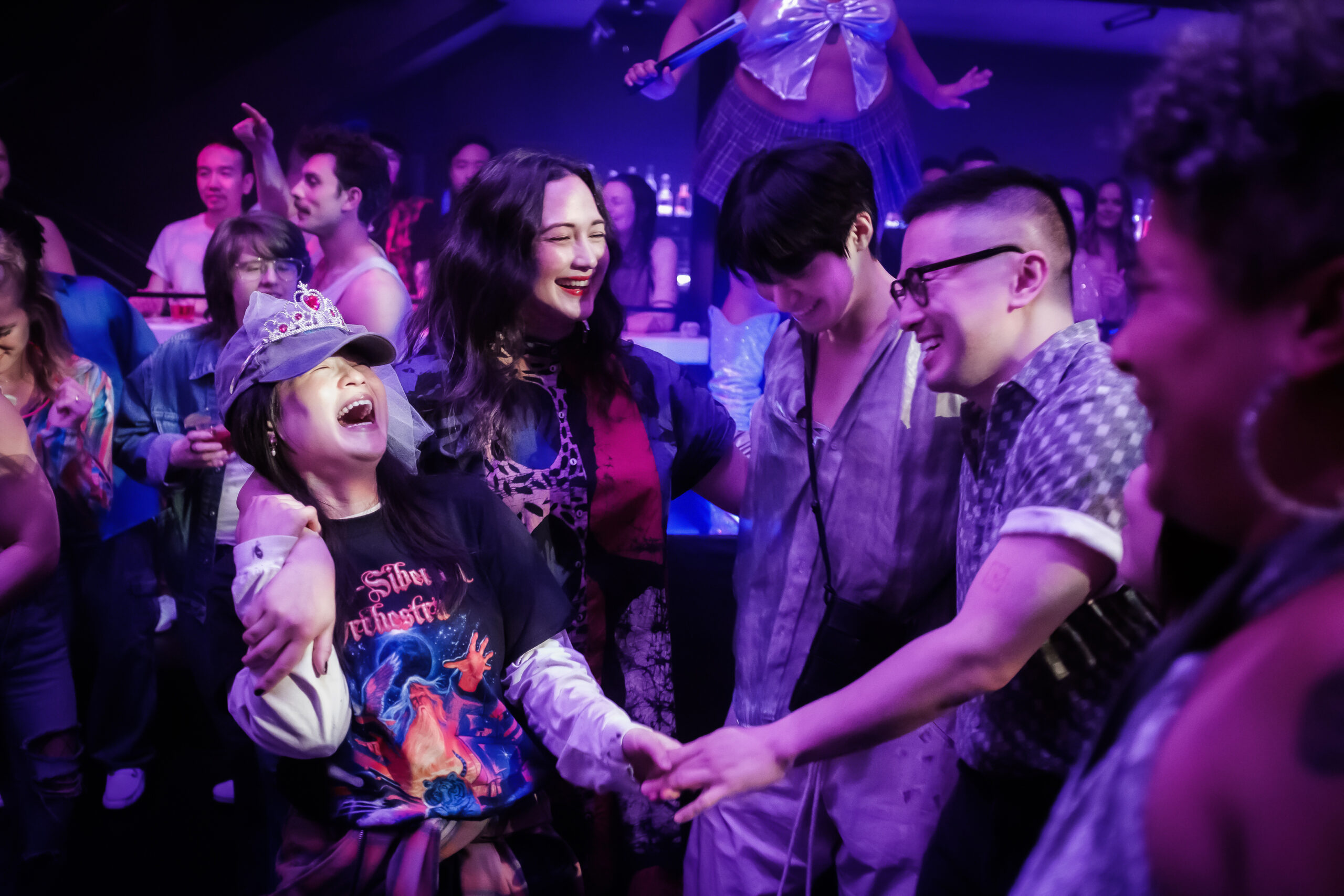
The Wedding Banquet (2025) is a tender, emotionally layered reimagining of Ang Lee’s 1993 comedy classic. Under director Andrew Ahn’s thoughtful direction, the original storyline is updated for a new era—one in which queer Asian Americans are afforded more freedom, yet remain entangled in cultural traditions and familial expectations.
At the heart of the film is a quartet of housemates, lovers, and emotional entanglements. Chris (Bowen Yang) is a commitment-phobe, paralyzed by indecision in both his career and relationship. His partner, Min (Han Gi-Chan), is an aspiring artist living in the U.S. on an expiring student visa who is also the reluctant heir to a Korean multinational empire. The two live in the garage of a Seattle home owned by Lee (Lily Gladstone), an Indigenous and queer youth organizer who longs to be a parent, and Angela (Kelly Marie Tran), an introverted scientist whose fraught relationship with her own mother (played to perfection by Joan Chen) has left her uncertain whether she’s capable of becoming one herself.
The quartet live in a kind of queer domestic idyll—gardening, partying, and sharing morning routines—until Min gets a call from his grandmother (Youn Yuh-jung) that disrupts their delicate balance. Tensions that once simmered below the surface start to boil over. Lee’s IVF treatments aren’t taking. And when Min proposes a green card marriage with Angela to solve their complicated set of problems, their lives spiral into further chaos and disarray. The road to this improbable solution is marked by comedic missteps and emotional reckonings, but it’s the fractured, very human family they cobble together in the end that marks the film’s happy ending.
Cold Tea Collective’s Kacie Chow and Dennis Tran spoke with Andrew Anh, Lily Gladstone, Kelly Marie Tran, Han Gi-Chan, and Bobo Le about this reimagined classic.
See also: XO, Kitty leads viewership rankings and expansion of queer Asian narratives for Gen Z
The Wedding Banquet cast shines through: Interview with Lily Gladstone, Kelly Marie Tran, Han Gi-Chan, and Bobo Le
If The Wedding Banquet feels richly inhabited and emotionally grounded, it’s because the cast brought deeper parts of themselves to the roles.
For Lily Gladstone, who joined the project on the heels of her ‘breakout’ performance in Killers of the Flower Moon, the shift into a warm, ensemble comedy was exactly what she was craving. “It might be the curse of being a breakthrough actor, particularly an ‘ethnic’ non-white actor—people might write it off as ‘you got lucky,’” shares the Oscar-nominated Native American actress. “So I was craving an ensemble piece and a comedy…. And as a human, it was just a beautiful story that I was dying to be a part of.”
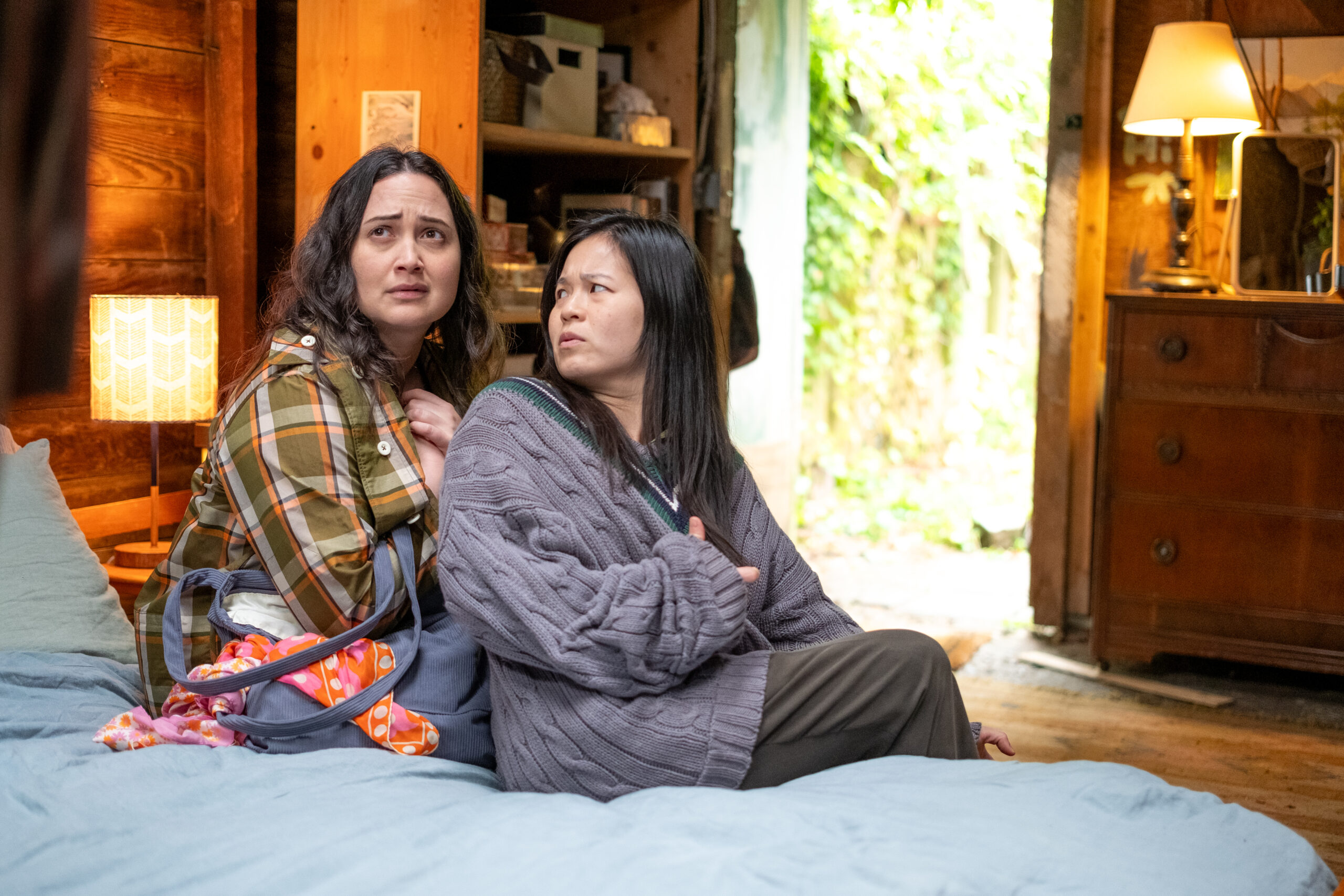
For South Korean actor Han Gi-chan, The Wedding Banquet is his first major U.S. film appearance. However, it is not Han’s first role as a queer leading love interest, as he starred in South Korean’s first LGBTQ drama, Where your Eyes Linger. Taking on the role of ‘Min’ in The Wedding Banquet offered a chance to explore unfamiliar terrain. “I was not an expert in comedy,” said Han. “But now, [receiving] a lot of laughter from the cast, I’m thinking I can be in more of them.”
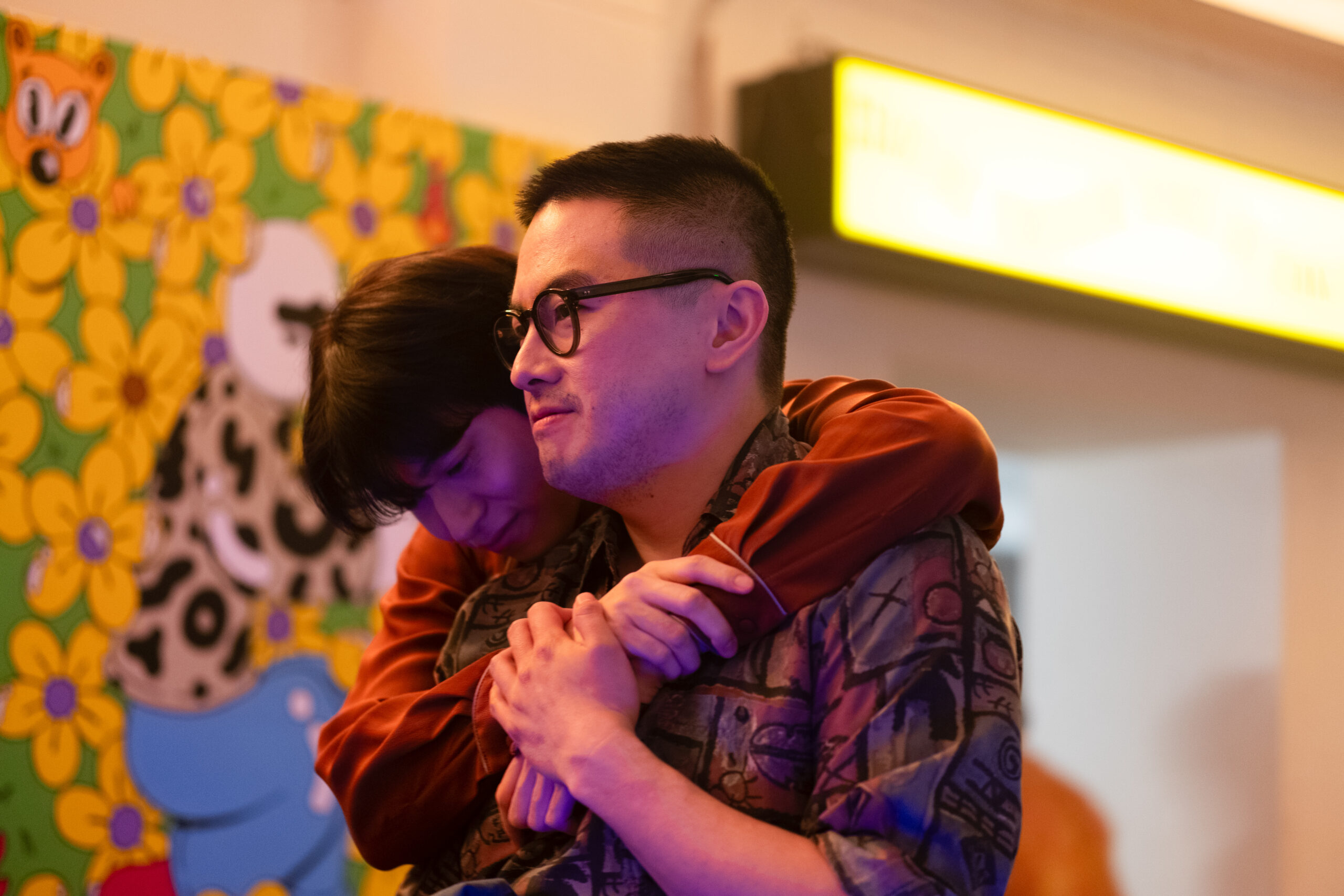
Han’s co-star Kelly Marie Tran was quick to praise Han’s honest approach to the comedic material, especially considering it was in a language that’s not his first. “It’s really a testament to not to play to the comedy [of the script], and just the honesty of it. And he’s so honest.”
Tran shared in an interview with Them, shared that her experience in filming The Wedding Banquet helped her come out as queer. “I don’t want to hide this part of myself that I’m celebrating in this beautiful piece of art.”
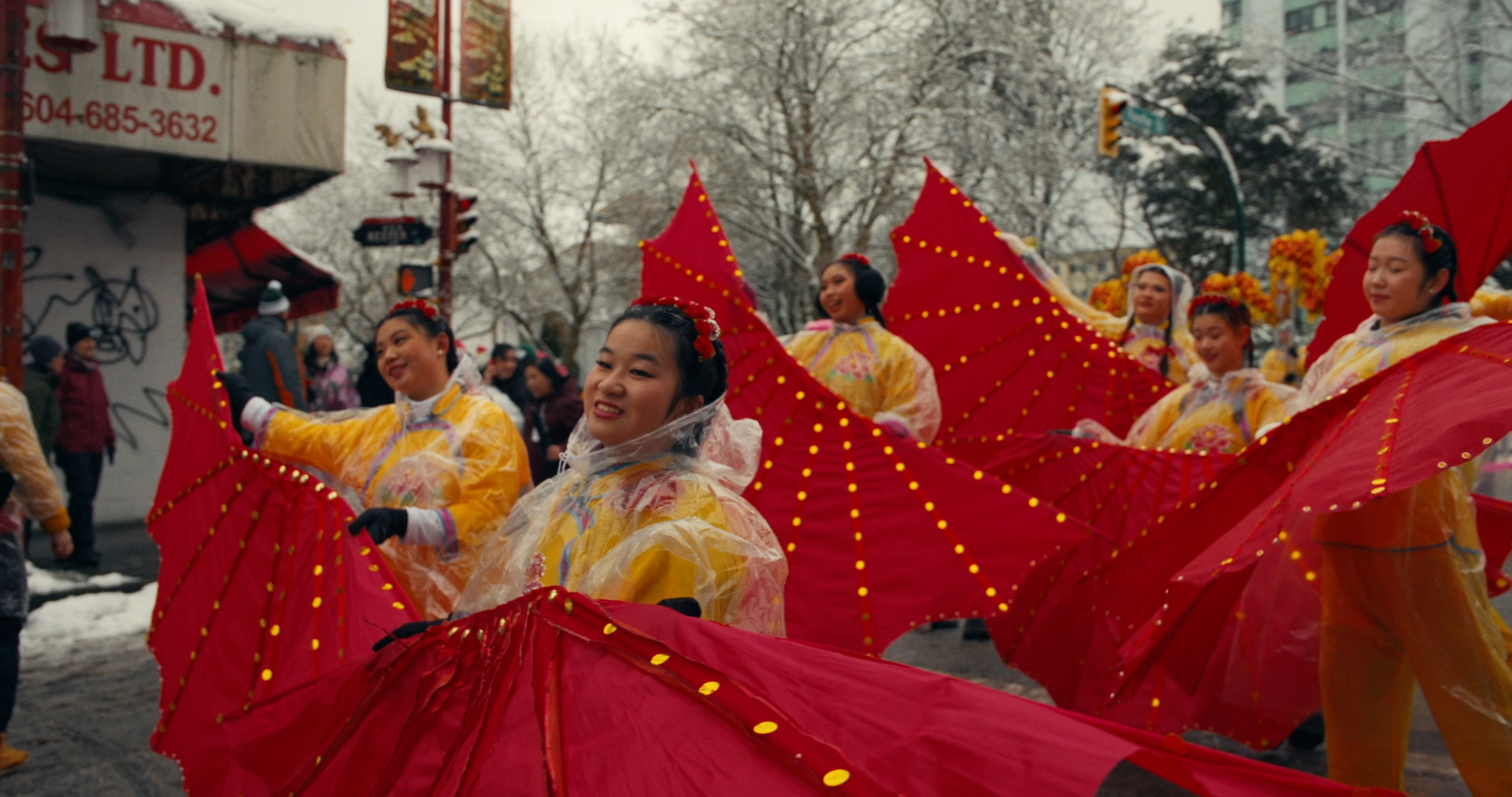
The film also featured a number of queer Asian creatives in Vancouver, including queer lion dancers and artists.
See also: Gender bias in lion dance and the weight of representation for queer lion dancers
Spotlight on emerging talent on screen: Bobo Le shares about her first big role in The Wedding Banquet
Bobo Le, a former competitive breakdancer, followed her passion for acting dramatically by leaving a dental school exam to go to an audition. Since then, she’s landed roles on television, but The Wedding Banquet has been meaningful to her in many ways.
“[The film] has brought me so many firsts: This is my first big movie. And I had just come back from London. It was my first time ever in Europe…and now it’s going to be my first time in L.A.”
She also is grateful for working with fellow Vietnamese actress Kelly Marie Tran. “We have such similar upbringings…and both of us bringing our experiences into this movie, I think it turned out to be something so amazing,” shares Le.
Her role as ‘Kendall’, cousin to Bowen Yang’s ‘Chris’, was initially written as a much smaller part, but when director Andrew Anh saw her performance, he decided to write a bigger part for her to support the story.
Le’s favourite moment of filming was an emotional scene with Bowen Yang, for which they had little time to prepare for. “There was this beautiful spontaneity in that scene that I think really resonated with me and Bowen in the moment and I think it brought out such a beautiful performance for both of our characters.”
See also: Joy Ride brings new opportunities for the Asian Canadian creative community
Andrew Anh on making a career in directing gay and Asian films
The Wedding Banquet is Korean American director Andrew Anh’s third feature film. Since his first feature, Spa Night (2016), the Korean American director also released Fire Island in 2022. In 2024, Anh also directed episodes of Bridgerton and the 2025 series Deli Boys.
“I don’t know if I can make a career of gay and Asian films,” shares Anh ata New York screening of The Wedding Banquet with Ira Sachs, founder of Queer|Art. “I’ve been trying to figure out how I can grow as a filmmaker, gain more resources and pay the people that I work with a liveable wage and still tell stories that feel meaningful to me,” says Anh.
Director Andrew Ahn shaped the film with the attention of someone deeply attuned to the talents of his buzzy cast. “Each one has different needs, wants,” he said. “And I really pride myself on listening.” That instinct to collaborate carried through the film. “I wanted to trust their instincts and allow them to shine.” What emerges is a film that thrives not on a single star turn, but on the careful chemistry of the entire ensemble.
For Ahn, though, the film’s emotional core runs deeper than performance. “How can I be both queer and Korean,” he said, “and have that make sense so I don’t feel like a person split apart, but like one holistic person?” It’s a question that anchors the film—and the kind of identity-rooted filmmaking Ahn believes will remain urgent, even as he notes the growing conservatism permeating U.S. culture.
Looking ahead, Ahn remains cautiously optimistic on the future of queer Asian American cinema. “I have to believe in the people who will keep championing our stories,” said Ahn. “And I’ll keep doing the work, too.”
That work includes mentoring younger filmmakers, like first-time director Niki Ang, and uplifting other queer Asian stories like Nice Indian Body (2024), starring Karan Soni.
“It’s going to be an uphill challenge,” Ahn admits. “But that’s also why I love independent film. You don’t have to answer to corporate America in the same way and you can work to protect the future of cinema culture.”
Watch The Wedding Banquet in theatres in Canada and the U.S. starting April 18th.