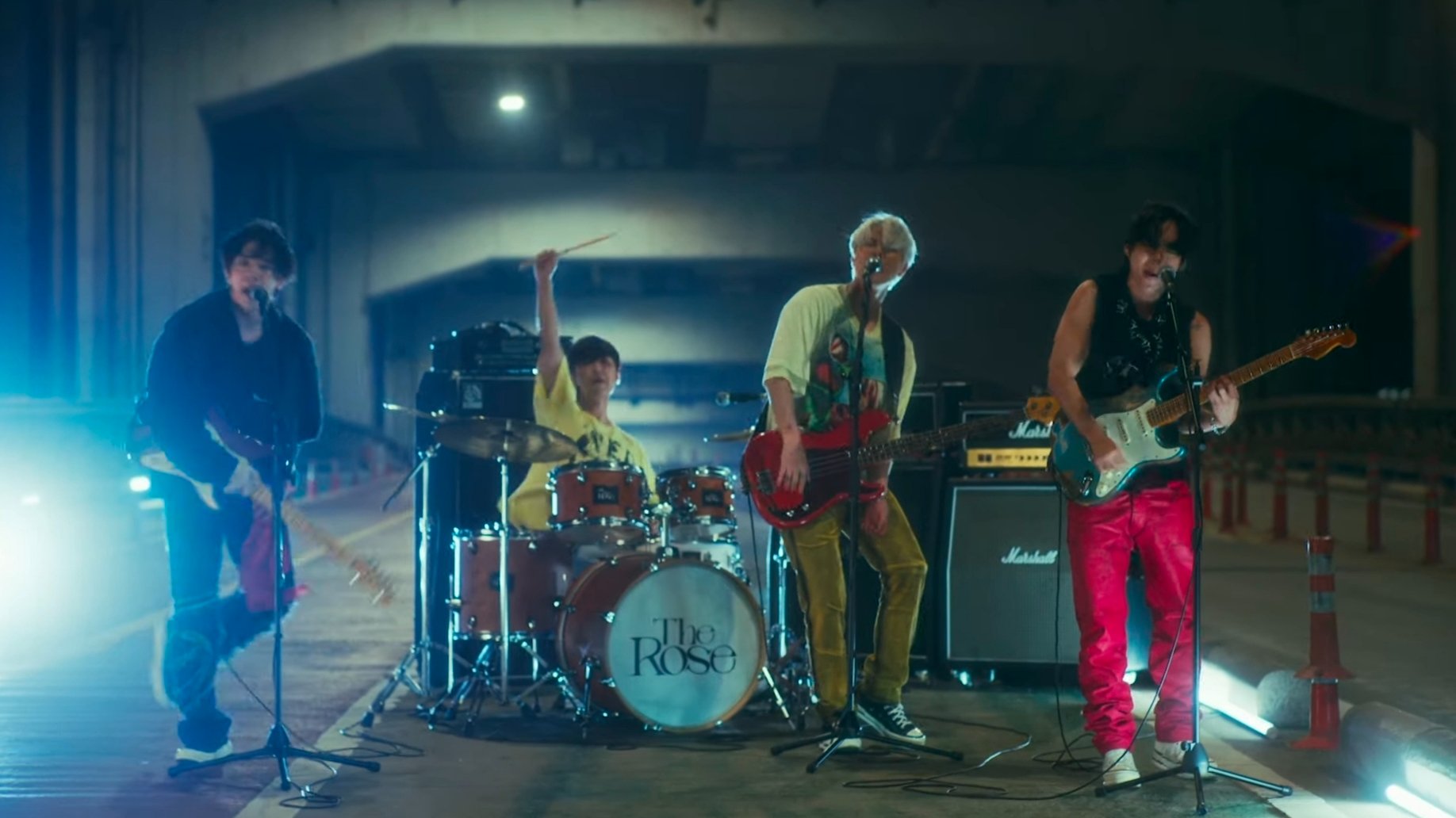
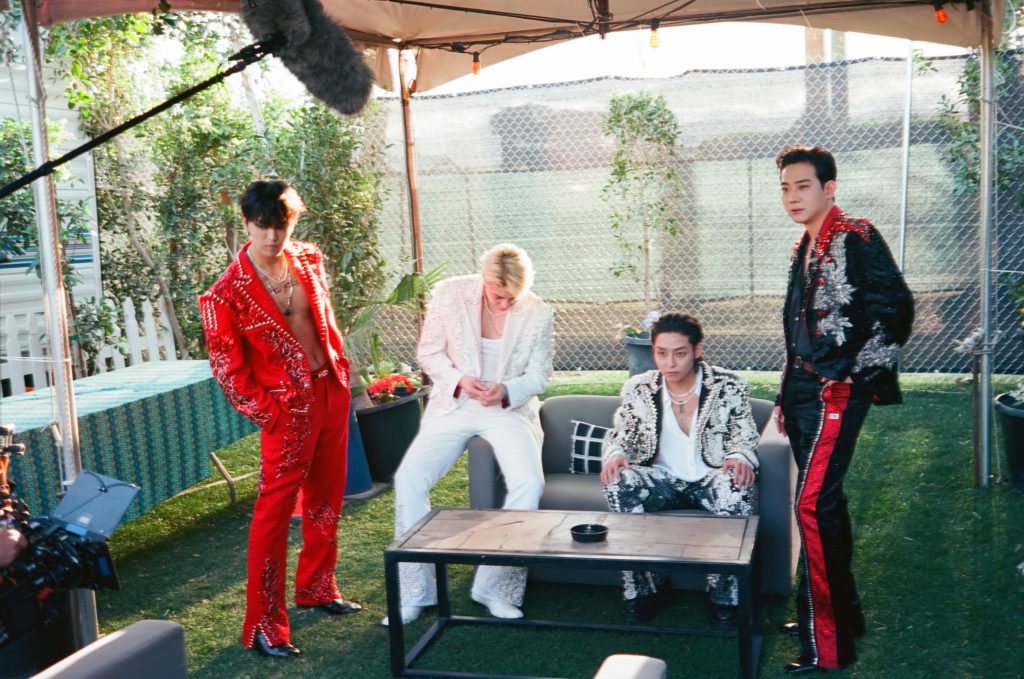
In 2015, The Rose was one of the many musicians busking in the Hongdae neighborhood in Seoul. Less than a decade later, the band performed at Coachella after recovering from a lawsuit and a hiatus that threatened to end their career.
The Rose teamed up with Asian American documentary filmmakers Eugene Yi and Diane Quon to share their story. Yi directed “The Rose: Come Back to Me” and Quon was the producer.
Cold Tea Collective got a chance to interview Yi and Quon to discuss the film, its message, and their hopes for it.
See also: Asian American Documentary Network (A-Doc)
Documentary as a Trojan horse
For both filmmakers, “The Rose: Come Back to Me” was a continuation of their work in sharing diaspora stories. Though The Rose’s documentary can seem like a tangent from their previous works, the filmmakers see the film fitting into their existing filmography.
Quon explained that a documentary often is a Trojan horse. “It’s like you come in to see one thing, and then you realize there’s a message behind it,” she said.
She pointed to “Minding the Gap,” which is a documentary about skateboarding and carries a message about intergenerational trauma. As for “The Rose: Come Back to Me,” Quon hopes to convey a message about mental health and healing.
“It can be hard when it’s a straight social issue film about mental health, but this comes through music first and then the story, and I think that is really powerful,” Quon said.

Yi’s previous work, “Free Chol Soo Lee“, followed one of the first pan-Asian social justice movements in America centered on the wrongful conviction of Korean American Chol Soo Lee.
Though it seems like a leap going from a historical social film to a music documentary, Yi said that both films are about community.
“[The film] is about building this community that became the Black Roses [the fandom] outside of the traditional K-pop system, independently, and the path it took to get there,” Yi said.
The documentary also spotlighted the diaspora community within the music industry. The Rose is managed by Transparent Arts, which was founded by the members of Far East Movement, an Asian American hip hop group known for their 2010 song “Like a G6.”
“As diasporic communities, we are building the foundation of what will be our culture as we go forward,” Yi said. “To sort of see that on a human level was really meaningful.”
See also: Executive producers Jake Hong and Moira Ross on the ‘KPOPPED’ experience
The band, the story
Yi had always wanted to watch a film like this. “I really wanted to see [a film] about Korean artists where they could talk about the real stuff of having built what they built,” he said.
At first, Yi and Quon were unsure how the members would fare during the interview portions of the film. To their surprise and delight, they were incredibly open and honest about everything.
“The guys’ candor and openness was appealing,” Yi said. “It speaks to their independence and that they are forging their own paths.”
Yi also emphasized that the members were able to relax due to the crew creating a comfortable environment for them. In particular, Rich Hama, (Director of Photography/ Co-Producer), and So Yun Um (Sound/Co-Producer), played crucial roles in cultivating a safe space for The Rose.
“Everyone who came on [the film] just loved The Rose and the story,” Quon said.
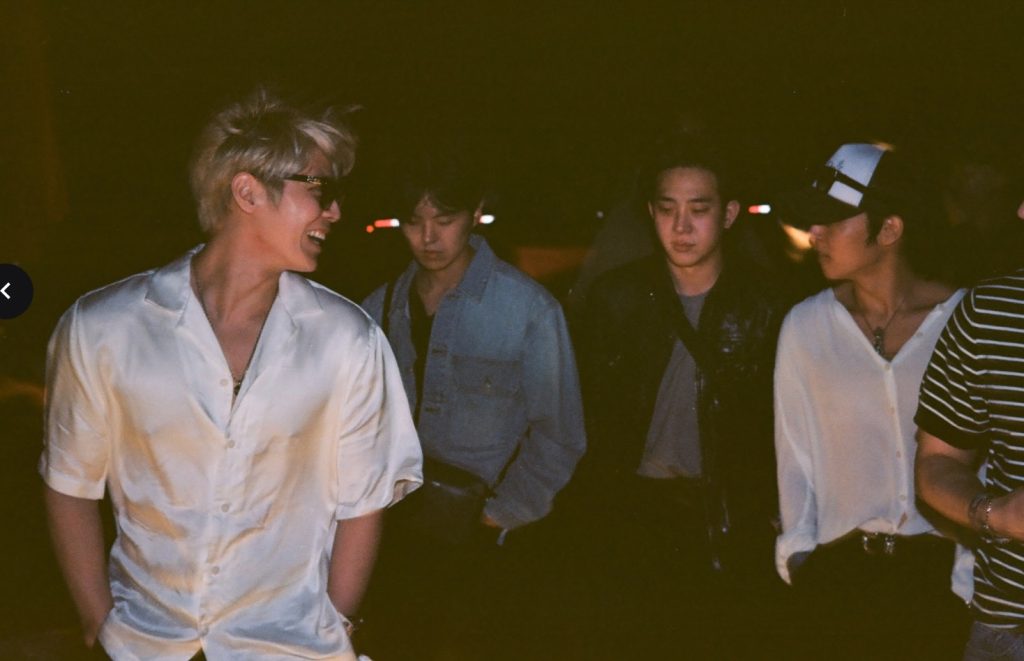
This resulted in vulnerable moments such as the bassist, Jeff, opening up about struggles with his mental health.
“My hope was that [the film] touches young people when they hear Jeff being willing to share his story in such an open way which we don’t usually hear from the Asian community, especially men,” Quon said.
Quon chose to partake in the documentary in large part for a chance to connect with Asian youth. “I hope it reaches young people especially in the Asian community with the idea of following your passion and your dreams and doing it your way,” she said.
“Young people are told to live their lives a certain way … I’m hoping that [they] will not be afraid of following their dreams.”
See also: Celebrating Korean American stories of identity and belonging
Beating the odds
When asked to describe the band after spending almost two years with them, both filmmakers mulled over their answers.
“The Rose is a band that decided to forge their own path, choose their own destiny, and show that there is life after the K-pop system if that doesn’t work out for you,” Yi said.
He also connected it to the story of EJAE, the singer-songwriter from “K-Pop Demon Hunters,” who also began in K-pop, didn’t fit into it, and still found a way to build a career outside of it.
Yi hopes that with more stories of people beating the odds, more people can be inspired to make their dreams reality.
Quon echoed Yi’s description, adding that, “They’re really good guys.” She remembered watching the band’s first performance at Coachella.
“I felt like a proud mom,” she said. “Like congrats guys, you did it, what a beautiful day. To be part of that was really special to me.”
“The Rose: Come Back to Me” is now available in theatres in the United States and Canada. The film will be available globally in cinemas on Valentine’s Day.