2025 has been quite the year for Fawzia Mirza, a writer and director of film and TV who was named a White House “Champion of Change” in Asian American Art and Storytelling in 2016, amongst many more accolades. And it is only July.
In late January, Sundance’s IndieWire Chili Party hosted a panel for Deli Boys where its cast and creator mentioned Mirza’s name as one of the talents they were excited to have worked with; Mirza had directed episode eight of the show which was then released to critical acclaim and wild popularity amongst viewers. Hearing the warmth in their voices, I could tell Mirza was beloved among the South Asian community. Six months later in June, I had the opportunity to attend the New York screening of her debut feature, The Queen of My Dreams. The room, albeit a smaller and more intimate theatre, pulsed with excitement at Mirza’s presence in the same way. Audience members sat enraptured during the Q&A and I saw an influx of social media stories and posts in the next 48 hours that shared a similar consensus of having witnessed a tender, cinematic, and joyous story of love.
“It makes me think that we are craving love and safety, and need to talk about our feelings. We want to cry and laugh and be together in ways that feel aspirational,” Mirza shared with Cold Tea Collective in an interview post-screening.
Mirza is no stranger to crafting layered and emotionally personal work that explores her feelings of love and safety. From her short film The Queen of My Dreams to her one-woman play, Me, My Mom & Sharmila, which explores her relationship with her mother through their shared love for Bollywood heroine, Sharmila Tagore, and now its full-length feature, she has steadily explored the mother-daughter bond, queerness, and memory in various iterations. Each time, she expands the narrative with deeper texture.
While the short was a way to process her “feelings that were jumbled up in [her] head,” Mirza explained that the stage allowed her to take a step further and explore deeper questions, like, “if I knew the 1960s version of my mother, would she have accepted this queer version of her daughter differently?” The feature film allowed her to expand the concept even further: “To fantasize about what could have been. From one experience to collective history, collective memory, collective fantasy.”
That expansiveness is core to Mirza’s story in her feature film. Beginning with the clip of the famous song “Meri Sapno Ki Rani” — which translated is Mirza’s film name from Aradhana — The Queen of My Dreams follows Azra (Amrit Kaur), a queer Pakistani Canadian woman grappling with grief when she learns that her father (Hamza Haq) died of a heart attack. She travels to Pakistan for his funeral rites, and immediately clashes with her mother Mariam (Nimra Bucha). The story then travels through a kaleidoscope of eras: 1960s Karachi, 1980s Canada, and the 1990s after her father’s death. It also features a recurring fantasy sequence of “Meri Sapno Ki Rani” that is shared amongst the iterations of the mother-daughter in all timelines, and snippets from the 1969 movie Aradhana.
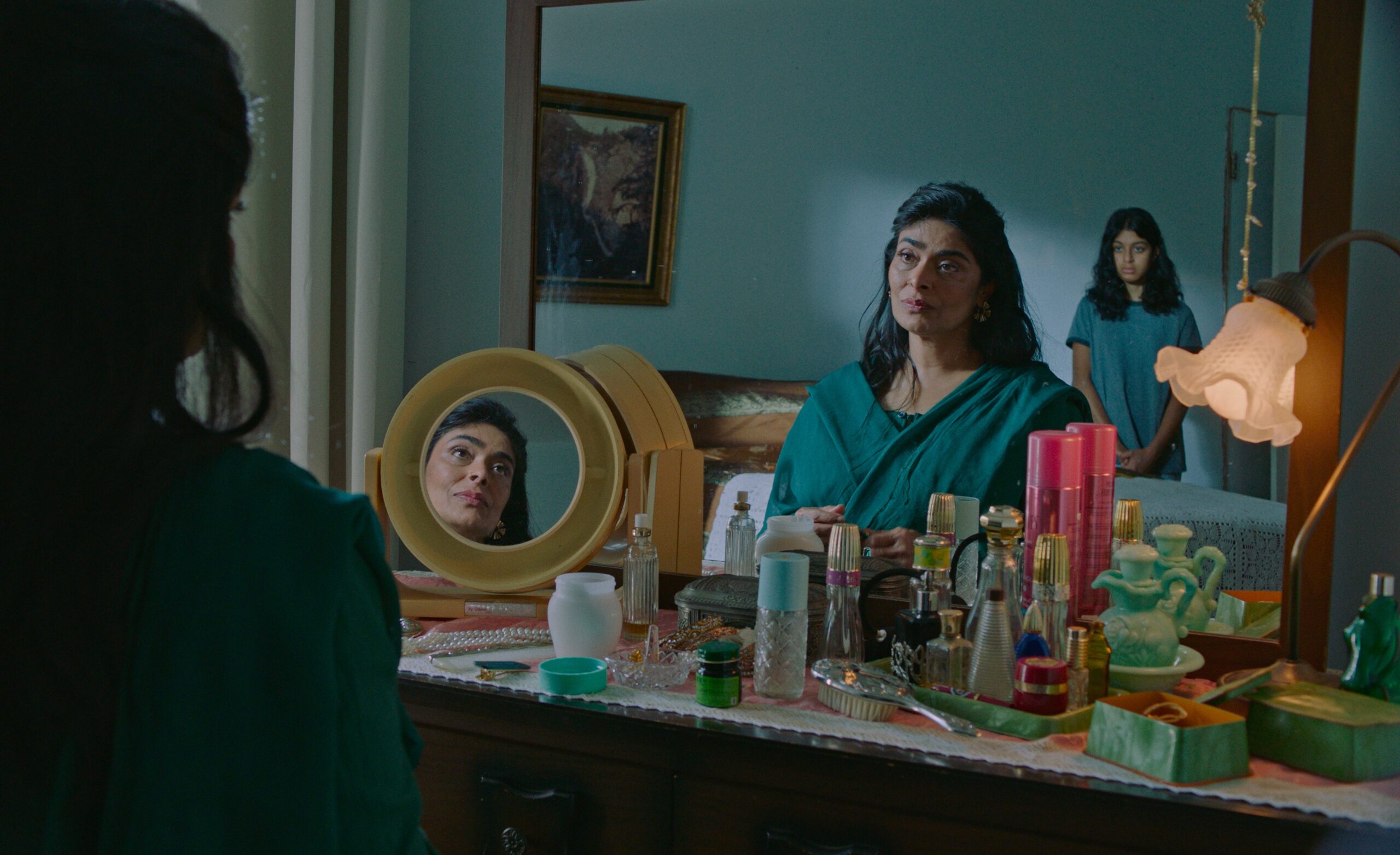
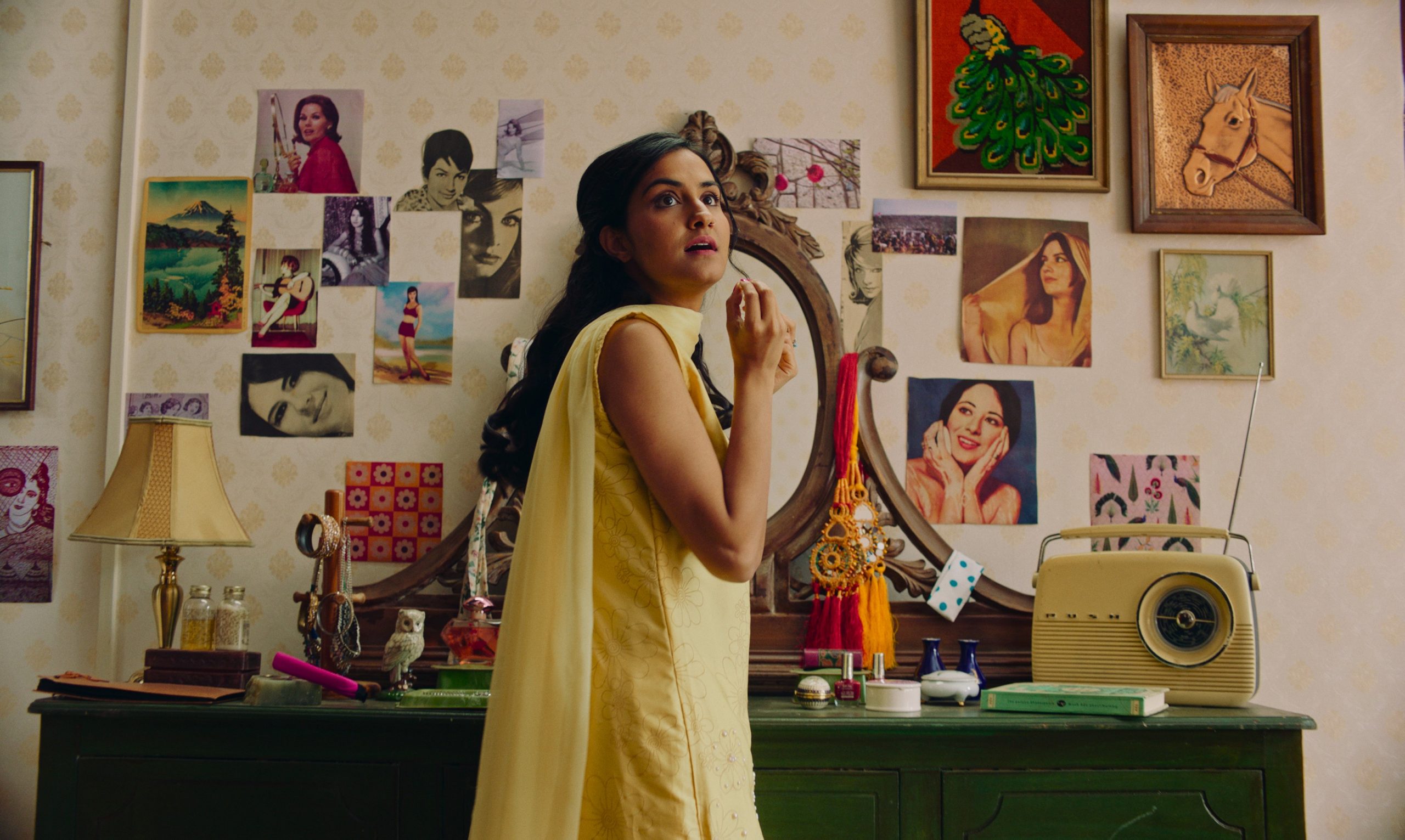
The film’s strength lies in its meticulous details. The 1969 Karachi glows with romantic possibility and bright costuming. Gone is the sepia-toned grit we often see in portrayals of the Global South. “We’re seen through these, like, gritty, edgy, hard, tough lenses. And it’s like, why? Why is that? Why do you need to see it that way? We are vibrant. We are full of love. We are even when during a funeral, there’s so much love in those spaces. We are filling spaces with energy and love and connectivity,” Mirza shared.
That vibrancy was deeply intentional; each era in the film has its own color palette: the Tupperware yellows and greens of the 1980s, the rich jewel tones of the 1960s, and the softness of the 1990s. Music, too, serves as both a character and a timeline anchor, with Qawwali performances and original songs threading through.
Bollywood grandeur shaped the visual and emotional language of film as Mirza cites the genre of film as inspiration. “The aspiration that you see in these Bollywood movies of how big love is, how big our world can be. The grand gesture is the most grand in a Bollywood film. We deserve that. Why can’t we have that in our real lives?” she wondered aloud.
When it comes to the cast, Mirza believes that “there’d be no movie without the work that they did.” Haq, who plays Azra’s father, was the first actor cast, first spotted by Mirza during a virtual Eid gathering. His connection to his father and the stories he had heard about Pakistan from his family, along with his bond with his daughter, made him keen on the role. Nimra Bucha, Ayana Manji, and Pakistani icon Gul-e-Rana round out the intergenerational cast. Amrit Kaur, who plays both Azra and her mother Mariam, in a delightful nod to Bollywood’s older trend of having the men reincarnated as sons, brought “an energy through Zoom” that Mirza found undeniable.
“She sort of came out to me as queer, which she hadn’t really been sharing, prior to that, in, in sort of public space. And so that was really important to me, more so than like, Indian or Pakistani narrative of identity. And was willing to do the work or whether it was work with a dialect coach, work with a dance coach, like she was just willing to take all of it on. And, make that trip to Pakistan,” said Mirza.
The rest of the year is busy for Mirza, who shared that she was in prep and would begin shooting a project four days after the interview. It was recently announced that she would direct the adaptation of Hana Khan Carries On, written by Sahar Jahani and produced by Mindy Kaling’s team.
“Now more than ever, we need to see and support joyous Muslim stories. Muslim stories where we’re falling in love,” she added. “Where we are doing regular things! Sounds so basic, but that is an act of support to watch and support buying tickets for movies that are centering these communities at this moment.”
Mirza’s work bursts with feeling, specificity, and joy, especially at a time when portrayals of Muslim and South Asian communities in mainstream media still feel like works-in-progress. Like Azra and Mariam in The Queen of My Dreams, who surrender to the fantasy of “Meri Sapno Ki Rani,” Mirza shows us that dreaming, when done with this much heart and intention, can be its own kind of revolution.