Shining a light on community at Sundance
This January marked the 40th edition of the Sundance Film Festival in Park City, Utah. It is one of North America’s top independent film festivals that creates opportunities that could change an independent filmmaker’s career trajectory. Sundance is known to be challenging for films to be accepted into the premier festival. After Sundance, many films go to distribution, to box office success, to winning awards.
AANHPI films that have premiered at Sundance include seminal films that have influenced and inspired generations of creatives and audiences alike. Some of these films include:
- Peter Wang’s The Great Wall is a Great Wall (1986)
- Tony Bui’s Three Seasons (1999)
- Justin Lin’s Better Luck Tomorrow (2002)
- Alice Wu’s Saving Face (2005)
- Justin Chon’s Gook (2017)
- Lulu Wang’s The Farewell (2019)
- Gurinder Chadha’s Blinded by the Light (2019)
- Lee Issac Chung’s Minari (2020)
- Alika Tengan’s Every Day in Kaimukī (2022)
- Sean Wang’s Didi (2024)
More than that, having a film screen and premiere at Sundance is an opportunity for narrative change and community building.
Cold Tea Collective attended its first Sundance Film Festival this year and experienced first-hand the power of being in community with those who are relentless in sharing stories for us, by us.
See also: Randall Park on his directorial debutShortcomings: An unusually everyday story
Climbing a steep mountain toward more AAPI representation at the Sundance Film Festival
Aside from getting a film you worked on into the festival, attending the festival to find your community of creatives drives the longevity of the community.
2024 marks the 40th year of the festival and the 20th year of the Asian Pacific Filmmakers Experience’s (APFE) community-building efforts. APFE started in 2002 to support the premiere of films such as director Justin Lin’s Better Luck Tomorrow and many others since. If you’re trying to do the math and it doesn’t add up between 2002 and 2024, it’s because there were two years with no AAPI films selected to screen at Sundance.
“AAPI representation has come a long way since 2002, but there is still more to be done and so many more stories to tell,” says Michelle K. Sugihara, Executive Director of the Coalition of Asian Pacifics in Entertainment (CAPE).
To celebrate this anniversary, APFE hosted social events with creators and filmmakers. In a special collaboration between Gold House, The Asian American Foundation (TAAF) and Daniel Dae Kim’s production company 3AD Media, the “Sunrise Collective” hosted a panel hosted featuring actor Sung Kang.
At this panel event, Kang shared stories of the Better Luck Tomorrow 2002 premiere and his experiences and outlook since.
“Being in a room like this, coming back to Sundance and not having to make excuses for my Asian-ness… now it’s tangible… now there’s possibility. It’s not just this grandiose hope. It’s not easy because you’re ‘Han’ and have nice hair,” jokes Kang, referencing his role in The Fast and the Furious series, causing event participants to laugh.

Another celebrated filmmaker who shared their stories at Sunrise Collective events was Tony Bui, whose film, Three Seasons, premiered at Sundance in 1999. Bui was 24 years old when he filmed and directed the first-ever American film to be made in Vietnam after the U.S. Government lifted the embargo. Three Seasons was also the first-ever film in Sundance history to win both the coveted Grand Jury Award Prize and the Audience Award.
Fast forward to this year, 29-year-old Taiwanese American filmmaker Sean Wang’s Didi won the U.S. Dramatic Audience Award and U.S. Dramatic Special Jury Award for Best Ensemble Cast. Focus Features, a production and distribution company, quickly acquired the film for worldwide distribution rights. Wang, now a Sundance award-winning filmmaker, learned that his 2023 short film, Nǎi Nai & Wài Pó, was nominated for an Academy Awards Oscar while at Sundance.
Reaching new heights for AANHPI community at the Sundance Film Festival
At independent film festivals, it’s not uncommon for folks to travel from far and wide to attend, support, and collaborate in hopes of having a film screened at Sundance one day.
“Film is a collaborative endeavour,” says Tracy Held, Vice-Chair of the Writer’s Guild of America’s Asian American Writers Committee. “You can’t do anything by yourself, and even if you could, you shouldn’t,” says the Chinese and Eastern European American writer and co-founder of the film production company Erosion.
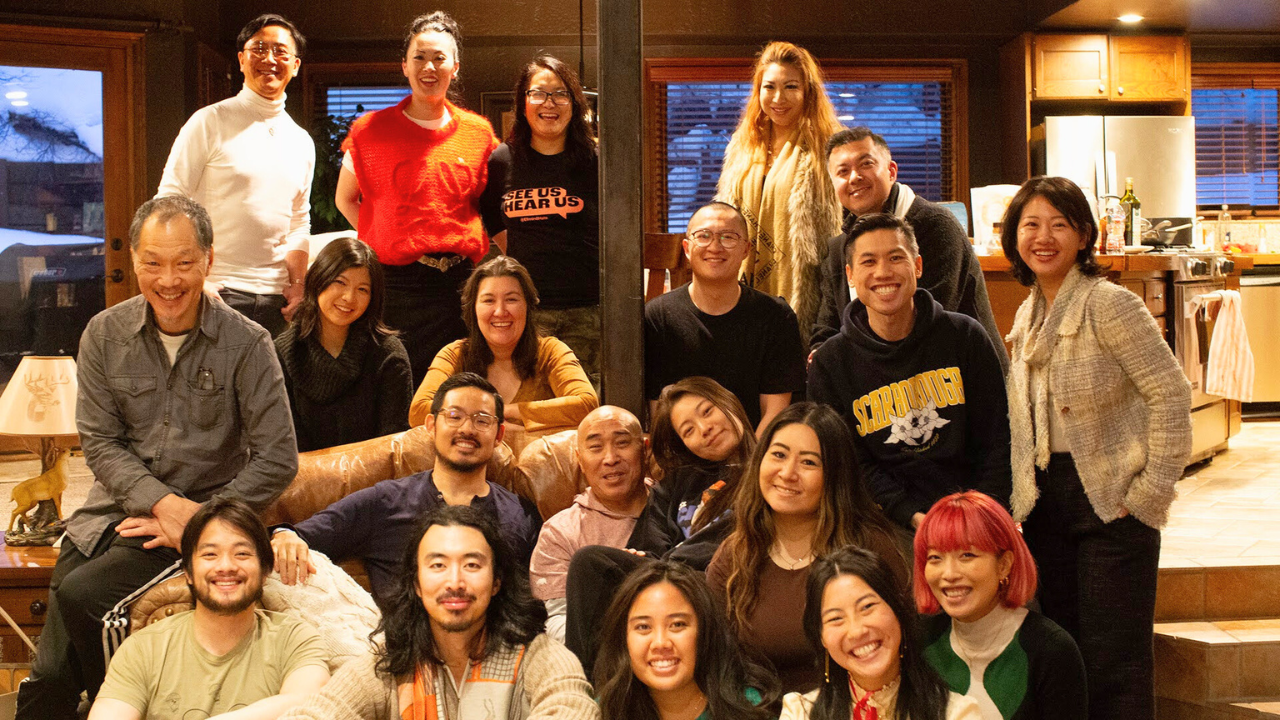
Held was one of 16 guests—all AANHPI creatives— who stayed in a chalet accommodation hosted for the third year by Yao King, a generous patron and supporter of the AANHPI community across various industries.
When asked why he wanted to host AANHPI filmmaking creatives at no cost to them, King shared a story about how he learned about the community’s need for accessibility to and at Sundance.

In 2020, King had just completed a number of #GoldOpen activations, where he supported AAPI film success by purchasing tickets and inviting people to watch and connect, contributing to box-office success and community-building. Films such as Crazy Rich Asians benefited from this, which sparked a curiosity for him to learn how they could make a difference at an individual level.
When Sundance came around, King learned that even recognizable AANHPI actors and industry leaders had no financial support to attend Sundance, even if they had a film in the festival.
With his own resources and a desire to help, King and fellow supporters aimed to increase accessibility for AANHPI creatives to attend and connect without worrying about financial constraints.
CAPE was also a co-host of the chalet in 2023 and 2024. “The idea was to bring people together who may not normally meet and to build community,” said Michelle K. Sugihara, Executive Director of CAPE.
Creating space for inspiration within the AANHPI community
I had the opportunity to drop by and meet those staying at what was called the “AsAm Creative House”.
There, I met creatives whose work fueled my drive to grow Cold Tea Collective. This included cast members of Marco Polo – a show that was canceled far too early, in my opinion –and launched the careers of many notable AANHPI actors who have found more success since.
“I woke up from a nap and found Benedict Wong in our kitchen?!” shared first-time Sundance attendee and queer Chinese Canadian writer-director Christopher Yip. He attended Sundance hoping to meet fellow directors and filmmakers at a similar career level.

Yip describes the house as a gathering place for Asian powerhouses from all walks of life. “It was an honor to meet people I admired and have a family of friends to come home to during the festival. Most of all, I felt so seen,” said Yip.
Ron Yuan (The Brothers’ Sun, Mulan) was also seen at the house. Yuan was attending Sundance for Freaky Tales, for which he was the action director. I was lucky enough to be at the house while he shared stories from his auditioning and filmmaking experiences across his 40-plus-year career and the challenges he faced as an Asian actor.
Perry Yung (Warrior, John Wick 2) and Olivia Cheng (Warrior, See, Marco Polo), were also at the house to give and receive feedback and support graciously to the community.
See also: Olivia Cheng talks breaking new ground in Warrior and in real life
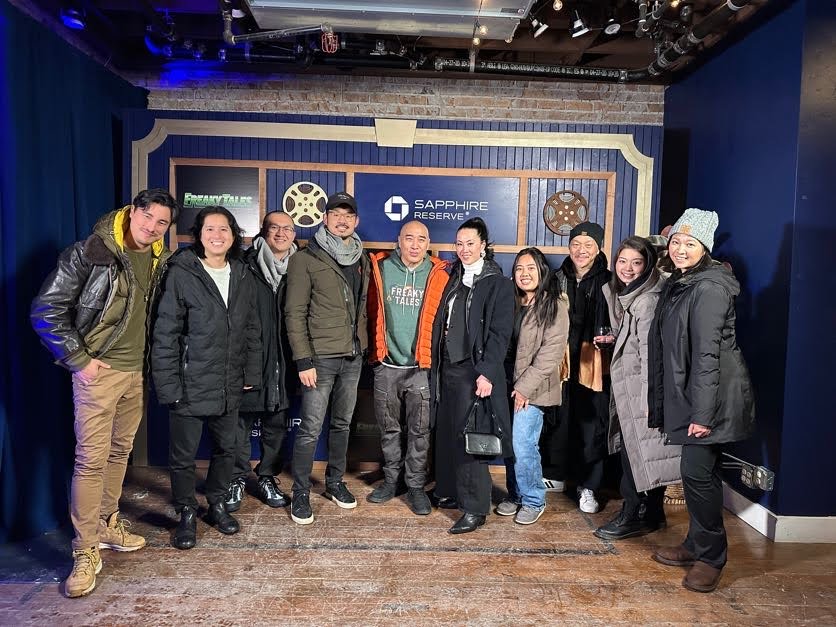
Chinese Canadian actor and filmmaker Osric Chau (Supernatural, Arrow) was also at the house. Upon one of my visits, I found Chau sharing stories and tips with fellow house guests at the beginning of their filmmaking journeys. And the inspiration went both ways.
“Sophia Wu was from D.C. There was no real film community in her area, so she found a friend in North Carolina and started their own young filmmakers community, Catalyst Production House, and is building that from the ground up – that inspired me,” shared Chau.
Continuing momentum up the mountain
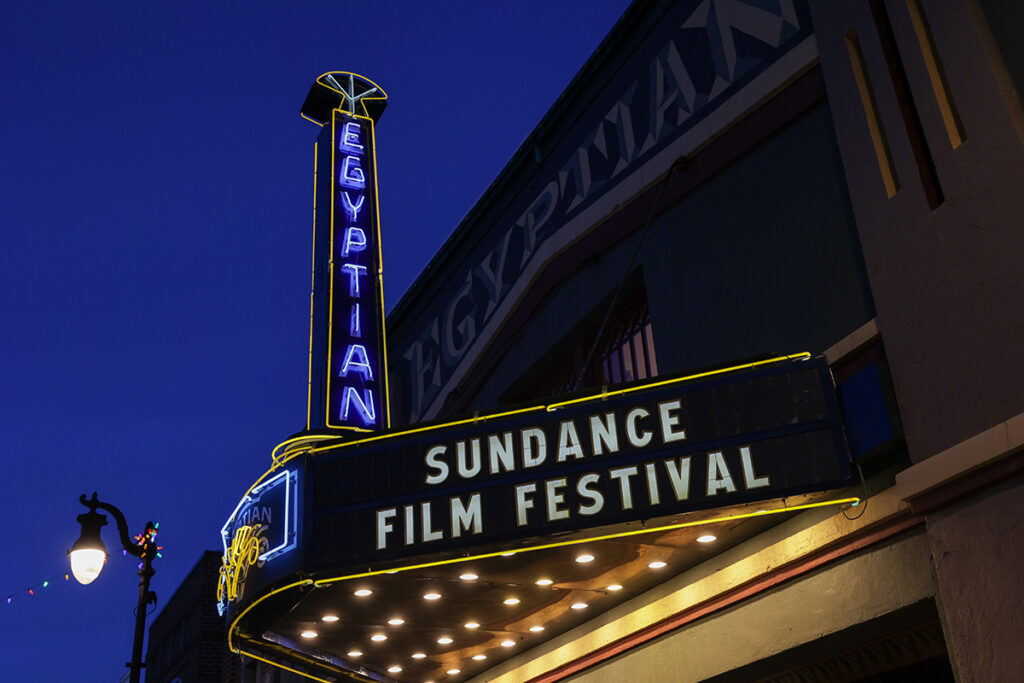
We have much much to celebrate from the 40th anniversary of the Sundance Film Festival, but what’s next? It’s up to all of us to take the lead in our own stories and grow together.
Having worked in the industry for over 20 years, Chau feels it is a privilege to be at Sundance and praises organizations such as CAPE and the Sunrise Collective for their efforts to build inclusive, accessible opportunities for AANHPI creatives.
Collaboration also took place across various BIPOC communities at Sundance. CAPE’s Sugihara shared the stage at the Latinx House in partnership with Illuminative and Nielsen.
Nielsen also announced and celebrated the release of a new feature called “Diversity Spotlight” on Gracenote. The new media content technology platform tracks metadata to empower media industry decision makers with information needed to create more diverse and truly representative work. The new feature uses insights from “IllumiNative, Gold House, RespectAbility, National Hispanic Media Coalition (NHMC) and CAPE (Coalition of Asian Pacifics in Entertainment) to highlight people and projects that meet a range of diversity-specific criteria and open new casting, funding and collaboration opportunities.”
Gold House also announced the “One House Filmmakers Fund” to benefit ten diverse filmmakers. The new fund features unrestricted funding, collaborative mentorship with established filmmakers and industry executives, skills training, comprehensive business-building support, and support from Gold House and partners throughout the year.
Held recognizes that our success today doesn’t necessarily guarantee our success as a creative community in the future. “In this industry, which is so volatile, the thing that helps us all reach our goals is finding ways to work together.” To describe her experience at Sundance with a feeling, she landed on the word “purpose.”
Yip acknowledges the importance of attending festivals such as Sundance. “It’s easy to get stuck in your own world in this industry,” he said, asking himself questions like “Am I doing enough? Are my dreams too big?” But through supportive conversations, he felt affirmed in where he could go.
“Chatting with my housemates inspired me to dream bigger. And hearing from titans like Lucy Liu and Steven Yeun share about their everyday struggles helped me feel less alone and grateful for all the work they’ve done for us to be where we are now as a community.”
See also: Lucy Liu on overcoming the assumption of success
Disclaimer: The content in this article has not been pre-reviews, approved or endorsed by Discover.