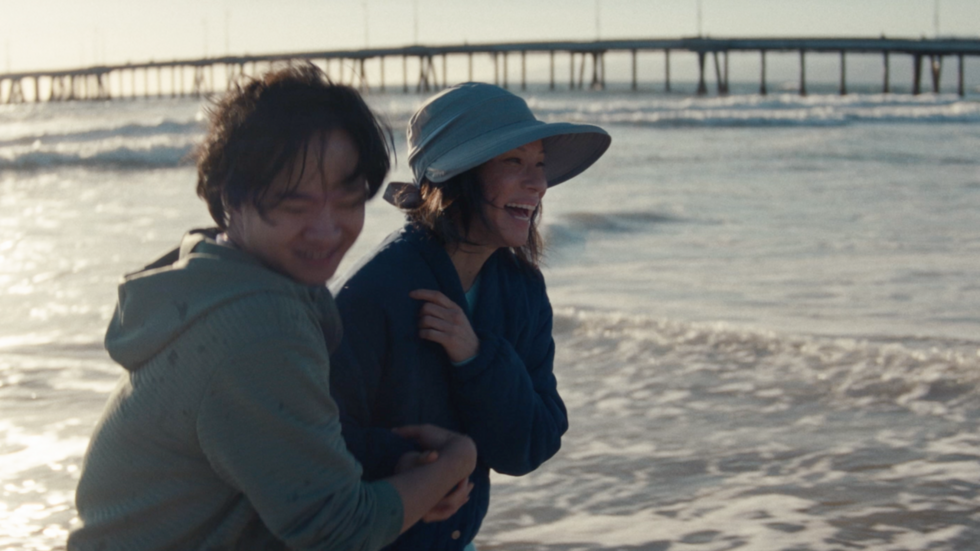
Interview with cast and creators of Rosemead, a film based on true events and a reflection on mental health in the Asian American community
Rosemead: a community within Southern California’s San Gabriel Valley, home to just over 51,000 residents in 2020, with over 60% of residents identifying as Asian. Home also to the Hang family, whose story made headlines in 2017.
Inspired by journalist Frank Shyong’s Los Angeles Times article on the real-life Hang family tragedy, Rosemead the film stars Lucy Liu in a devastating performance as a terminally ill Chinese immigrant widow grappling alone with her teenage son’s (Lawrence Shou) schizophrenia and growing obsession with mass violence cases in the U.S.. In a community where mental illness is rarely discussed and often left unsupported, her son’s condition worsens while she’s pushed toward an increasingly isolating, desperate—and, ultimately, divisive—decision.
Directed by Eric Lin, Rosemead made its world premiere at the 2025 Tribeca Film Festival in New York City. We spoke with Lin and cast members Lucy Liu, Lawrence Shou, and Madison Hu at the premiere and heard more from producers Mynette Louie and Andrew D. Corkin on the film during a post-screening Q&A.
“The way a lot of people heard about this story was just the headline…writing the film was like an emotional detective story,” shares Lin.
“We understood the act. We understood what happened. We had the facts of the case. But we knew that the reason she did this was out of love. So we had to ask—what did she experience? What state was she in?” These questions sit at the heart of Rosemead, shares Eric Lin.
At a tight 97 minutes, the film is as brisk and biting as the article that inspired it, putting us directly into the headspace of Lucy Liu’s Irene.
Watch clips from our interviews from Tribeca Film Festival and continue reading below.
See also: Sandra Oh and Keira Jang in “Can I Get A Witness?”
Rosemead – a true story of family, love, mental health
“I think [Rosemead] is incredibly meaningful because it’s based on a true story, and it’s something that we really want to highlight to the [Asian American] community—to know and to understand and to embrace,” Liu tells me. “If this wasn’t based on Frank’s article, no one would believe that it could be true.”
As a Chinese American born to immigrant parents in the very part of Los Angeles where both the film Rosemead and the real-life events took place, I admit to Lin that I am shocked I hadn’t heard the Hang family’s story before watching the film.
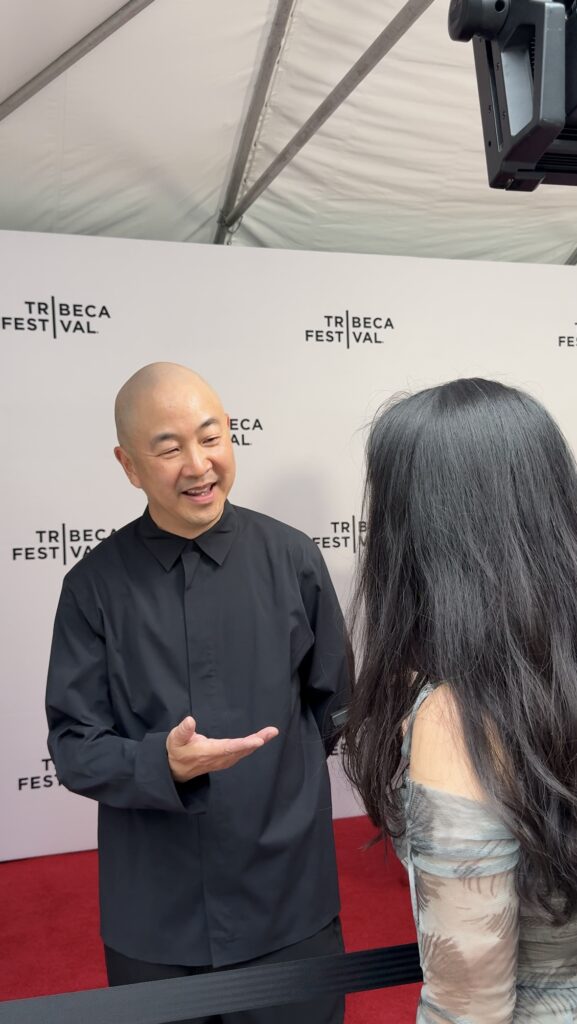
Growing up, I was acutely aware of the mass shootings across the U.S. that Shou’s character fixates on—ones where white perpetrators were at the center. Those were the tragedies that persistently dominated the mainstream headlines.
But producers Andrew D. Corkin and Mynette Louie did hear about it—through a Los Angeles Times article. And according to Corkin, he “couldn’t shut up about it.”
“When I first read it, it just sat with me,” he says. “I’m not a parent. This isn’t my cultural community. And yet the story just… it grew inside me. I told everyone about it. And the next step was: I wanted to tell more people.” That led him to working with Louie on this project starting in 2017.
The next year, Marilyn Fu joined as the screenwriter. By 2019, Eric Lin had signed on to direct, with Lucy Liu attached to star and produce.
Liu also recently shared about her relationship with her parents and lessons she is passing down to her son at The Asian American Foundation’s (TAAF) Summit in May in New York ahead of Rosemead ‘s premiere.
Rosemead film – a first for many
Rosemead is a first for many. It marks Lawrence Shou’s feature acting debut, Eric Lin’s directorial debut, a rare dramatic lead role in a film for Lucy Liu, and a conversation about mental health in the Asian American community that could very well make its way to awards season—Variety’s early Oscar 2026 predictions names Liu among the five “Best Actress” contenders for this film.
Shou’s self-tape stood out among casting submissions, Liu recalls. “He has this magnetism about him and the suppleness that we really needed for the character—and he brought that to life well and so beautifully.” Though this is Shou’s first film, Liu says that “Lawrence really had it together on his own [and] didn’t need much from me.”
When I ask Shou about his self-tape, he remembers submitting three emotionally-charged scenes. “I definitely had to scream,” he says. “There were some pretty intense moments. I was in a state.” To prepare for this role, Shou and director Lin interviewed psychiatrists and would watch documentaries and Youtube videos about people suffering from schizophrenia.
Director Eric Lin, best known for his cinematography work—most recently on the drama Transplant starring Eric Nam—is also stepping into new territory with Rosemead. Madison Hu, who plays one of Shou’s friends in the film, tells me: “Eric and his cinematographer, Lyle Vincent, were really good friends, and their language was so shared. I had never seen anything like that before.”
See also: Breaking generational barriers about mental health in a Vietnamese family
Rosemead’s Lucy Liu and Lawrence Shou on forming a mother-son bond
Though everyone involved with making Rosemead was aware of how the real-life events ultimately concluded, for both Lucy Liu and director Eric Lin, love was always at the forefront of the story—and that shaped how they approached the film from the start.
“They would just assume that she’s a monster,” Liu adds. “But the reality was that she loved him beyond words, and she was just afraid to leave him without her care and attention.”
“We didn’t want [Liu and Shou] to stay apart before filming,” Lin says. “We needed that casualness, that familiarity, because the story begins with them as a close family unit.”
Liu and Shou quickly formed a close relationship. “Lucy is probably one of the easiest people you’ll ever form a bond with,” Shou tells me. “She was my mom on set, but also when we weren’t filming. She guided me through everything.”
“I just wanted to make sure he didn’t get mugged in New York…and that he stayed warm,” laughs Liu.
“Sometimes you just have an ingrained feeling about somebody,” Liu says. “We ran lines, talked about scenes, worked through some of the Chinese. Ultimately, it’s a love story—and we were lucky to have that natural chemistry.”
See also: Lucy Liu on overcoming the assumption of success
Personal connection serves as a powerful motivator in making Rosemead
Despite the heaviness of the material—and the eight-year journey to make it that was plagued by filming and financing challenges—producer Mynette Louie shares that everyone involved with the film felt compelled to take on the challenge. She describes the process as “an uphill climb.”
“None of them did it to make money,” Louie says. “They all did it because they had their own story of a family member or someone close who struggled with mental health.”
For Louie, that story was her sister, whom she lost. For Lawrence Shou, his mother works in a youth mental health facility.
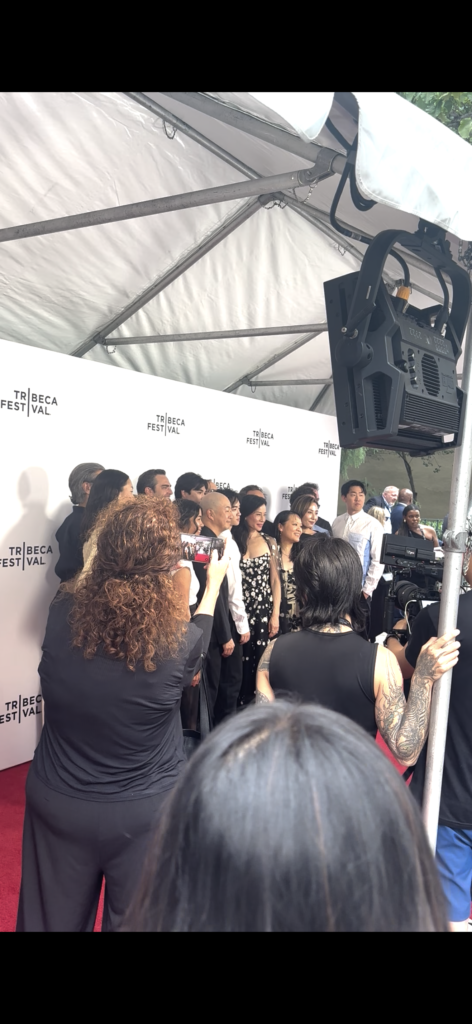
When casting for Shou’s character of Joe, Lin admits that he was worried what he would have to put the actor through and made sure to regularly check in with Shou and ensure he could return to normality whenever he left the set.
When I ask Shou what it was like for the challenging role of Joe in Rosemead to be his film acting debut, he laughs knowingly. “I remember talking to my friends about it, and they looked at me like I was crazy,” he said. “They were like, are you serious? This is your first movie? This is what you’re going to do for the next few months? And I was like, yeah… It’s challenging. Yes, it’s something I’m new to, but it’s so important. I knew I had to get this done.”
Shou credits finding joy in the everyday mundane as his biggest self-care tip—both while filming Rosemead and in his day-to-day life. For him, that means “having conversations with friends, going out to brunch, taking a jog”—simple routines that help him stay grounded and “feel normal.”
See also: How I overcame cultural expectations to regain control of my mental health
Why Rosemead needs to be seen
If there’s one thing the team behind Rosemead hopes to leave audiences with, it’s this: the importance of talking about mental health, especially in Asian American and immigrant communities where it’s still deeply stigmatized.
For Liu, the film’s impact on the Asian American community is what matters most: “The potential of this film being released to our community and sharing it was really my number one priority.”
“Putting a name on mental health issues is not a bad thing,” Hu tells me. “It’s the first step to getting help.”
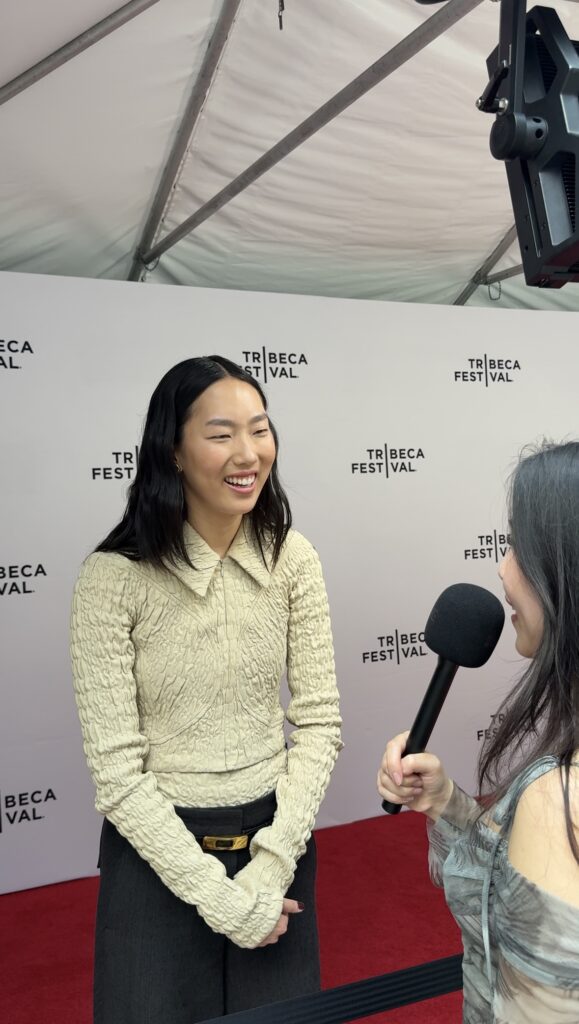
Shou agrees. “I really want people to have a conversation. Mental health is not talked about in our communities. And if this movie can change that—even a little—that’s a huge win.”
Producer Louie adds: “The film doesn’t end where it ends. The goal is for it to live outside the frame. Everyone has an experience with mental health. We want people to feel less alone.”
As the credits roll, my whole row is in tears. The cast and creative team goes onstage for a quick Q&A. It’s a slow trek to get out of the theater as attendees rush to the front to take photos and chat to the cast. Actress Julia Fox passes by Shou and praises his performance: “I can’t believe it’s your first film.” I make my way out of the theater and immediately call my parents. I need to talk to them about this film.
See also: Filling gaps in the mental health space for the Asian diaspora