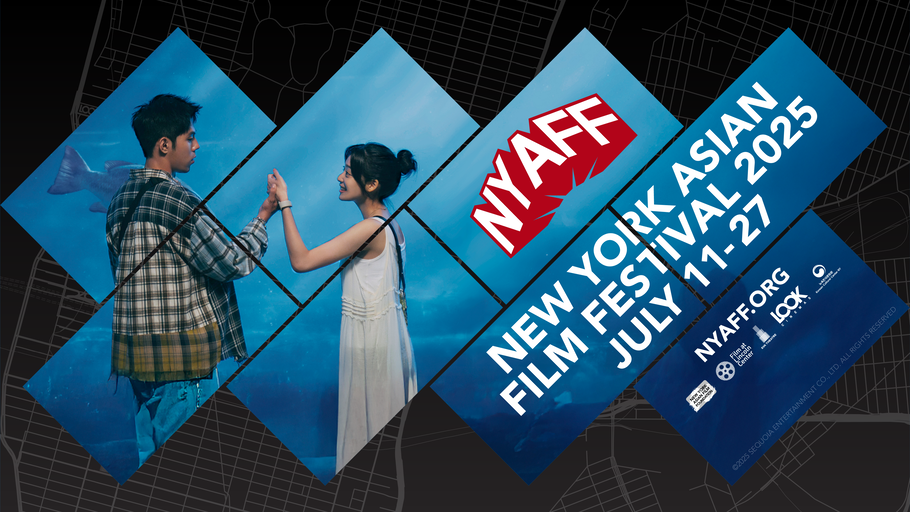
Now in its 24th year, NYAFF is a staple for filmmakers, actors, and moviegoers to convene and enjoy the latest and best upcoming films from Asia. Although it calls New York home, the festival has also expanded its connection to the film industry in South Korea, Hong Kong, and the Philippines.
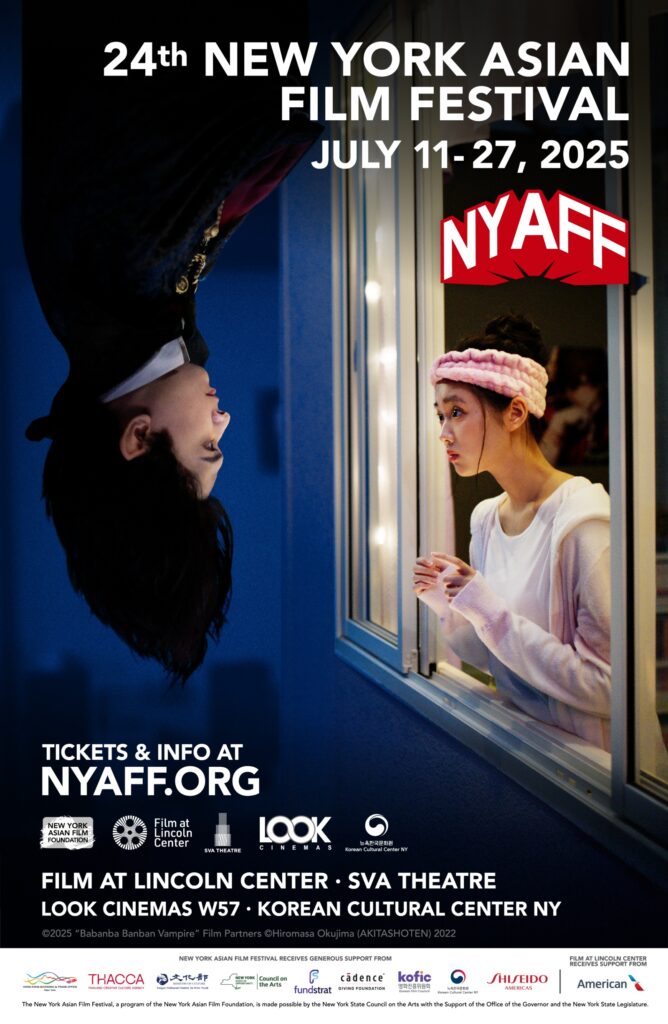
Cold Tea Collective is a proud media partner of New York Asian Film Festival 2025 (NYAFF). This year’s festival runs from July 11-27, 2025, with screenings across six venues in Manhattan.
To celebrate NYAFF 2025, Cold Tea Collective chatted with Samuel Jamier, NYAFF executive director, about the evolution of NYAFF, its global reach, and his hopes for Asian cinema.
The early days of New York Asian Film Festival
For Jamier, when he first joined the festival, he described NYAFF as very much a renegade operation: raw, passionate, and chaotic in the best ways. “The organization was essentially a group of cinephiles dedicated to bringing the wildest, boldest, most bizarre, and overlooked Asian films to New York audiences,” he says. “The festival was all about dragging in films no one else dared or cared to show. We didn’t have a long-term roadmap or a business model—just instinct, passion, and credit cards. We hoped for the best and mainly that we wouldn’t go broke.”
Jamier shares how, over the years, NYAFF evolved from a “scrappy underdog into a recognized cultural institution.” “The programming became sharper and more expansive, not just about flicks where fists break bricks,” he shares. “Our partnerships became more strategic, and our ambitions more global.” Despite the festival’s evolution and popularity among Asian stars, it has never lost its core: an unapologetic, no-holds-barred spirit. For Jamier, he reflects on how the festival is “just louder, better dressed, and more deeply connected to our communities than ever — the most important part.”
“We look for stories that are real, that move you, not films engineered to impress. There’s a kind of internal pressure, an emotional logic, that good cinema has.”
Gaining industry traction and growing as a film festival
Over the last decade, several key moments marked the rise in NYAFF’s popularity and recognition as a film festival with legitimate industry traction.
In 2013, NYAFF honored Jackie Chan with its Star Asia Lifetime Achievement Award. His appearance at the festival significantly boosted NYAFF’s global visibility and marked a turning point in how the industry and audience perceived the festival. Not long after, in 2015, major directors and actors began attending the festival as fixtures on the film festival circuit. Jamier says, “Suddenly, they were here with us: actors and directors like Shunji Iwai, Yuen Woo-ping, Dante Lam, Lee Jung-jae, Lee Byung-hun, Anne Curtis, and Yaya – essentially established industry giants and legends in Asia.”
Since its beginnings as a niche passion project to one of the most respected platforms for Asian cinema in North America, Jamier attributes the festival’s growth to its consistency, conviction, and determination, “We’ve always taken risks, not just in terms of programming genre films but also championing films from countries that, frankly, the West hadn’t paid much attention to,” he says. “We don’t really ride trends or chase after the fashionable or the zeitgeist. You’re either in it for the long game, or you’re not. We often premiered first-time directors long before anyone was watching.”
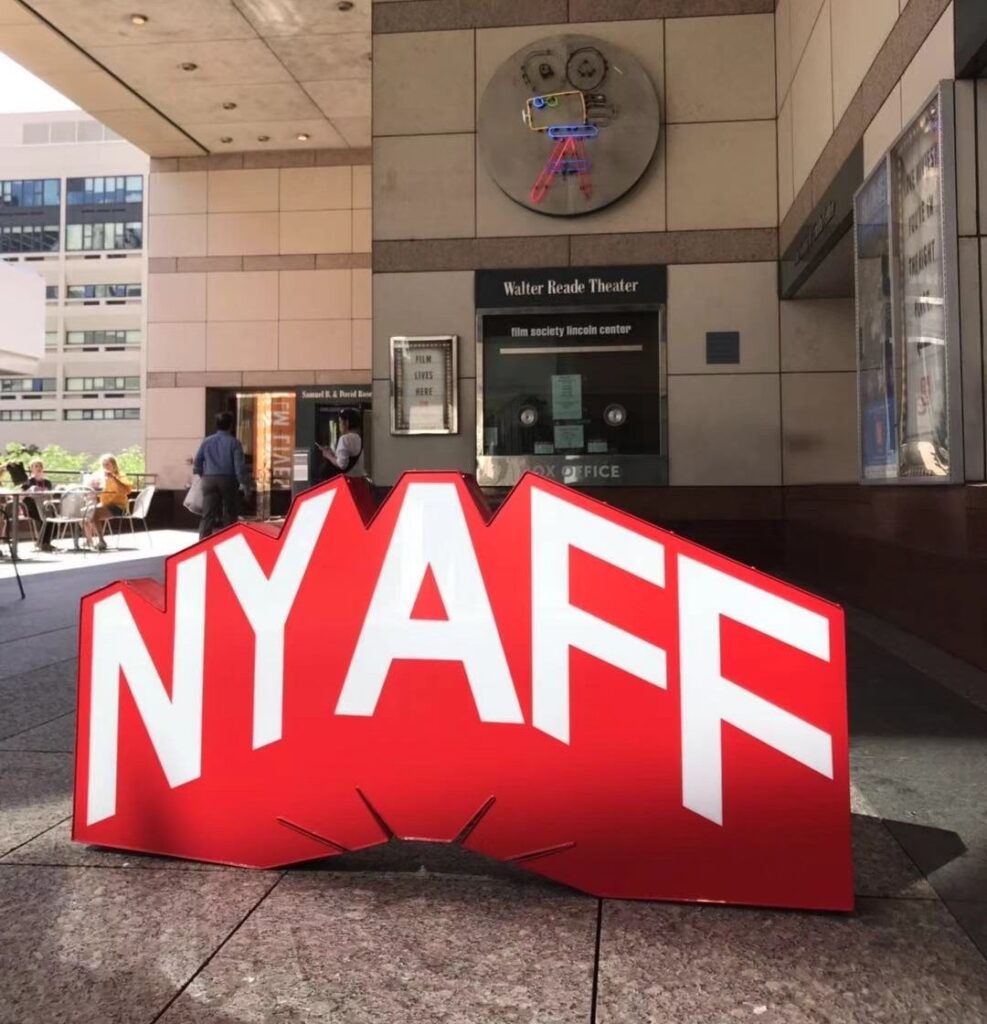
NYAFF’s programming was always authentic and objective, which helped build the trust of the audience and filmmakers. “We don’t try to fit Asian cinema into tidy, palatable boxes. NYAFF celebrates the weird, the widely imaginative, the impossibly bizarre, the genre-defying, the stubbornly rebellious,” shares Jamier. “We’ve created a space where a Filipino noir can sit alongside a Korean melodrama or a Taiwanese queer coming-of-age story…These aren’t sidebars or token additions – they are central to the evolving future of Asian cinema and storytelling.”
Now in his tenth year leading NYAFF as an executive and creative voice, Jamier recognizes the power of listening when it matters more than speaking. “Sometimes, the quietest audience reactions, like when people stay in their seats long after a film ends, are the most powerful signs that maybe, just maybe, you’re doing something right.”
How does NYAFF pick programs that emotionally connect with its audience? Jamier explains that the festival “looks for stories that are real, that move you, not films engineered to impress. There’s a kind of internal pressure, an emotional logic, that good cinema has.”
Asia’s biggest stars at NYAFF
NYAFF’s reach stretches far beyond Manhattan and New York City. The festival evolved into a brand, and its influence in Asia has enabled many of its biggest filmmakers and actors to visit New York City for the two-week celebration.
Jamier recalls, “It hit me when I was travelling [in Asia], I saw a film poster proudly featuring our NYAFF laurel. Another time, in Tokyo, I spotted a guy getting on the metro with a NYAFF tote bag. That’s when it clicked: we’re not just a festival anymore—we’re a brand.”
With stars and celebrities visiting New York City and NYAFF, Jamier admits that there have been many memorable moments that have happened outside the theater. “Not so long ago, we had an up-and-coming actress who stayed for almost the entire run of the festival, which spans two full weeks. She ended up hanging out with our staff every night, going to bars and clubs I’d never even heard of… There was also a Korean director who insisted on treating us to dinner and ended up being our host,” Jamier shares.
The Inaugural NYAFF Opening Weekend Gala
What’s new at this year’s NYAFF is their first Opening Weekend Gala hosted at the Lincoln Center. “We realized we were probably the only major festival without a gala. Even festivals much smaller than NYAFF have one… People have asked us for years, ‘Do you have a gala?’ So, we finally said, ‘Let’s do it,’” Jamier explains.
The Gala provides NYAFF with a platform to honor legacies while spotlighting the rising stars who are shaping the next era. Despite the new glamour of a gala, NYAFF remains cost-accessible to its fans and the public. “We’re still one of the best bargains in town… We’ve always believed that anyone interested in the cutting edge of culture should be able to experience it,” says Jamier.
What to check out at NYAFF 2025
This year’s NYAFF program spotlights films that explore themes such as trauma, displacement, desire, and memory. For Jamier and NYAFF, it means disruptive forces that hit where it hurts, “a bit of hurt sometimes can feel good,” exclaims Jamier.
He also shares how he’s excited about the selection of films coming from Southeast Asia and Central Asia, “They have the feel of something new, like a wave forming just offshore. There’s an energy there that feels raw and urgent.”
The festival’s closing film, Flower Girl, a Filipino film, premiers internally at NYAFF 2025. “It’s not for me to say whether it’s the best film in our lineup—that’s for audiences and critics to decide—but I can tell you this with total confidence, it’s wild [and] just impossibly original and imaginative,” Jamier says.
The future of Asian cinema
Jamier is excited for the future of Asian cinema despite all the negativity in the world, “At a time when, everywhere you look, the world is closing borders, building walls, burying itself in fear and hatred, forgetting history’s lessons. Audiences and filmmakers from [Asia], just like us, want to tear down those walls… There’s a cross-pollination happening where stories mix in unexpected ways, and filmmakers borrow from each other and the world around them. They’re claiming their space, and it truly excites me.”
Jamier goes on to explain, “I have witnessed how many of us are actually deeply unhappy, trapped in fear, anxiety, and suspicion of our neighbors and others. It feels urgent to offer something different… I believe in the power of stories to tear down walls of isolation, to build and rebuild empathy, and to remind us that we’re all part of something larger.”
When asked why Jamier returns year after year, he shares that he feels a duty to offer moviegoers a space where they can feel more connected, lighter, or understood after watching a Korean sci-fi flick or a Filipino family drama.
NYAFF’s mission isn’t to become a blockbuster machine. Instead, it’s an opportunity to open windows into other worlds and to inject a bit of joy, curiosity, and compassion into people’s lives. “That communal moment in the dark, with strangers, laughing or crying together—that’s proof that cinema matters.”
Discover the full program and get tickets to the NYAFF 2025.