Warning: spoilers ahead.
Nimona, the animated feature set in a seemingly post-racial world, uses race-bending as it weaves a tale of the unlikely friendship between a shapeshifting teen outcast from society and a brooding knight framed for murder.
The film deftly twists familiar threads found in the original 2015 graphic novel by ND Stevenson to show a world devoid of racial strife. The prominent race-bending creates a new tapestry of fascinating new interpretations and resonances—perhaps somewhat sidelined in the original story.
Race-Bending to Amplify Other Pieces of Identity
In the graphic novel, most of the characters appear white. When adapted, the creators made intentional strides to clearly delineate different races for several of the main characters, a casting tactic growing in popularity called “race-bending.”
Race-bending, similar to gender bending, is when a role is cast for a performer of a different racial or ethnic background than the source material intended or specified. It has been met with mixed reviews. While many support attempts to create more opportunities for actors of color, some argue that it feels half-hearted and the resulting race-bent roles feeling inauthentic.
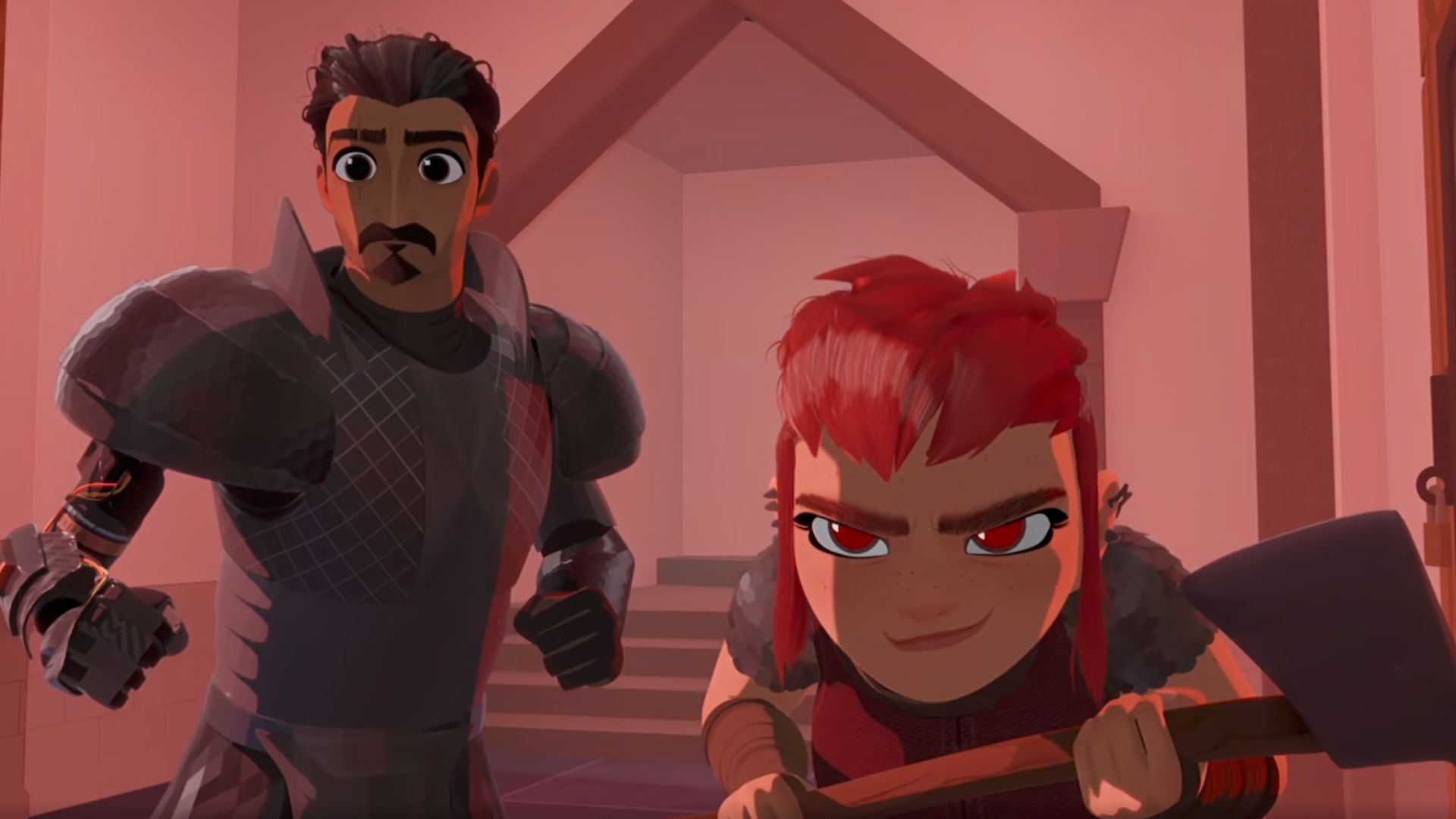
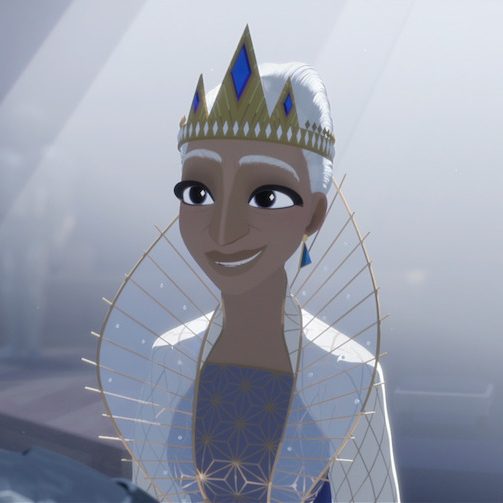
In Nimona, Ballister Boldheart (Riz Ahmed) is now Brown, and Ambrosius Goldenloin (Eugene Lee Yang) is an East Asian character. The opening minutes feature Queen Valerin, a Black woman tasked with governing over the multiethnic state, cuing the audience to depart from modern expectations (à la Queen Charlotte).
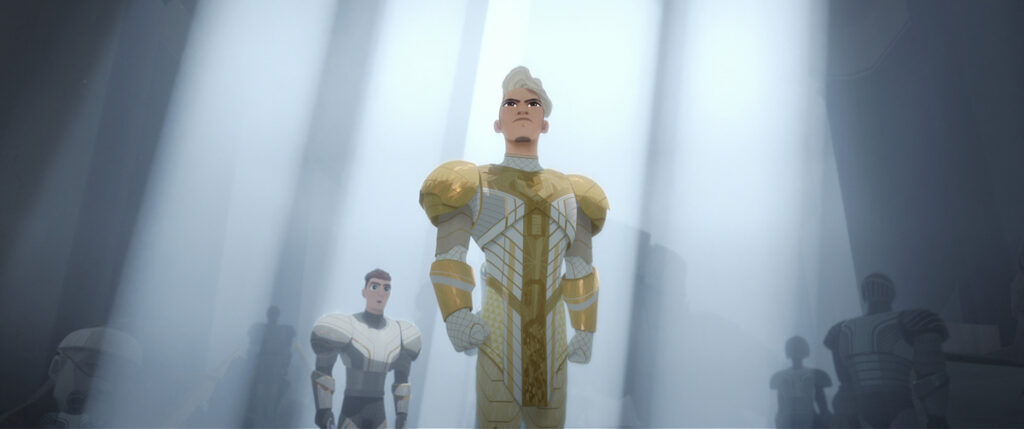
It is possible that the race-bending in the film attempts to intentionally level the playing field. Making characters like Ballister and Ambrosius nonwhite in a post-racial society, the conflicts they encounter can’t be read as purely racially motivated.
Further departing from the graphic novel, the movie focuses on Ballister’s commoner roots and underdog story. In painting a sort of post-racial kingdom, the discrimination that Ballister faces seems more tied to class than race.
The mockery Ballister experiences from fellow knights, namely Thoddeus Sureblade (Beck Bennett), could also stem from unacceptance around his gay relationship with Ambrosius, who too experiences similar jeers.
In both cases, race-bending the main characters brings other pieces of the character’s identities to the forefront. As a result, the story positions a narrative around the lack of acceptance in society for the low-income and queer community.
See also: Rush Hour: Buddy cops tackle racial bias
A Racial Parable in a Post-Racial World
If the movie race-bends to avoid a racial commentary, two important counterpoints remain. First, why change the races of any of the characters in the first place? Second, why are the most bigoted characters in the movie all white (Thoddeus, the Director, and Gloreth)? The two “easiest” ways to avoid falling into questions of race or being pinned as a racial commentary would be to have an all white cast or spread prejudice across a variety of characters, regardless of their racial identity.
In reality, the story did not truly just fling aside any sort of recognition of race by race-bending the characters at-will. Instead, it crafted a racial allegory through Nimona’s character.
Nimona isn’t a monster (as we learn), but everyone in the kingdom keeps calling her one. The misnomer originates with Gloreth, the godlike hero who founded the kingdom under the premise of collective strength and protection from monsters.
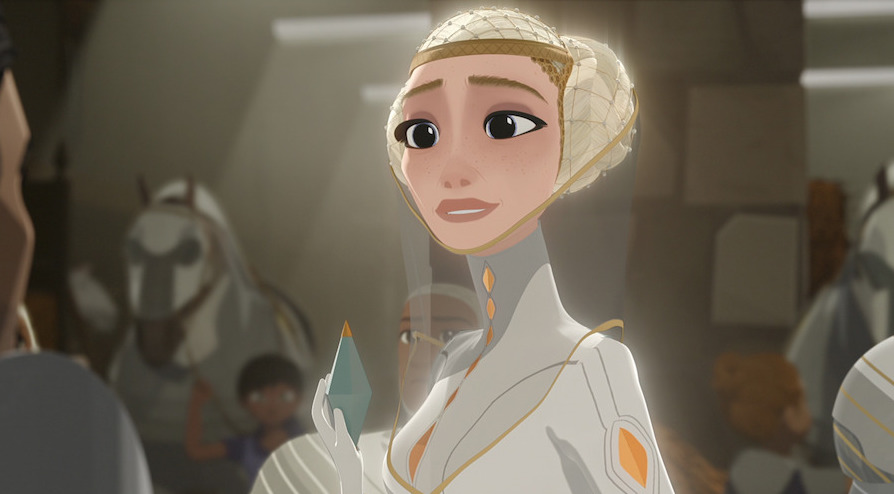
Through the film’s original backstory for Gloreth, we realize that Gloreth isn’t heroic but rather a product of her parents’ fear of difference. They label those who are “other” as monsters. Nimona’s shapeshifting powers admittedly make her unusual, so in a kingdom built around a fear of difference, she is an outsider by definition.
The kingdom’s walls were built to keep Nimona out, not dissimilar from the barriers built by American isolationism. The fear mongering by the Institute mirrors a sort of anti-immigrant sentiment often faced by the Asian diaspora. Nimona’s pain and frustration at her inability to connect with people provides a proxy for an Asian American experience.
Through this clever mapping of race onto Nimona, the movie becomes a cautionary tale on how anyone can hold bias if they buy into a system structured around creating outcasts, like Gloreth did. The story becomes universal to everyone, regardless of their racial or ethnic background, precisely because of the race-bending to establish a post-racial setting.
See also: An “Elemental” life: From one animator’s story to a universal narrative
Resonance Across Identities
The character of Nimona in both the graphic novel and the movie also serves as an allegory for gender fluidity. She describes her shapeshifting as more of an existential need than a superpower.
“I feel worse when I don’t [shapeshift]. Like my insides are itchy. You know that second right before you sneeze? That’s close to it. Then I shape-shift and I’m free,” Nimona tells Ballister. When pressed, Nimona says that if she resisted the need to shapeshift, she knows she “sure wouldn’t be living.”
Even author ND Stevenson has acknowledged the coding of Nimona’s experience as gender dysphoria.
At a time in which the bounds between and within racial identities are coming under scrutiny, Nimona’s story speaks to some of the experiences of folks with mixed race backgrounds.
Most current media on mixed race characters fixates on a “caught between two worlds” trope, but Nimona tweaks that narrative. Nimona isn’t stuck between two states nor is she deciding whether she should be a shark and a rhino.
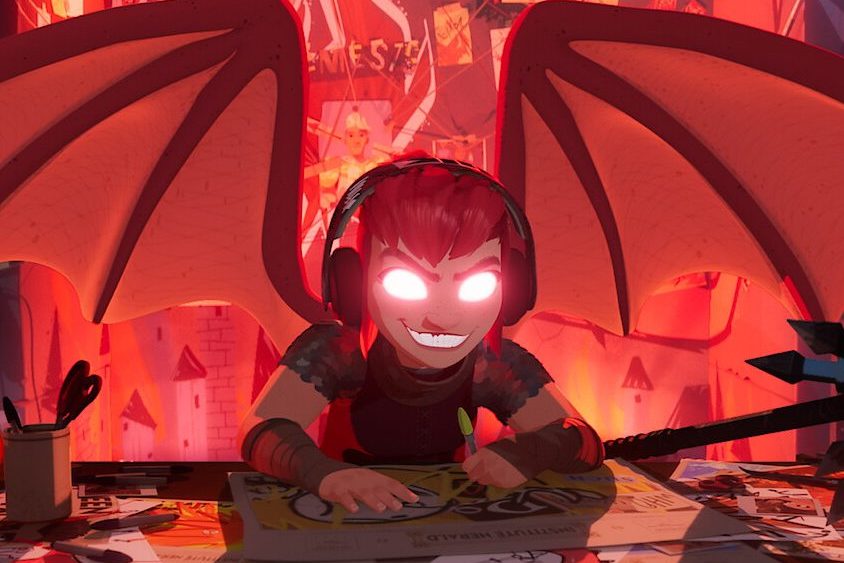
She is everything all in the same instant, she slides between parts of her identity in moments that feel best to her. She shapeshifts to get out of sticky situations and add humor to tense moments. Whereas in “caught between two worlds” stories a mixed identity is a hindrance, Nimona makes it an asset.
The race-bending of characters like Ballister produce an uplifting vision of mixed race identity because their initial desire to have Nimona hold back her shapeshifting represents the attempts to confine mixed individuals to certain aspects of their identity.
Of course, that interpretation also applies to the experiences of genderfluid folks, indicating that there perhaps is a thematic shared experience between the groups according to Nimona.
All in all, the creators attempt to grapple with the common pitfalls of race-bending for race-bending sake. They use it as a strategy to bring new meaning, morals, and resonances to the source material while staying true to the story’s overall thematic message.