The Academy Award committee faces a dual mandate to appease calls for more representation while still appealing to their white base. This year, the Oscars straddled the two and symbolically sterilized the Telugu film RRR of its revolutionary origins by awarding the 2023 Best Original Song to “Naatu Naatu.”
RRR embodies Brown rage against white colonizers. The plot centers around two South Asian revolutionaries standing up to the British Raj. Without the context of the broader movie, “Naatu Naatu” does not show the violent, bloody, and radical message of the movie.
As such, the performance of “Naatu Naatu” at the Oscars for white Hollywood elites remains unsettling.
The Revolutionary Roots of “Naatu Naatu”
RRR follows the fictional friendship between two real-life South Asian revolutionaries, Komaram Bheem and Alluri Sitarama Raju. Bheem was an indigenous Adivasi leader and a forerunner to the Telangana Rebellion. Raju led an armed uprising across the subcontinent against the British colonizers in the 1920s.
The story of RRR pays homage to the oft-overlooked violent resistance to the British Raj. The movie depicts the blunt racism South Asians faced in their daily lives and their simmering disdain for the white settlers.
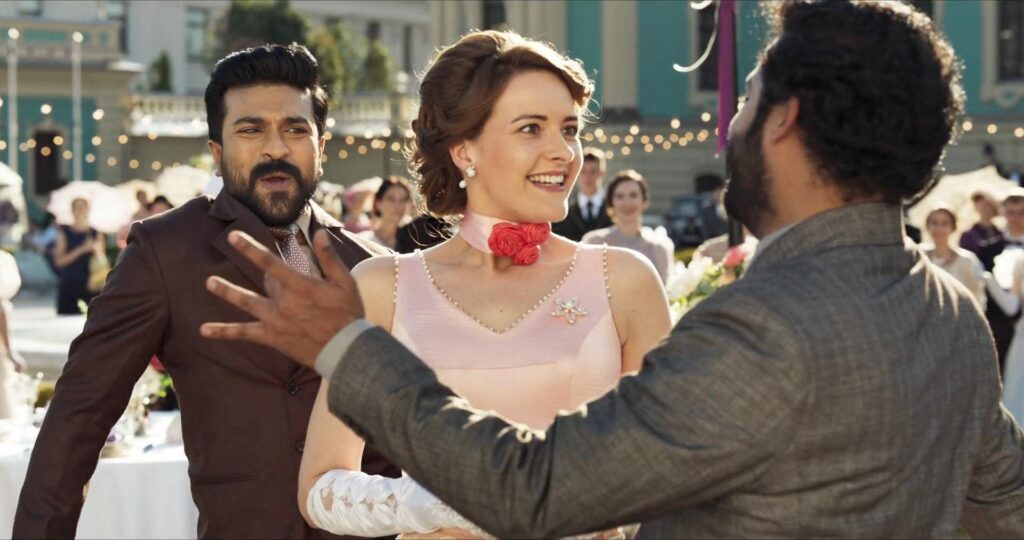
“Naatu Naatu” appears in the movie when the protagonists softly contemplate whether they can come to a peaceful understanding with the British. This question comes to a head when Bheem and Raju attend a party hosted by the British Governor Scott as the only nonwhite guests.
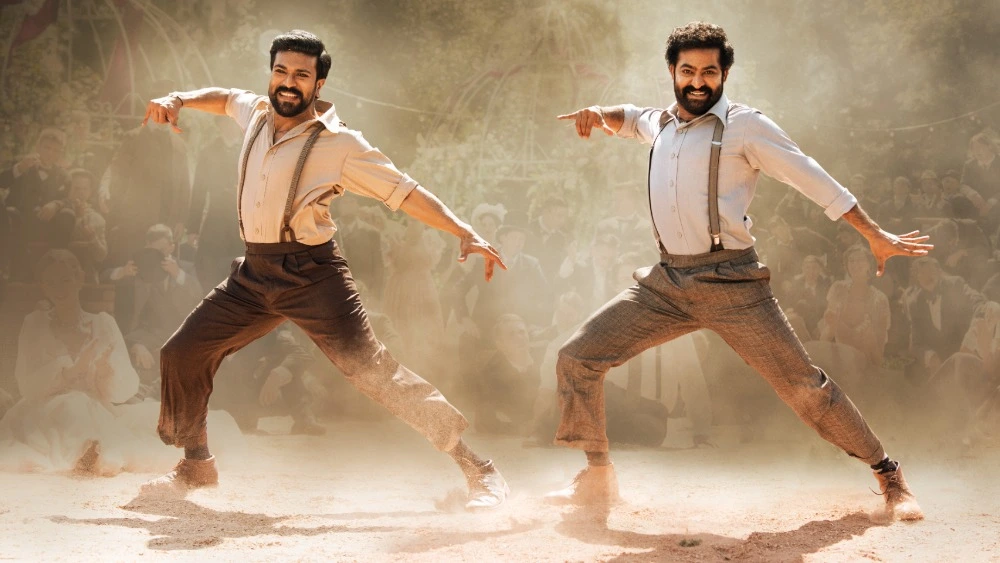
After some other attendees hurl racially motivated insults berating Bheem and Raju’s intellect, their understanding of the arts, and their ability to dance, the protagonists launch into the “Naatu Naatu” dance number to prove them otherwise.
A Disingenuous Award
At first glance, the upbeat song plays as a celebration of South Asian musical achievement against the white dominance in the field.
Composer M. M. Keeravani won Best Original Song at the 95th Annual Academy Awards with “Naatu Naatu.” It marked the first time a South Asian film won an Oscar in the category and received global recognition. Legendary composer A. R. Rahman won an Oscar in the same category for “Jai Ho” from Slumdog Millionaire (which despite the South Asian-driven cast and plot, was a British production).
“Naatu Naatu,” despite its distinct sound and wondrous choreography, likely won the award since it was palatable to white audiences. The award reads as a performative nod to years of South Asian excellence going unrecognized.
The song depicts the protagonists appealing to the white British colonizers with song and dance, a vast departure from the violence in the rest of the film. It is an overt display of ethnicity—not far removed from minstrelsy—that panders to white audiences. Bheem uses the dance number to impress Jenny, his white romantic interest.
However, it solved none of the systemic problems facing South Asians. For viewers whose only context of the film is “Naatu Naatu,” they do not see that the white characters continued to treat the protagonists like savages afterwards.
“Naatu Naatu” serves as the protagonists’ failure to win equality and respect without bloodshed. They are still scoffed and looked down upon after their well-received performance.
Director S. S. Rajamouli designed the song as Bheem and Raju’s appeal to white colonizers, so unsurprisingly, the Academy Awards committee found it palatable enough to greenlight for a performance.
Ostensibly, the Oscars only celebrates South Asian songs like “Naatu Naatu” that put Brownness on display for white audiences. They misunderstood that the song truly symbolizes the colonizers’ inability to understand or appreciate Brownness.
Another Case of Hollywood Performativity
Given the storied tradition of Bollywood and Tollywood soundtracks, one must question why it is only being recognized on the international stage in 2023 with this song. Certainly, RRR is a unique film worthy of recognition (although there are plenty of deserved criticisms of its depiction of indigeneity and its pro-Hindutva undertones). But what about “Naatu Naatu” sets it apart from the vast selection of Tollywood songs?
To start, it is one of the few South Asian songs with majority white performers. Because Brownness is limited on the screen, perhaps it is more palatable to non-Brown viewers.
Moreover, “Naatu Naatu” encourages white Britishers to participate in an ethnic dance. To an extent, providing the song with international recognition gives white audiences a “pass” for cultural appropriation.
The lyrics even seem to perpetuate the idea of South Asians (and the associated dance style) being untamed. The translation of “naatu” holds connotations to wildness or craziness, and other lyrics seem to invoke stereotypical South Asian traits such as eating spicy food.
This is not a criticism of the song itself, which stands as a fun and playful celebration of Brownness. However, the reception of the song mirrors the colonizers’ worldview that the savage South Asians exist solely to perform for whites—which RRR spurns from its opening scene.
See also: South Asian Fashion Week: Breaking barriers and building new ones
Brownface at the Oscars?

The performance of “Naatu Naatu” at the Oscars played into the idea that South Asian talent cannot win awards without help from their white counterparts. The lead dancers in the performance, Billy Mustapha and Jason Glover, are not South Asian, nor did there appear to be any South Asian talent involved in the project.
The majority white audience at the Oscars gave the dance number a wondrous applause. But knowing that they applauded white performers, one cannot help but feel that deserving South Asian creatives went uncredited. Backlash against the performance online highlighted whether Hollywood questioned the blatant absence of South Asian talent or even gave thought to the meaning of the movie.
Without South Asian dancers, the performance at the Oscars in effect whitewashed “Naatu Naatu.” They took a song already targeted at a white audience and removed the remaining Desi-ness from it.
The absence of South Asian talent for the performance, to an extent, serves as the latest example of Brownface and cultural appropriation. White institutions like the Oscars believe they can replicate South Asian success by cutting South Asians out of the picture.
See also: Asian Representation in Hollywood: Why So Late?
The Case for “Dosti”
A selection criteria for Best Original Song is partly how the song encapsulates or complements the themes of its movie. “Naatu Naatu,” taken by itself, reflects almost the opposite image the movie conveys: a world where whites can dance alongside South Asians. It keeps a “South Asian feel” with its percussive refrain and athletic dance moves, except the performance implants it onto a chorus of white dancers.
“Naatu Naatu” does not touch on the themes of violence, rebellion, friendship, and betrayal that make RRR great. Instead, “Dosti” stands as one among a handful of alternatives that appear more deserving of Best Original Song.
“Dosti” (translating to friendship) serves as the theme for the protagonists’ bond, their differences, and the tides of their relationship. Its lyrics echo the bond, betrayal, and bloodshed that underscore the entire movie.
Maybe most importantly, with its somber strumming, chant-like chorus, and agony behind the vocals, “Dosti” captures the distinctive tone RRR strikes throughout the movie. It is hard to pick a better song that embodies the feel of revolution.
Rise, Roar, Revolt Against the Oscars
In keeping with the themes of RRR, the creative team behind the film should rebel against tradition at the Oscars and return their award. They have earned a good deal of recognition for their accomplishments, but they should not let the Academy Award committee and Hollywood get any payoff (or give themselves a pat on the back) for their performativity.
Instead, the RRR team should encourage the globe to consume more Tollywood films and media from South Asia. Revolting against the Oscars and its limited understanding of the subcontinent’s entertainment industry would only put the spotlight further on South Asian creatives.
Featured image photo credit: BBC