Korean American Day celebrates the Korean American experience
After the United States entered the Korean War (1950–1953), a new wave of Korean immigrants arrived. From military brides, to adoptees, refugees, and students, many were displaced by violence and national division. These postwar migrations laid the foundation for more permanent Korean American communities across the country.
Observed each year on January 13, Korean American Day commemorates the arrival of the first Korean immigrants to the United States in 1903.
More than a historical marker, the day invites reflection on over a century of Korean American resilience, organizing, cultural preservation, and evolving identity, stories shaped by migration, labor, family, activism, and survival.
In 2003, Korean American Day was formally recognized to ensure these histories were not erased or flattened. The day affirms visibility across generations, from early plantation laborers and independence activists to today’s artists, organizers, caregivers, and leaders.
See also: Joshua Lee steps into the spotlight as ‘Jin’ in XO, Kitty
The history of Korean migration to America
Korean American history in the U.S. is deeply intertwined with global politics and displacement. In 1903, the first Korean immigrants arrived in Hawai‘i as plantation laborers during Japanese colonial rule over Korea, carrying both economic hopes and nationalist dreams.
Early immigrants also included students, Christians, and independence activists who organized abroad to support Korea’s liberation. Immigration slowed under exclusionary U.S. policies, but global conflict would later reshape the community.
The Immigration and Nationality Act of 1965 further expanded migration, enabling families to reunite, businesses to form, and cultural enclaves to grow in cities like Los Angeles, New York, and Chicago.
Yet these gains came alongside racial violence, economic precarity, and moments of rupture. Most notably, the 1992 Los Angeles Uprising drove racial tensions between Korean and Black Americans.
More than thirty years since, through intentional reconciliation, civic engagement, coalition-building and education have helped bridge the divide.
See also: Korean American-Black conflict during L.A. riots was overemphasized by media, experts say
Korean American Day celebrates pride in heritage
Today, Korean Americans number over 1.8 million in the U.S. While many are U.S.-born, a majority are immigrants, and identity remains deeply rooted in heritage.
Research shows that 66% Korean Americans primarily identify as “Korean” or “Korean American,” reflecting a strong connection to cultural identity even across generations.
Today, Korean American stories are expansive and intersectional: adoptees reclaiming heritage, undocumented families fighting for safety, elders preserving language, and younger generations challenging stigma around mental health, disability, and queerness.
While Korean culture has been in a special spotlight in America over the last near-decade through seminal films, shows and music artists, it’s important to recognize that the Korean American experience is vastly diverse.
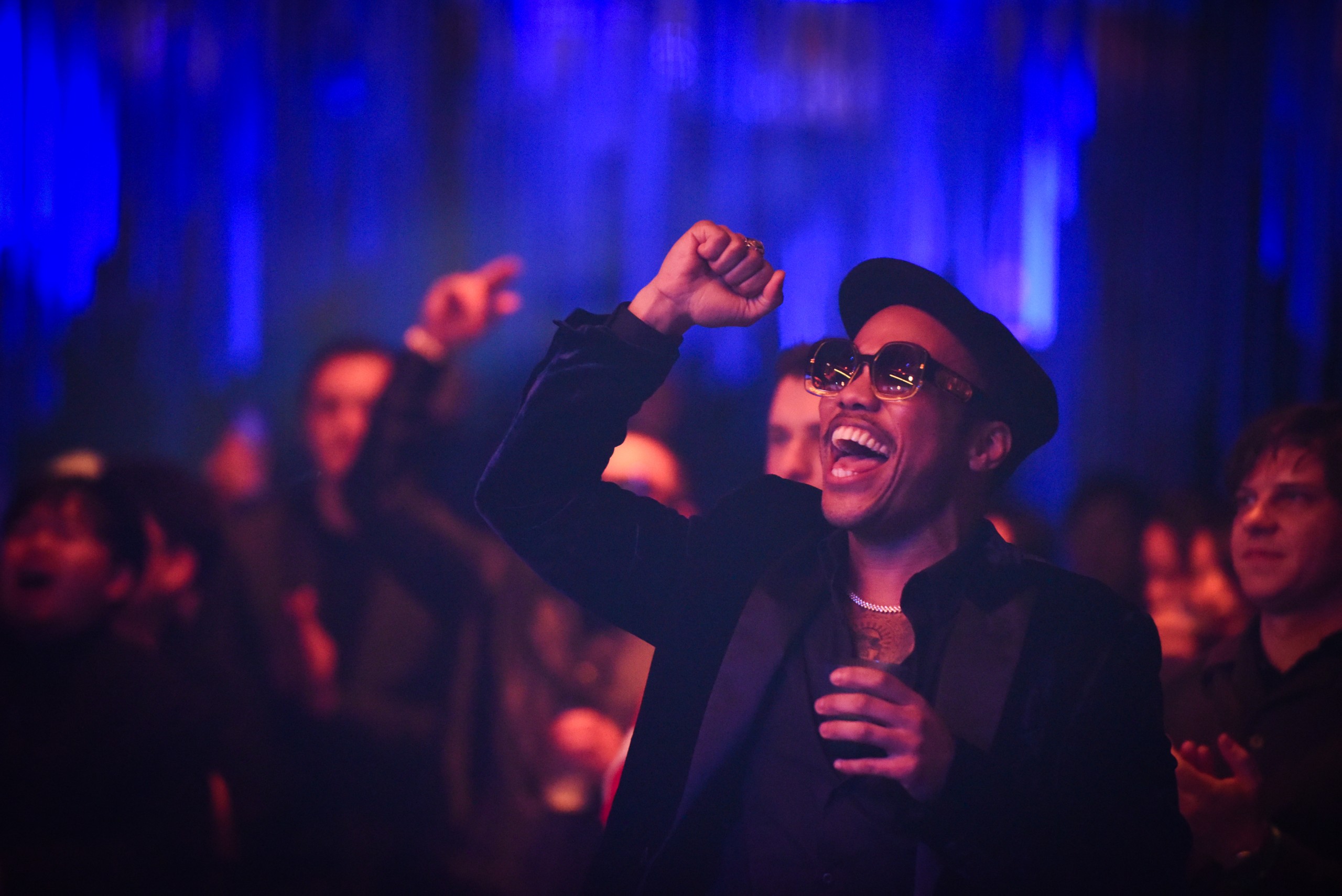
See also: Anderson .Paak shares pride in his Korean American heritage
Celebrating Korean American stories
Ashley J. Chong (she/her)
Cold Tea Collective team member Ashley J. Chong refers to herself as a “third culture kid”. Her lens and identity have been shaped by being born in Illinois, while also living in the Philippines, Indonesia, Singapore, Chicago and Montreal. As an adult, she pursued her post-graduate education in South Korea, recently returning to the United States. She describes being Korean American as “being in between.”
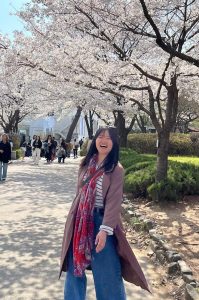
Despite having improved her Korean language proficiency, she says “there are experiences and cultural touch points that remain inaccessible me. I can only read about certain things rather than experience them, but also it’s made me recognize how American / Western my upbringing is, and the ways I can toggle between the two and perhaps mix them together.”
As a third culture kid, Chong would love to see stories about Korean Americans living in Korea and life after that period as well. “It’s a whole new level of navigating cultural identity when everyone looks like you but internally, there are still some dissonances in terms of knowledge and possibly language.”
Meeja Richards (she/her)

Meeja Richards is a mixed-race Korean American, as well as a Descendant of Korean Adoptee (DoKAD).
Stories that she’d like to see more of would spotlight Korean Americans that grew up in America and created a life for themself that defy Korean and American societal expectations. “I want to see the ex-felons and fringe, who might be stigmatized as the “bad Asians” but have really creative minds,” she shares. “I have always admired those with the courage to embrace their flaws from the beginning and to let people into their world.”
For her, it’s a privilege to be Korean American. “Being Korean American means I have the privilege to celebrate my individuality, while exploring my identity within my heritage lens,” she shares.
“It means I get to be a part of a community that is made up of a complex spectrum within our diaspora. As a Korean American, I feel a duty to sustain jeong.” Jeong is the Korean concept of deep emotional connection, affection and attachment; it is central to Korean culture.
Korean American Day is a reminder that community strength is not accidental; it is built through care, organizing, and the courage to tell our stories.
See also: Jennifer Cheon Garcia: Korean Mexican Actress Thriving Outside the Box
Learn more from these Korean American organizations
Community-based organizations continue to play a vital role in this work, advancing advocacy, preserving culture, and nurturing leadership across the diaspora.
Advocacy and civic engagement
Council of Korean Americans (CKA): A national, nonpartisan leadership organization empowering multi-generational Korean American leaders and building cross-community coalitions.
Korean American Coalition – Los Angeles (KACLA): Works on civic engagement, civil rights, and community empowerment.
Culture and community
Korean Cultural Center – LA (KCCLA): Promotes Korean culture through arts, events, and educational resources.
Korean American Story: Preserves and amplifies the histories and lived experiences of Korean Americans
Korean American Journalists Association (KAJA): A professional group for Korean American media professionals.
Education and research
Korean American Scholarship Foundation (KASF): Supports Korean American students through scholarships. (IG: @kasfnational)
Korean American Education Foundation (KECLA): Promotes Korean language and culture education.
Korean American Institute (KAI): Produces research and data to inform policy on Korean American issues.