Neo Sora’s coming-of-age film Happyend had its U.S. theatrical release on September 12, nearly a year after its world premiere at the 81st Venice International Film Festival. Sora, the son of the late Ryuichi Sakamoto and the director of the acclaimed documentary Ryuichi Sakamoto: Opus, sets his debut feature film in a chillingly plausible near future.
Happyend follows two best friends, Yuta (Hayato Kurihara) and Kou (Yukito Hidaka), who both love techno music – Sora even relays the film’s score as “a separate object, as the film itself.” One day, the best friends pull a prank on their school principal which provides the administration with the perfect reason to install cameras in every hallway and classroom.
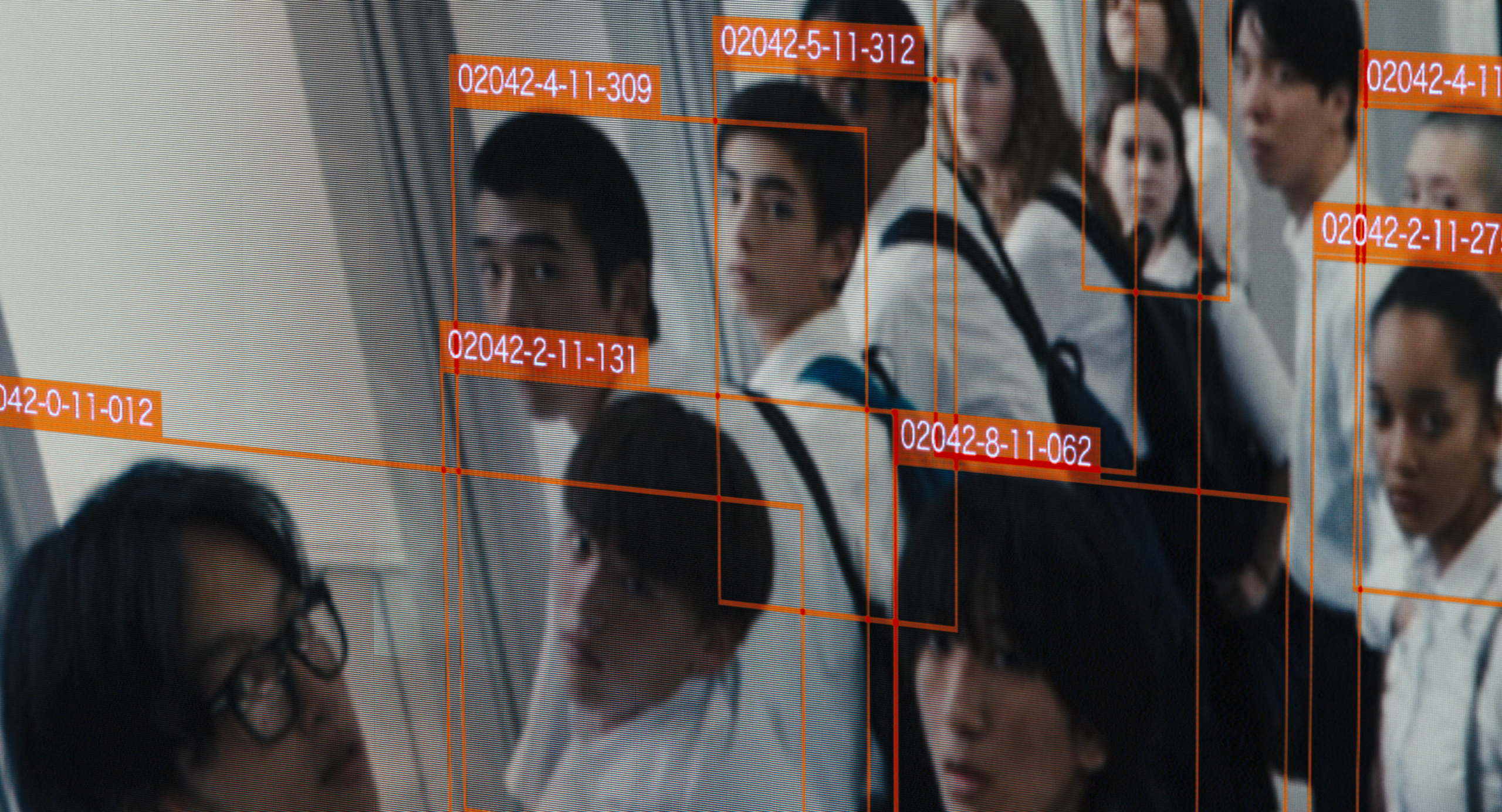
The new surveillance, aptly named Panopty in a nod to the panoramic design, doesn’t just surveil. When a student steps into the camera’s frame, and therefore the audience’s, we see the facial recognition algorithm analyze them without any human input, and deduct points from the student if it deems misbehavior.
Outside the school’s halls, the Prime Minister uses the threat of an earthquake to expand the military’s power.
Yuta and Kou have different responses. Yuta clings on to school life the way they know it by listening to music with friends, breaking into school property, and keeping levity the priority. Kou, who is actually Korean with a residency status, is inspired by a fellow classmate – a crush – to take up activism. Kou has much more to lose from any encounter with the authorities, and their friendship is inevitably tested.
In conversation with Sora, he is as thoughtful as his film. He turns over questions of music, silence, and adolescence with a reflective precision. Ahead of the U.S. release, Cold Tea Collective spoke with him about a score that stands alongside the film, the politics embedded in youth, and the emotional aftershocks that ripple through friendship like earthquakes.
Emphasizing the Musical Score
At the release party, Lia Ouyang Rusli played a DJ set in honor of her contribution to the film’s score. Sora and Rusli were first connected through Albert, a producer on the film. Sora says, “I was pretty adamant that I wanted to work with somebody who was classically trained, but also who could do electronic music and ambient music.” Upon their first first meeting in Tokyo over pancakes, “it was an immediate yes” when they discovered they had the same taste in music. He sent her the script and talked to her about “this idea of emotional distance.”
Sora’s perspective and approach to the film’s score is specific and abstract at the same time. “I don’t like movie music where the intention of the music is to color the scene, the emotion that you should be feeling. I much prefer music that feels more like there is one sculpture which has no color, which is the film.”
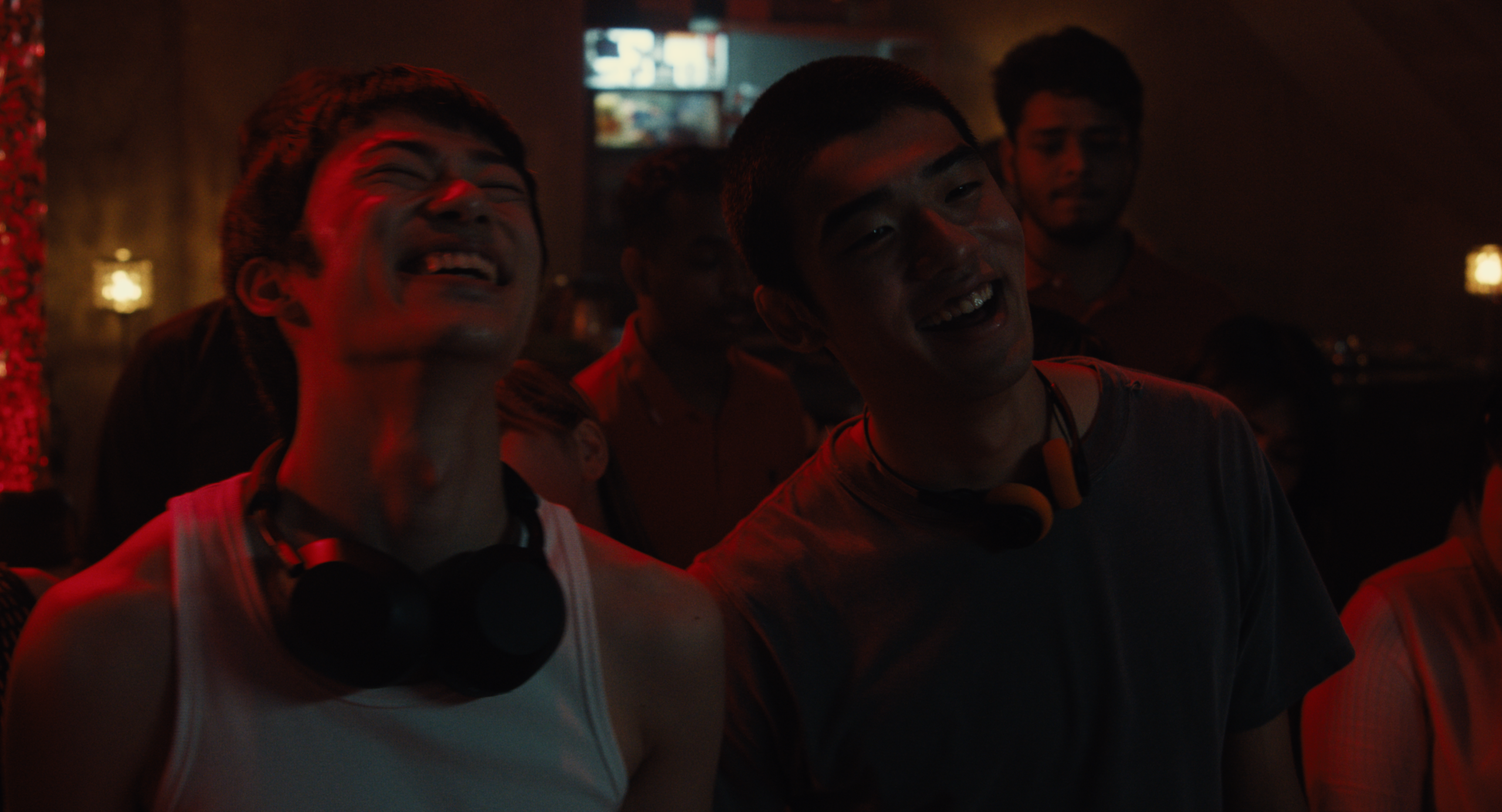
Throughout the film, Sora’s musical perspective communicated the distance he wanted the music to have to portray “this idea that where Yuta and Kou run into each other in the future, reminiscing on all these scenes that you see playing out in real time in the film,” says Sora. “The music is more attuned to the emotions of retrospect, rather than the emotions happening now in the film.”
Sora continues, “When you have a scene that’s exciting or they’re running away, the music is almost more melancholy or sweet and nostalgic because they’re reminiscing on those good times. Even if they’re fighting, the music is a little bit sweeter or romantic because they remember that that is the first time that they actually talked in a real way.”
Framing an Earthquake on Screen
Along with music and in the same tenor itself, silence was also deployed quite effectively in Happyend. There are two key scenes when the silence is felt: when the earthquake happens and when the two characters regard each other at the end. Sora reveals that this cinematic choice came from a short film that was a proof of concept of Happyend, which tested the earthquake effect. “I decided to do the earthquake by shaking everything that’s in frame, but not the camera. And then, putting in kind of like a low rumbling sound to try to make you feel like there’s an earthquake happening,” Sora shares.
When that proof of concept played to audiences, especially in Japan, they noted how realistic it felt and that it reminded them of their real life experiences and trauma. “I want it to be really considerate of real traumas, especially for Japanese people,” Sora explains.
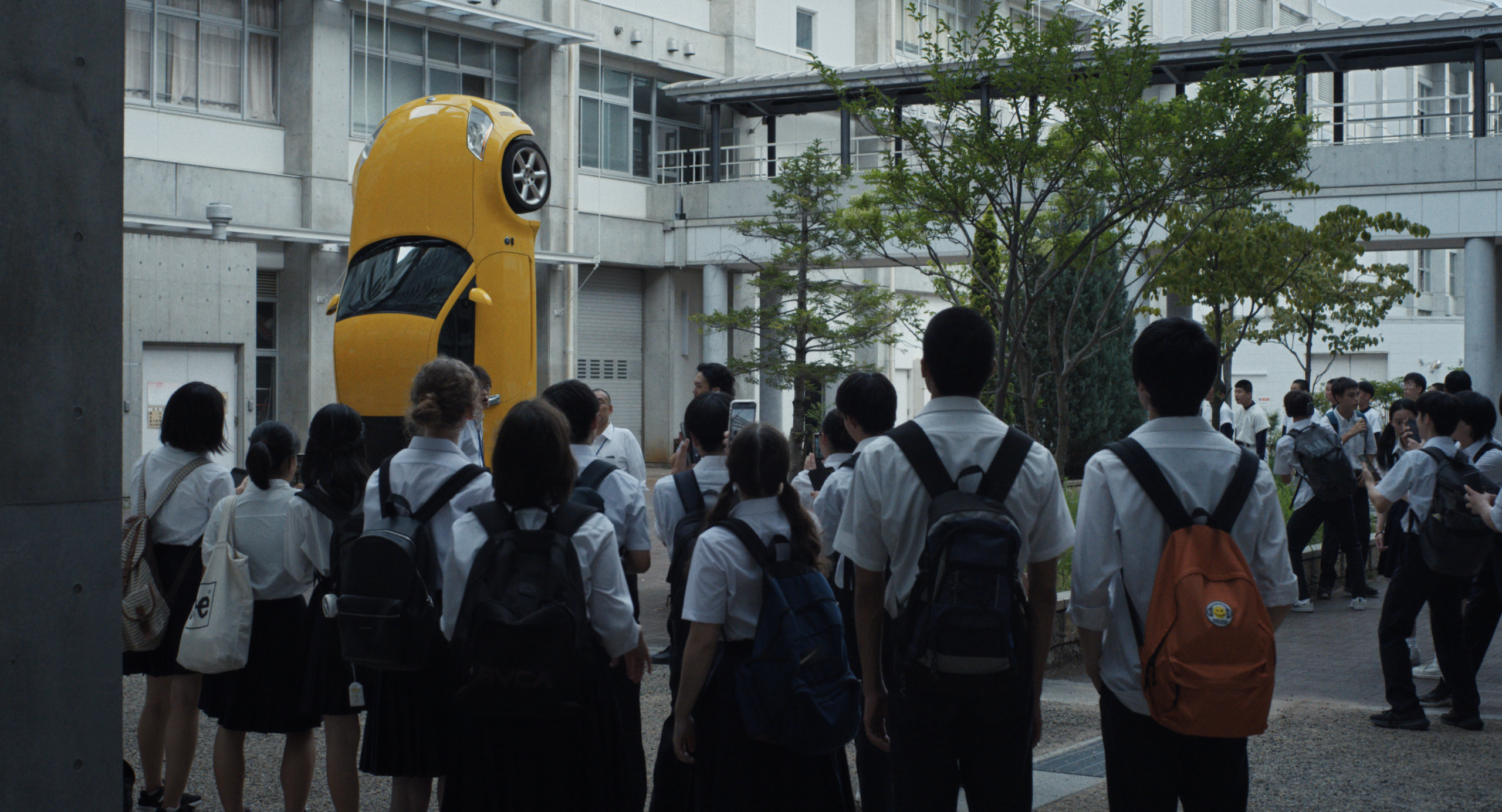
He also revealed that while they were editing the film, a big earthquake had hit the Noto Peninsula in Japan. He decided then to not put in any rumblings or sounds at all.
”Ultimately, this decision created an interesting effect where it feels like the air is completely sucked out of the room,” Sora says, “It replicates the feeling of when a small earthquake starts to happen and you’re trying to figure out if it’s like a real one or not.”
The metaphor extended to the two main characters in that “the rupture of the friend is also as significant as an earthquake.” Towards the end of the film, when Yuta and Kou look at each other, it resembles the earlier moment.. A similar uncertainty, fear, and finally, recognition settles in both their demeanours that their friendship has really changed.
On (Observing) Adolescence
Throughout the film, Happyend captures this fragile essence of adolescence and its young characters by gently highlighting how they face what is happening around them.“There’s an aspect of youth that is just automatically good and anarchic and political, all together in a way,” says Sora. “There is an aspect of being young that you’re just thrown into this society and you are figuring out stuff.”
Sora shows off this sense of youthfulness through Yuta’s character. In the heavily monitored school, Yuta finds the one spot where the cameras can’t see him so he can smoke. Another one of the friends learned how to mess with the camera instinctively by raising their hands and stretching. The film itself begins with the friend group trying to find a way into a club, and some of them do end up succeeding by finding a different entrance.
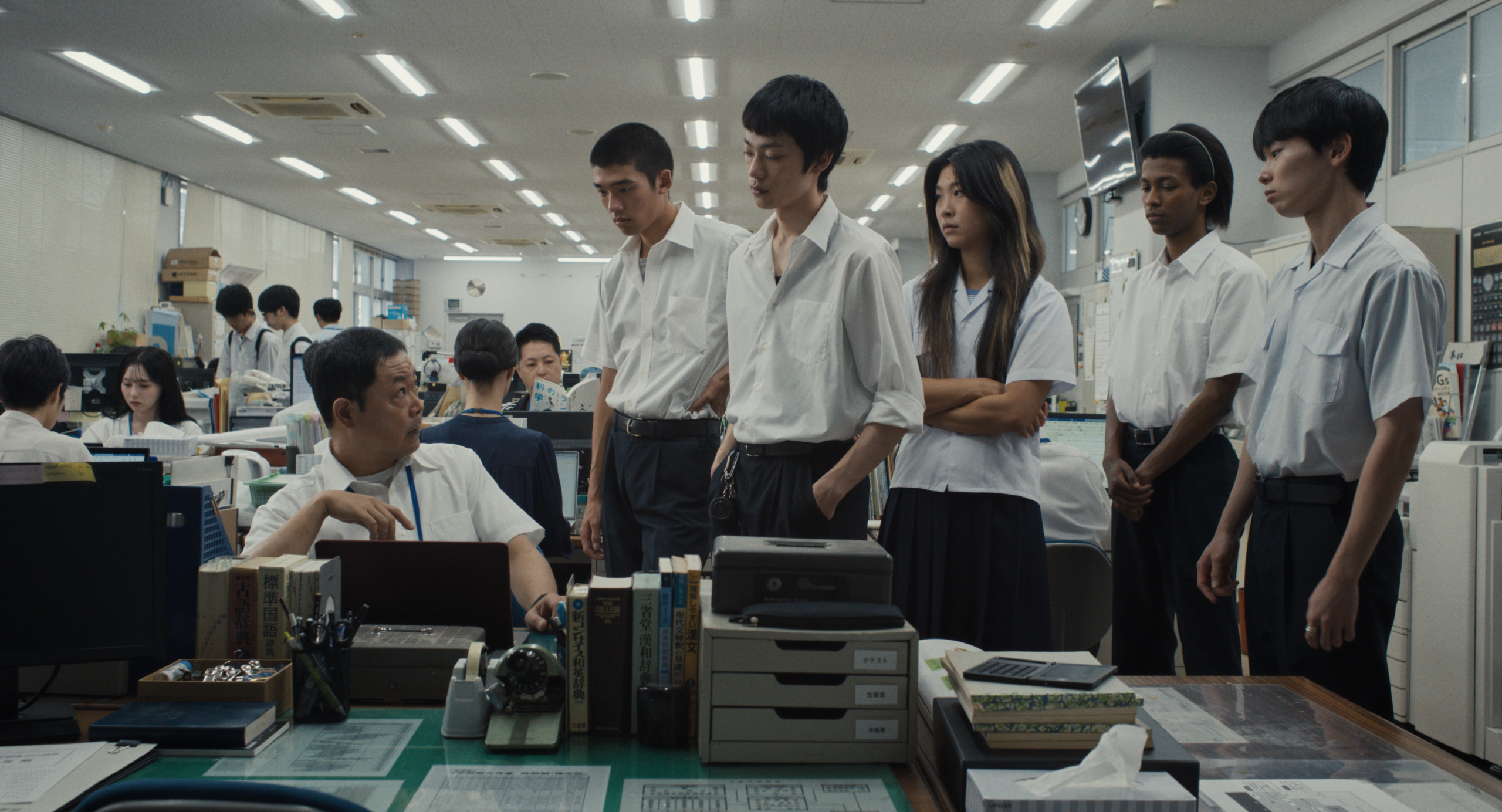
“It’s using the city as your playground. It’s using these spaces that in a neoliberal society become more and more privatized and closed off,” Sora concludes. “You still have a way to force it into the commons in a way. I think that’s very powerful. Even if it’s unintentional, it’s also quite political.”
If Happyend depicts a future shadowed by authoritarian control, it also insists on the vitality of adolescence and the ways young people carve out loopholes, joy, and defiance. That tension, between rupture and resilience, like the space between film and score, is what gives Sora’s debut its lasting aftershocks.