“Chief of War” is the first-ever scripted drama about the history of the Hawaiian islands
Often the backdrop, but rarely the main character, the islands of Hawaiʻi finally get their epic historical drama in Jason Momoa’s AppleTV+ show “Chief of War”.
“When people come from far and wide to spend time in Hawaiʻi, they fall in love with it, because there’s something special,” says “Chief of War” creator, executive producer, director, co-writer and star Jason Momoa. “It’s an umbilical cord to the center of the Earth. But many people have no idea of our history.”
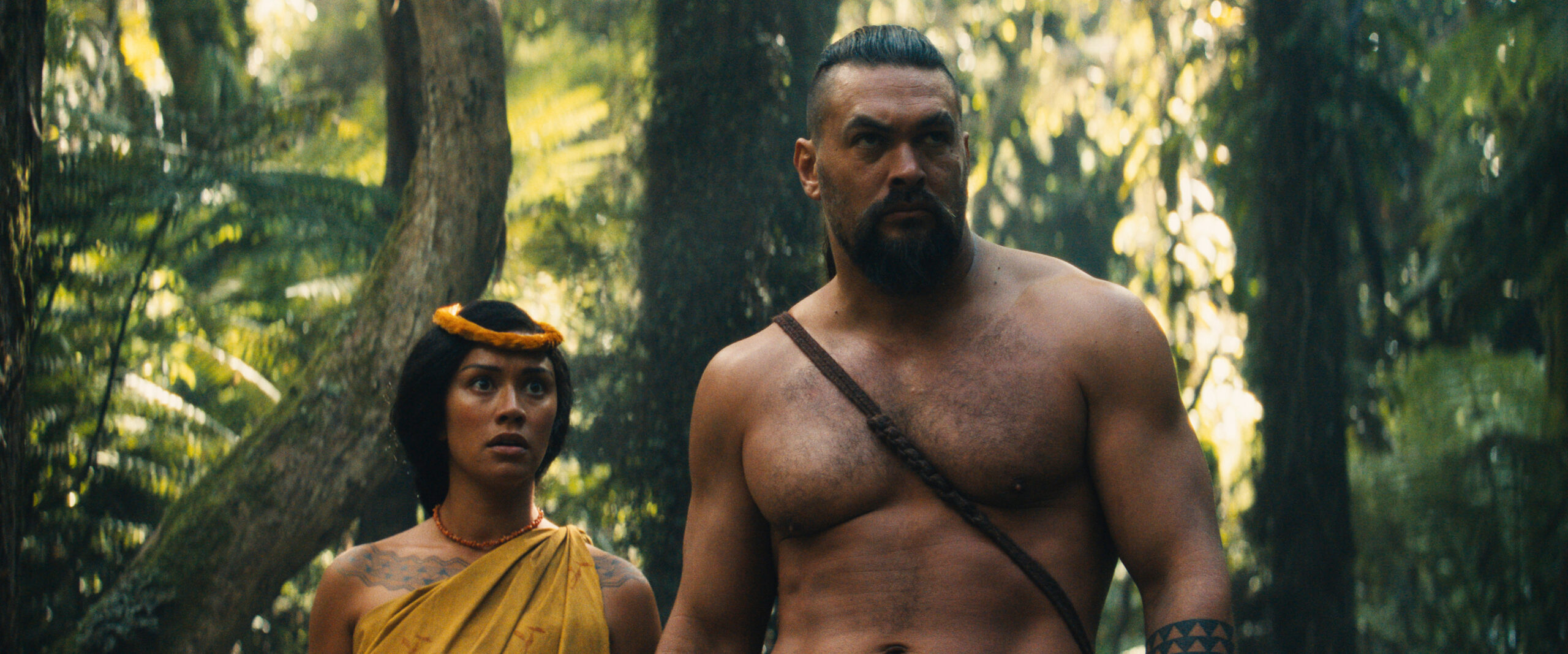
The nine-episode series is an historical drama based on the true events, history, culture and people of Native Hawaiian descent. The story follows the journey of warrior Ka’iana (Momoa), as he tries to unify the islands before Western colonization in the late 1800s.
It is a story never before produced at such a high production budget and scale – a story long overdue. The series features a predominantly Polynesian cast, is told from an indigenous perspective, and predominantly in Native Hawaiian language.
Cold Tea Collective spoke with cast members Luciane Buchanan (The Night Agent, Sweet Tooth), Temuera Morrison (Aquaman, Star Wars: The Book of Boba Fett), Te Ao o Hinepehinga (Breakwater, Head High), Cliff Curtis (Risen, Colombiana), Moses Goods (NCIS: Hawaiʻi, Inhumans) and newcomer Kaina Makua, Moses Goods.
See also: 5 Indigenous Oceanic people redefining gender identity
“Chief of War” spotlights the rich history of Hawaiʻi, centering authenticity
In approaching the storytelling in “Chief of War”, the creative team held themselves to the highest standard of authenticity and respect for their ancestors. Engaging cultural practitioners from language consultants, historians, culturally-informed wardrobe, hair, makeup and stunt departments and more, line producer Sarah Donahue shares the importance of ‘getting it right’.
“It was absolutely vital and non-negotiable that we had cultural experts participate…anything from canoes to costumes to tattoos — every aspect of Hawaiian life in the late 18th century — we were connected to luminaries of Hawaiian culture,” says Donahue.
To achieve their vision, the team shot the production entirely in Polynesia, including Hawaiʻi as well as in New Zealand – increasingly known by the Te Reo Māori name Aotearoa – meaning the land of the long white cloud — which has a large and thriving film community, whose expertise was called upon.
“It’s very unusual to have a local producer on board,” says Laprete, a well-known figure in the Hawaiian film industry, a major booster of local film and talent, and someone who’s known Momoa since he was 19 years old. “That doesn’t usually happen with big studio shows. But because of the content of “Chief of War”, Jason really wanted to keep the show as authentic as it could be. That’s one of the reasons we hired local [talent] as much as we could.”
The cast also appreciated the opportunity to practice the native language of those that came before them.
The role of ʻŌlelo Hawaiʻi, the indigenous language of Hawaiʻi in “Chief of War”
The entire first two episodes of “Chief of War” are spoken in ʻŌlelo Hawaiʻi’, the indigenous language of the Hawaiian islands language of the islands, and the official language of the state of Hawaiʻi as we know it today.
“We wanted people to experience the textures of the world we were showing them, and language is a huge part of that. If we don’t hear Hawaiian, we lose the reality,” shares Thomas Pa’a Sibbett, the show’s co-creator and executive producer. “It’s important to note that Hawaiian was a dying language, but in Hawaiʻi the people have worked really hard to revive their language.”
Through over a century of erasure of Hawaiian language as a result of colonization, only in the 1970s did the Hawaiian people start to push for a movement to revive their mother tongue.
“It was a bit of a challenge for a lot of us…I am so proud of everyone in the cast; we all knuckled down and knew the commitment we wanted to make,” shares New Zealand-Tongan actress Luciane Buchanan. She takes on the role of ‘Ka’ahumanu’, a real life Hawaiian Queen and wife to King Kamehameha.
“The process was to learn the sounds phonetically, then the cadence, and then add acting on top — so three stages of learning,” describes Buchanan. “As an actor, it was the scariest thing I’ve done so far, but it’s also been the most rewarding. It’s so important that ‘Olelo Hawaiʻi is in the show. It turned out to be my favorite part of the job.”
Te Ao O Hinepehinga portrays ‘Kapuohi’, wife to Momoa’s ‘Ka’aina’. For three months, she would spend three to four hours a day on the phone with her language coach, Kalei Kawaa.“I hope she’s happy with the character because a lot of Kapuohi is Kalei with little smatterings of my mother, who is a fierce woman; those two were my biggest source of inspiration,” shares the Maōri actress.
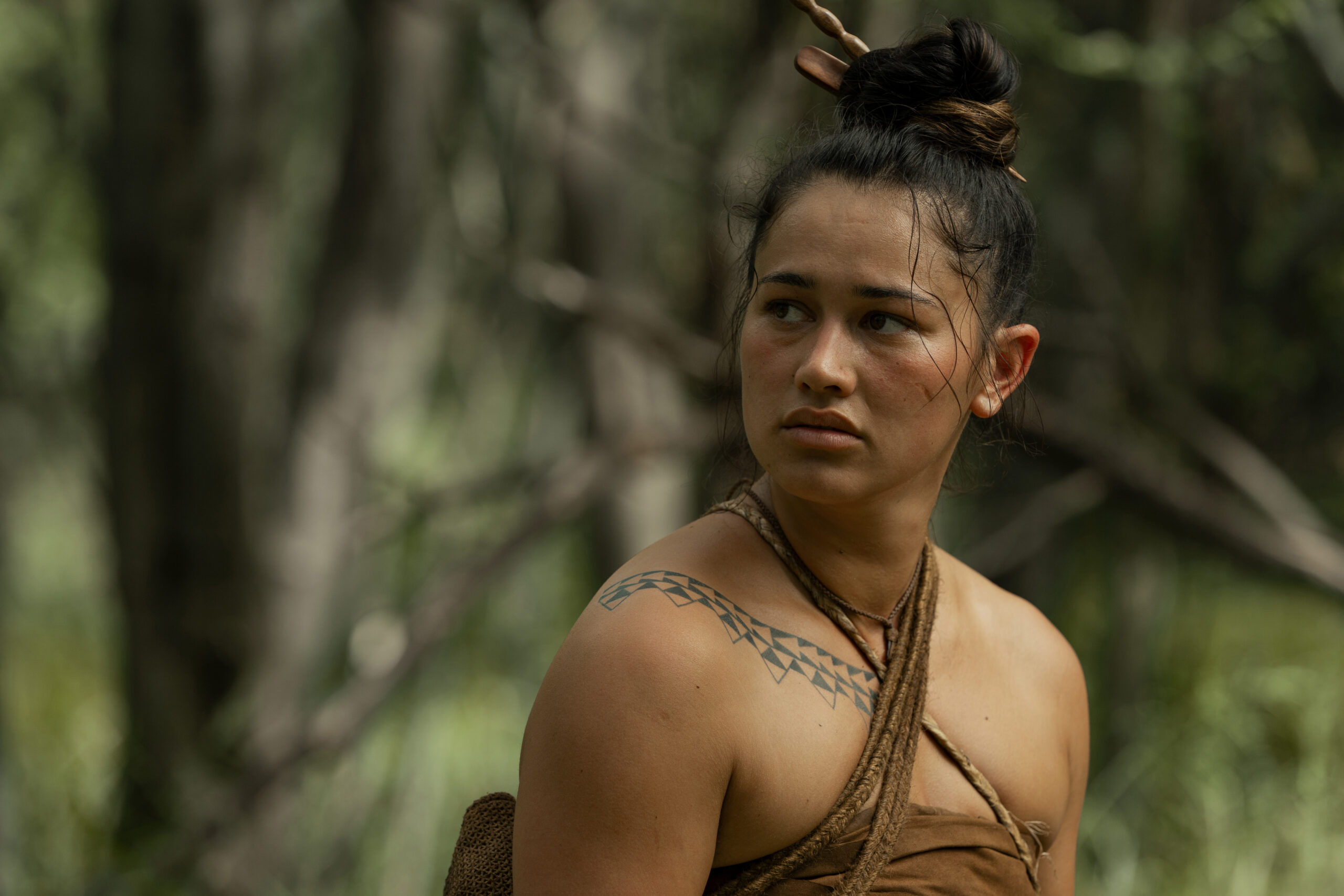
“Shows like Shogun really opened doors for us. We were a bit nervous about [whether] audiences will want to watch a show with subtitles?” Buchanan also credits the global success of K-Pop and K-Dramas to normalizing subtitled and non-English entertainment.
“Chief of War” co-creator, executive producer and star Jason Momoa notes that when it came to the language, he simply wouldn’t have done the show if they hadn’t been able to use ‘Olelo. “Apple had a lot of trust in me finding actors who could act in a language known by so few people. It was a big risk.”
Honouring Hawaiian ancestors in ”’Chief of War”’
A powerful character in “Chief of War” is King Kahekili, portrayed by Temuera Morrison. Taking on this historic role, Morrison had his hesitations. “These are ancestors that lived and walked these islands. It came with a lot of responsibility. I initially tried to run away when Jason called me to get involved,” he shares.
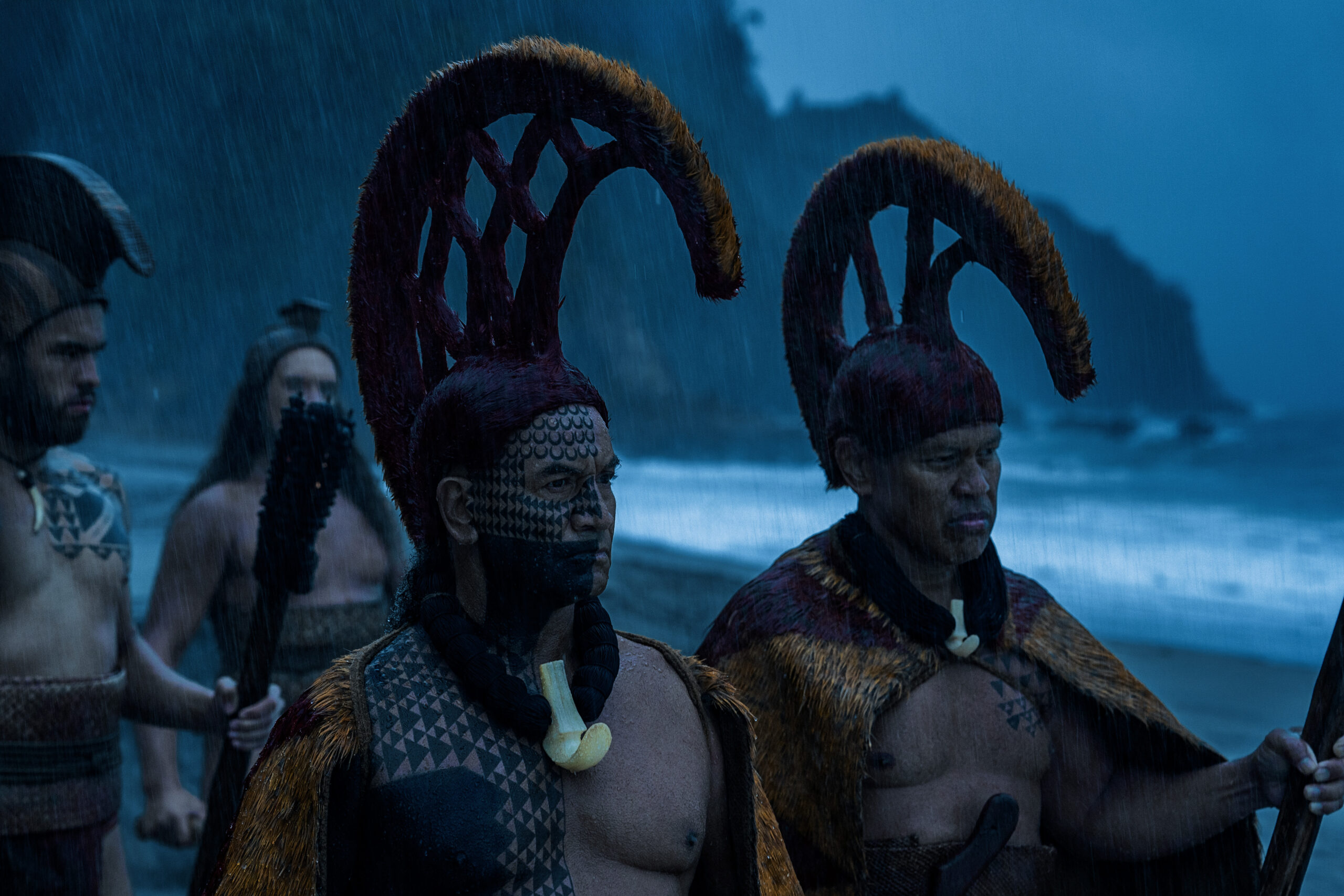
Like many of his co-stars, one of Morrison’s main concerns was being able to speak the language. “I felt very apprehensive and scared that I wouldn’t be able to meet some of the demands – especially speaking the Olelo, the Hawaiian – that was a challenge in itself,” he shares.
“To be part of this wonderful journey, I’m just very proud and very honoured, very very humbled. It’s been a reconnection, a reawakening, a reclamation of culture and identity for us as Polynesians,” says Morrison.
Luciane Buchanan also recognized the importance of honouring her ancestors in her portrayal of Queen Ka’ahumanu. “Ka’ahumanu is one of the most iconic people in Hawaiian history. I flew to Hawaiʻi and visited her birthplace, which was a whole story in itself. It took me three hours to find it, and it was by chance that I finally did. From that day on, I had a personal and spiritual connection with her, and I felt her mana [life energy] every day. Even when shooting in Aotearoa, and I felt far away from her, I said a quick prayer with my Hawaiian coaches and that would set me right.”
Native Hawaiian actor Moses Goods who plays ‘Moku’, a close advisor to King Kamehameha, shares the most interesting thing he learned about the ancestor he portrays in ”’Chief of War”’. The great warrior Moku named his feathered cloak to represent the sound produced by wings when they fly.
“Moku was one of the most fierce and brutal fighters in history, but he goes into battle with the sound of wings. That shows me that he is a multifaceted person that is not thinking kill kill kill Ge’s gong n with this image of beauty, this thing of calm going into battle. He’s not just a badass fighter, he’s got many sides to him. Understanding that about this kahuna, [I knew] this is a character I’m going to enjoy playing because he has so many sides to him.”
See also: The bonds between football and Polynesian players
Combating the erasure of Hawaiian history, heritage and culture through collaboration in “Chief of War”
“Chief of War” is the first time the story of Hawaiʻi is being told in a scripted drama series. To reclaim centuries of the erasure of language, heritage, tradition and culture, a bold retelling and reclamation of Hawaiian heritage were required.
Cliff Curtis who plays ‘Keoua’, a rival chieftain to Morrison’s King Kahekili and assumed successor of the throne who feels he is denied his birthright to become king to Kaina Makua’s ‘King Kamehameha’ became so creatively involved in the project that he became a co-producer.
“Chief of War” co-creator Thomas Pa’a Sibbett shares his gratitude for Cliff’s dedication to authenticity in the show. “Cliff was very generous and decided to come in, and was crucial in helping us to understand the culture and how things were properly done. We were so grateful to have Cliff as both an actor and co-producer on this show.”
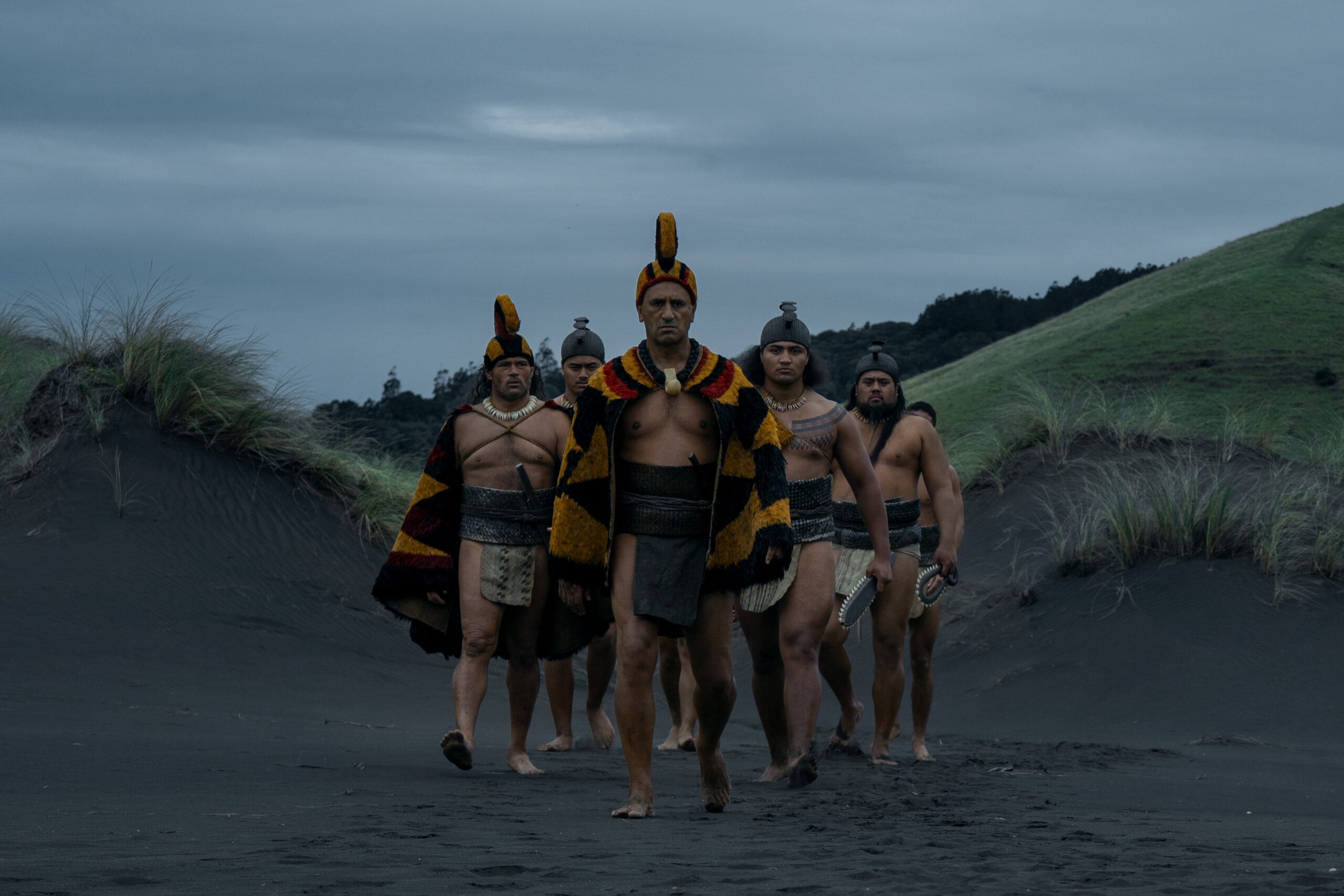
For Curtis, it was Jason Momoa’s inclusivity and collaboration that made all the difference. “Practically speaking, why I became a co-producer, was to help reconnect our heritage…[Jason] Momoa embraced us and invited us in as Maōri to tell a Hawaiian story alongside Tongan, Samoan, Tahitian and other talents that have come together to celebrate what it really is to be Hawaiian and to really look at this important story.”
Temuera Morrison looks forward to hearing how the Hawaiian people feel about the show. “I hope they sit there with pride,” he says. “I hope they hear their language, reclaim and identify themselves as Hawaiian.”
–
“Chief of War” is now available globally with the first two episodes on Friday, August 1 on Apple TV+.
Thank you to Cultural Agency, Apple TV+ and the cast of Chief of War for the interview opportunity.