After a devastating breakup, Amy Chan hit rock bottom. She did everything she could else to deal with what felt like unbearable pain. She not only wanted to alleviate her heartbreak, but also break out of behavioural patterns so she could build healthier, more fulfilling relationships.
The beginnings of Renew Breakup Bootcamp
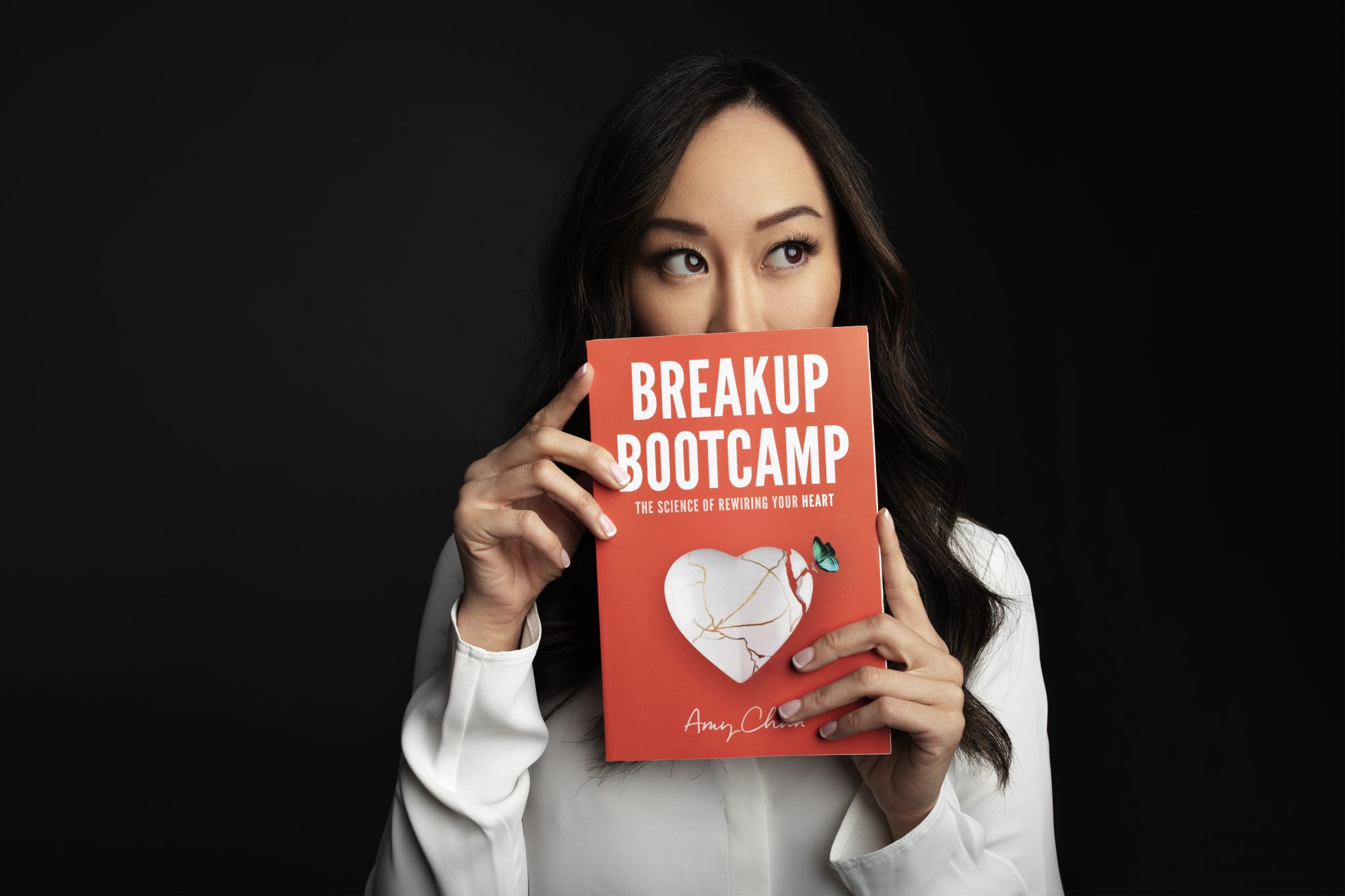
“It was a long, tumultuous journey toward healing, and I was improvising every step of the way. I tried everything—therapy, yoga retreats, hypnotherapy, consultations with psychics; you name it, I tried it,” said the founder of Renew Breakup Bootcamp and author of Breakup Bootcamp: The Science of Rewiring Your Heart. Her debut book is a guide on how to navigate breakups based on tips backed by psychology.
But the loss opened up a new chapter for Chan. After lifting herself out from rock bottom, she was determined to help others mend their hearts and reclaim their identity and develop self-love.
“Once I came out on the other side, I realized how perilously close I had been to committing an act of complete destruction when it felt like the pain would never end and I was devoid of hope,” she said. “I wondered about those who don’t have the support system I had, who don’t know which books to read, or which healing modalities to try.”
In 2017, Chan created Renew Breakup Bootcamp, a unique 4-day retreat in nature that marries scientific and spiritual approaches, facilitated by a team of experts from a wide range of disciplines. Good Morning America, New York Times, and Glamour have featured the bootcamp since it’s launch. By cultivating a safe and supportive community, she provides others with the tools to cope with the loss of significant relationships.
Despite her painful struggles, she is using her lived experiences to empower others to thrive after a heartbreak, so they can reconnect with themselves and future partners in a meaningful way.
See also: Anita Chan: Climate action starts with community
An entrepreneur at heart
Prior to becoming an author and expert in the relationship and wellness space, Chan led a successful marketing career. Climbing the corporate ladder, she landed the role of the Chief Marketing Officer at SPiN, a global chain of ping pong social clubs co-founded by award-winning actress Susan Sarandon.
But two years later, she left the prestigious, six-figure-salary position to start Renew Breakup Bootcamp. For many founders, launching a new business takes a great amount of perseverance and determination. By then, Chan had developed an entrepreneurial spirit by watching her Chinese immigrant parents manage their family grocery store in Vancouver’s Chinatown.
“While my appetite for tenacity is still a work in progress, I’ve inherited my parent’s work ethic of building something brick by brick,” penned Chan, in a recent article titled “What I Learned From My Chinese Immigrant Parents About Hard Work.”
After running her business for three years, she signed a book deal with Harper Collins and released her first book Breakup Bootcamp — something she had set her sight on fifteen years ago. It started with a free WordPress blog, followed by pitching an article to over 100 publications and facing countless rejections until she became a relationship columnist for a local newspaper.
“My goal wasn’t just to host retreats for the heartbroken, it was to carve my own niche in the breakup space.”
Even though she is now a best-selling author and prominent voice in the wellness field, talking about feelings was a rarity in her home growing up. Her family expected her to follow traditional behavioural expectations and roles because of her gender.
Not only has she broken the barriers as a coach, author and speaker, she is also changing the narrative for women.
“My proudest achievement is that I am a cycle breaker,” she said. “I’ve taken all the pain from my childhood and that of my ancestors and transformed it into a force to help others, particularly women, to tap into their power and to refuse to tolerate abuse and disrespect in their relationships.”
See also: Alyce Chan: MOMCOM and healing with laughter
Making space for diversity in wellness
Diversity has been a hot topic in the last few years, especially when it comes to high-value industries such as entertainment and wellness. The wellness space, including relationship coaching and mental health, still has room to improve when it comes to truly diverse representation. Chan has found that the people at the top, from the best-sellers to the ones keynoting conferences, are mostly white and often male.
“I’ve been approached to help promote conferences in my local area but not to participate as a speaker, and I’ve observed that the speaker lineups are exclusively white,” said the Editor-in-Chief of HeartHackers Club. “I refuse to overlook such issues and often reach out to the organizers to discuss the significance of diversity.”
@missamychan We we feel chemistry with people who are bad for us. #repetitioncompulsion #atrractionsofdeprivation #unavailablemen #anxiousattachment ♬ original sound – Amy Chan / Breakup Expert
According to Zippia, an online career platform, the most common ethnicity of wellness coaches is white at 66%, compared to 4.4% of Asian coaches. To cultivate a more inclusive community for her clients, Chan employs a culturally diverse team of teachers at Breakup Bootcamp, with more Asian teachers than Caucasians.
With mental health becoming more of a focus for individuals, communities like Breakup Bootcamp and The Villij, a Canadian wellness club for women of colour, are making health and wellness more accessible to people from all walks of life.
Healing through community
Many Asian cultures often stigmatize break-ups and divorces. Therefore, it can be difficult for individuals to discuss their experiences and build a support system.
Growing up in a Chinese immigrant household, talking about relationships and feelings would rarely come up with her family. They perceived showing emotion was a sign of weakness. “I was taught that being a ‘good girl’ meant being quiet, reserved, feminine, and obedient,” said Chan.
A 2017 study by UCLA psychology researcher Naomi Eisenberger has shown that the brain can process emotional pain, such as a loss of a friend or partner, in the same way as physical pain.
“As a community we need to see heartbreak as serious as if someone were to break their leg,” said Chan. “Even if you cannot see the pain, physically they are going through pain.”
When someone goes through a breakup, they are grieving the loss of a relationship and their potential future together. The best way to support someone is to understand the stages of grieving they are going through so you can provide comfort and compassion, as well as the appropriate type of support.
“If you are supporting someone going through the grieving process and understand the different stages, you will realize that giving advice to someone during the shock stage or stating platitudes like “it happened for a reason” actually makes things worse versus better.”
Community also plays a key role in providing comfort and calmness during a tumultuous time.
“When our nervous system is dysregulated, the presence of calm and grounded individuals can be incredibly beneficial,” she said. “Their stable nervous system can co-regulate ours, providing a calming influence that helps to stabilize our emotional state.
@missamychan This is what happens to your brain after a breakup when you check your Ex’s social media #fyp #breakuptips #missmyex #donttextyourex ♬ Roxanne – Instrumental – Califa Azul
This approach does not just apply to breakups from romantic relationships, but also to the loss of other types of relationships in our lives with our loved ones. Chan words it perfectly in a recent essay, where she reflects on her personal experience of saying goodbye to her elderly father, who passed away in November.
In a personal note on Heart Hackers Club, Chan shares, “what I’ve learned through all my training and tools of dealing with matters of the heart — grief is nothing to be afraid of, or ashamed of,” she said “It humbles you, it grounds you, it expands your emotional range.”
This interview with Amy Chan is part of an interview series featuring her and her two sisters, Alyce and Anita. The Chan sisters draw from their experiences to build and support their unique communities across Canada and the United States.
See also: Building communities beyond Vancouver’s Chinatown with Anita, Alyce, and Amy Chan