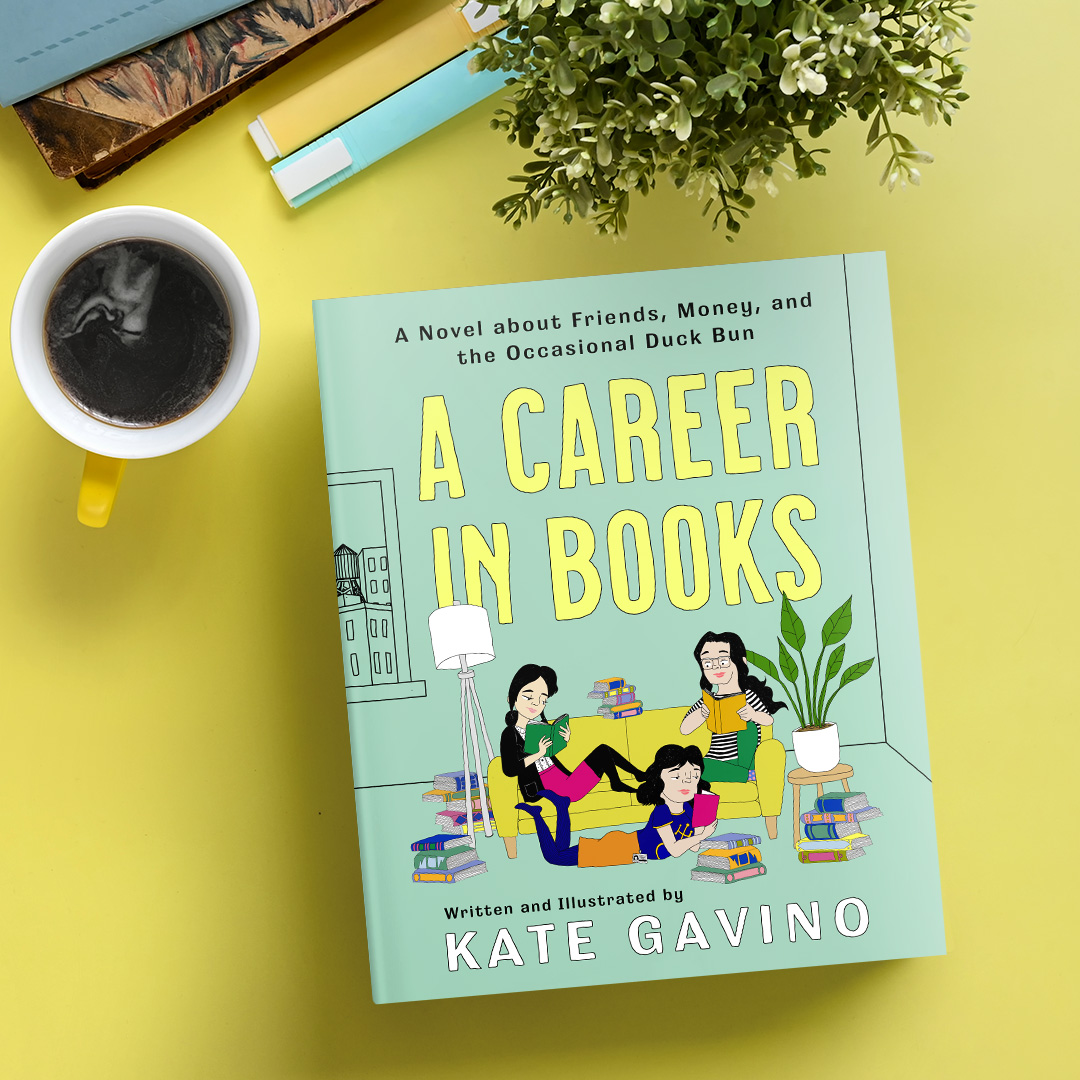
Kate Gavino’s graphic novel, A Career in Books: A Novel about Friends, Money and the Occasional Duck Bun follows three women who just started their careers in publishing and the challenges they face in the industry. This book is for those who wanted a literary career even in the face of systemic racism. It is also a stylish, heartfelt and intimate look into the lives of three friends supporting one another.
In the book, Shirin’s boss just assumes she knows Cantonese. No matter what she does, Nina cannot get her promotion. Silvia has to deal with daily microaggressions. Then they meet a neighbor, Veronica Vo, a Booker Prize winner nicknamed “Tampax Tolstoy” by the press. They each find motivation in Veronica’s life story to continue their own journeys.
Cold Tea Reads interviewed Kate Gavino about her book and her reflections on the publishing industry.
Inclusive representation vs marketing in the publishing industry
Representation in the publishing industry is crucial to ensure diverse experiences and perspectives are shared and heard. Representation provides opportunities for underrepresented voices to have a chance to tell their stories. But we must also address the diversity in stories shared about a community: we are more than our suffering, our work does not simply exist to educate, and we can lean into joy and many other experiences.
“In terms of telling Asian-American stories, once it becomes a trending topic, sometimes there’s only one type of story being told,” Gavino says, “If you want to buck against that trend, one thing you have in your arsenal is to think: Why am I the one telling the story? Am I the only one who can tell it? We have to question what’s expected of us as Asian-Americans.”
Gavino also offers another perspective. In one chapter, we see the characters go to a women of colour publishing mixer. It turns out to be a room full of Asian women, with zero representation of other racial groups.
“People of color in these publishing offices are usually majority Asian women. Black and Latino women especially are still underrepresented in the publishing community,” says Gavino. “It’s like one thing to complain about being the only Asian in the room, but the overrepresentation of Asian women was something in the back of my mind as I wrote this book.”
According to a New York Times study, non-white authors only write only about 5% of the thousands of English language books published between 1950 and 2018.
Since Black Lives Matter movement, there has been a significant rise in diverse stories. The needle is moving in the direction of more volume. But often these books are not well reviewed and not distributed widely. And, certain print houses only have a limited amount of “diverse” stories that they acquire. This is despite the cheerful veneer of diverse and inclusive marketing during racial inclusion months.
Supporting diverse voices and fair compensation in publishing
Gavino reflects on this book boom of diverse stories: “I often wonder how much support they’re putting behind these books because marketing is a big reason why books succeed or fail. If an author doesn’t do well, is the publisher still going to be behind those authors?”
On June 6, 2020, author L.L. McKinney started the hashtag #PublishingPaidMe. They called for authors to transparently share the advances received for their books. The #PublishingPaidMe campaign showed a deep disparity. N.K. Jemisin is the only author to win three Hugo Awards in a row for her Broken Earth trilogy. She only received a $25,000 advance for each book. A white author shared that he received an $800k advance for his debut. The numbers his black colleagues were making through this hashtag shocked him.
“It’s one thing to publish like one diverse book, but then expect the author to market the book themselves, and not give the support to do that,” says Gavino. “I think publishing these stories is just like the first step. Publishers have to support the story and author through marketing, the design and the publicity of the book, in a way that’s actually really helpful to them because otherwise it’s like a diversity checklist the publisher is ticking off otherwise.”
The recent 2022-23 HarperCollins strike was another move towards equity and inclusion in the industry. Those who walked out of HarperCollins asked for improved parental leave benefits, improved protections for union members, an increase in starting salaries from $45,000 to $50,000, and a commitment to improving diversity. On February 21, 2023, the strike ended with a new contract that addressed some of the concerns.
“All the salaries in my graphic novel were my salaries during the time I was in publishing. They were like $28-30k. When I was reading about these social movements, a lot of the salaries were still the same years later,” Gavino reflects, “And when you’re living in New York City, one of the most expensive cities, on like a $28k salary—that’s just wild to me. The more we talk about it, the more the next person will be able to fight for fair compensation if they know how much other people are getting.”
Supporting one another in the industry
Kate Gavino addresses many issues of diversity and compensation in her graphic novel. It is also an effortless and fun read about three friends trying to survive and make a career.
The book is stylish, but with a budget-orientated eye and the humour feels like you’re sitting in the same apartment of these three girls with big dreams to succeed. You catch glimpses of cultural references and high-brow publishing expectations. You walk with these characters as they shell out extra cash for bougie boba or celebrate completing a manuscript with duck bun. This heartfelt read offers an intimate look into the lives of three friends supporting each other through the ongoing challenges of the publishing industry.
See also: 8 must read books for AANHPI Heritage Month and beyond
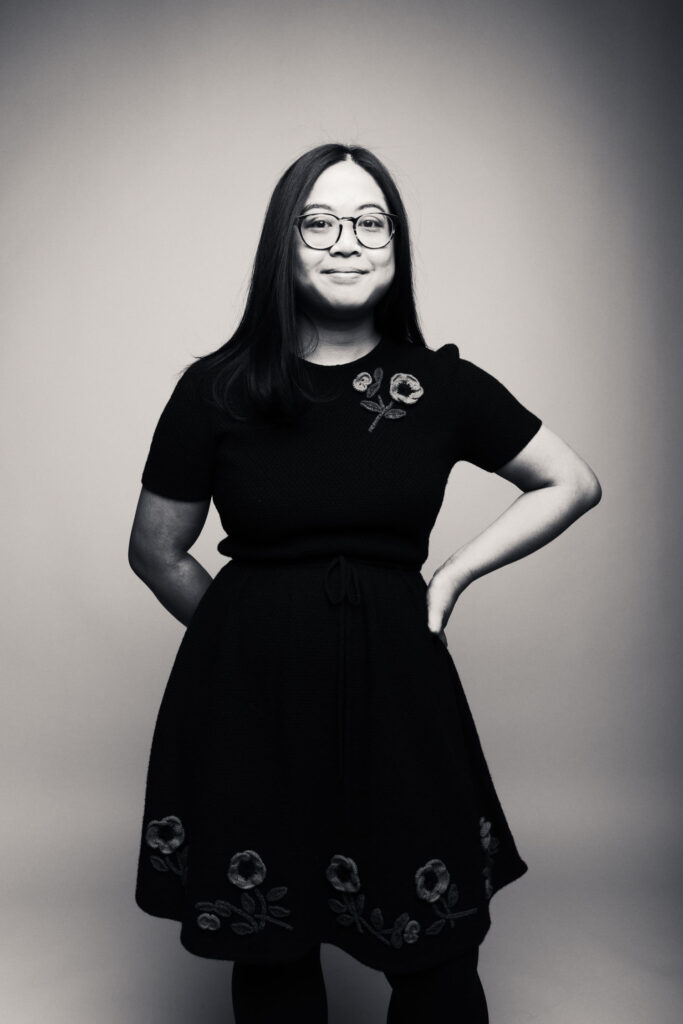
Image credit: Kate Gavino